
Supply chain optimization through custom software development
We deliver custom software development for supply chain optimization, taking responsibility from system assessment through integration and delivery.
You retain useful systems. We scope integrations and new modules around your operation.
- 120+Projects delivered across 12 countries since 2012
- 100+Senior in-house engineers, six countries
- 5.0Unified rating across 61 client reviews on Clutch
- 2 to 4 weeksTypical time from signature to start
- ISO 27001Certified security practice, audited by Quay Audit UK
01Overview
Software built around your operation
unicrew delivers custom software development for supply chain optimization, connecting shipments, orders and stock across existing systems. We integrate and modernize useful logistics software, build the modules your workflows need, and agree which system owns each operational record.
02Proof
Logistics systems we have delivered
- Jack Cooper: inspections in the fieldWe built Jack Cooper's vehicle-inspection platform, supporting an operation handling 9M+ vehicles. The cross-platform system runs on iOS, Android and web, taking field inspections digital for one of the largest US automotive-logistics providers. The engagement used Angular. Read the case study.9M+ vehicles supportedthe scale of Jack Cooper's own operation, which has managed inventory and inspections on well over 9 million vehicles
- MiniMoves: a bought platform, made to fitA new order-management platform, built by customizing a base .NET product rather than writing one from scratch, with unicrew hired as the primary development team. Read the case study. MiniMoves' Jeff Sides said in Clutch review 14288: "They are very cost effective. We could not have the same level of expertise through internal hires."Double digit growthmaintained without a substantial increase in staffing, in the client's own words, Clutch review 14288 (March 2022)
- Bitergo: a warehouse suite, with a new front endThe front end of a warehouse-management application suite, rebuilt on Angular with a reusable component library and REST backend integration. Managing Director Andreas Trautmann names the product in Clutch review 18113: "Warehouse Star is a cloud based warehouse management system for e-commerce, retail and industry." Read the case study.Start-up to 4PLa collection of warehouse-management apps, scalable from start-ups to 4PL companies
03Problems
Visibility, automation and planning
Choose the operational improvement first. We scope the software and data work around the decisions your dispatch, warehouse and back-office teams need to make.
We connect operational feeds and build dashboards for shipment, order and stock visibility. The work includes the integration behind each status, so the display reflects the systems that hold the records.
We automate order entry, shipment rating, transportation assignment and customer status updates. System integrations carry the information between steps, reducing repeated data entry.
We assess route optimization and AI demand forecasting against the operational goal. Routing depends on the constraints and inputs; forecasting also needs usable historical data. We scope any data preparation alongside the use case.
Technologies used in our logistics builds
These logistics builds use ASP.NET, ASP.NET MVC, .NET, Java, PHP, JavaScript, React, Angular, Storybook, REST API, Xamarin, iOS, Android, AWS and Azure. We assess what you run before recommending changes to the technology.
04Compare
Choose between modernization, a product and a new build
The right investment depends on workflow fit, useful existing software and the responsibility you want to retain. Compare the change to current systems, the resulting software and the work each option requires.
- unicrew
Modernize and extend what you run
A strong fit when existing systems serve the operation and selected workflows need improvement. We retain useful modules, connect their data and build the custom functionality around them. The assessment identifies what to keep, extend or replace, with a transition plan for dispatch and warehouse teams.
- Today's system
- Retained and changed in stages
- You own
- Existing systems plus custom code
- What it asks
- Assessment and transition planning
- Off the shelf
Buy a packaged platform
A strong fit when a product covers the required workflows through standard features and configuration. Check licensing, integration options and data access before purchase. The amount of additional engineering depends on the fit between the product and your operating model.
- Today's system
- Retained or replaced to fit scope
- You own
- Rights defined by the product licence
- What it asks
- Configuration and integration
- Greenfield
Build a custom system from zero
A strong fit when the required workflow calls for a purpose-built system. The scope includes data migration, cutover and ongoing maintenance as well as new functionality. Agree the first release around the operation it needs to support.
- Today's system
- Migration and cutover agreed
- You own
- A purpose-built codebase to maintain
- What it asks
- Defined scope and release priorities
05Client story
Client stories: adapting and extending logistics platforms
MiniMoves and Mover Technologies: platform engineering
MiniMoves bought a base .NET product, then hired us to adapt it to its operating model. We redesigned and refactored the order-management system around the company's requirements. Mover Technologies combined freight management with carrier data and customer and dealer apps. Founder Boruch Akbosh described the beta work in his June 2017 Clutch review, 115841: "For the last 5 or 6 months, we have been working on a new calculator which allows our beta tester to go in and generate live quotes by collecting data from each dealer, and also by pulling API data from freight companies." He added: "We have apps for iOS and Android for both customers and dealers."
About 3,000 to 4,000 moves a year
Jeff Sides, then VP of IT at MiniMoves, described its operating scale in his September 2019 Clutch review, 43900: "We service all 50 US states, have partners in all of the major metropolitan areas, and do about 3,000–4,000 moves each year."
What the bought platform covered
He describes it in the same Clutch review: "We had an outdated custom-built order management system that we needed to replace with new technology." The base .NET system they bought covered entering an order, rating a shipment and assigning transportation; the rest of the operation is what needed the customization.
Development responsibility and client relationships
Sides described our responsibility in Clutch review 43900: "We hired Artelogic to customize the system and serve as our primary development team." He added: "Artelogic assisted us in redesigning and refactoring the base order management system to fit with our model." The relationship began under our former Artelogic brand. Mover Technologies' founder Boruch Akbosh described the relationship in his June 2017 Clutch review, 115841: "I have been working with them for many years. Artelogic is my number one resource, especially for projects of such magnitude."
Double digit growth without substantially more staff
In his March 2022 Clutch review, 14288, Sides reported that functional and performance enhancements increased productivity and allowed MiniMoves to maintain double digit growth without a substantial increase in staffing. The order-management platform had become essential to running the business.
Cloud Van Lines: extending a custom build
Cloud Van Lines' commissioned an end-to-end SaaS platform for household moves, written from scratch, then extended it as requirements changed. CEO Jeff Chizmas described that work in his September 2019 Clutch review, 50724: "Since the initial development, we've modified the software as the market has changed. Now the platform is integrated with smart containers that allow users to get data and information on their shipping containers, like the location at any given time." That integration extended the original build through software modernization.
We deliver supply chain optimization as a sequence. First we agree the system of record and join your systems, so one shipment has one status. Then we automate manual data entry, and the forecast comes last, trained on history you can trust.
 Oleksandr TrofimovCTO & Co-Founder, unicrew, who leads our transportation and logistics work
06Process
From assessment to phased delivery
We agree the delivery scope from the assessment, with the first release tied to an operational priority.
- Assess what runsWe review systems, feeds and manual handoffs with the people who use them. The assessment identifies useful modules, data gaps and priority workflows, then recommends the order of work.You provideAgreed system access and time with the people who run dispatch, the warehouse and the back officeYou getA written map of the stack, the data and the gaps, with a recommended order of work
- Integrate and modernizeWe connect operational platforms, carrier data and order systems around agreed record ownership. Useful modules stay; changes and replacements follow the assessment and a scoped transition plan.You provideAPI credentials, a test environment, and one person who can decide which system owns a recordYou getWorking integrations in production, and platform work you can extend
- Automate the manual stepsWe automate priority workflows such as quoting, order entry, status updates and reporting. Current processing time and manual effort give your team a basis for setting priorities and assessing the change.You provideThe current workflow, including manual handoffs and exceptionsYou getAutomated workflows in front of the staff who run them
- Add AI where the data supports itWe scope AI against a defined operational decision and the data available to support it. Forecasting needs reliable history; route optimization also requires explicit constraints and current inputs. Data preparation is part of the agreed work where needed.You provideRelevant operational data, routing constraints and a defined forecasting or planning goalYou getA model in production when the data is ready, plus the data work that gets it there
07Integration
Integration between operational systems
Connect the records behind the dashboard
We join operational feeds around agreed shipment records and statuses. Our guide to logistics APIs versus custom integration explains the integration choices; the role of logistics in supply chain management covers the wider operational context.
Live freight quotes and mobile workflows
We connect dealer and freight-company data for live quotes and build iOS and Android workflows for customers and dealers. Our round-up of logistics APIs for the supply chain industry explains the available integration options.
Scope the carrier and ERP integration
For a specific integration scope, freight API development covers carrier APIs and custom ERP for logistics covers ERP engineering. Our logistics and transportation page brings together the broader industry experience.
08Case studies
Platform customization, modernization and new development
MiniMoves commissioned .NET customization, Bitergo rebuilt warehouse application frontends, and Cloud Van Lines commissioned a new platform. Each project started from a different operational and technical position.
See all case studies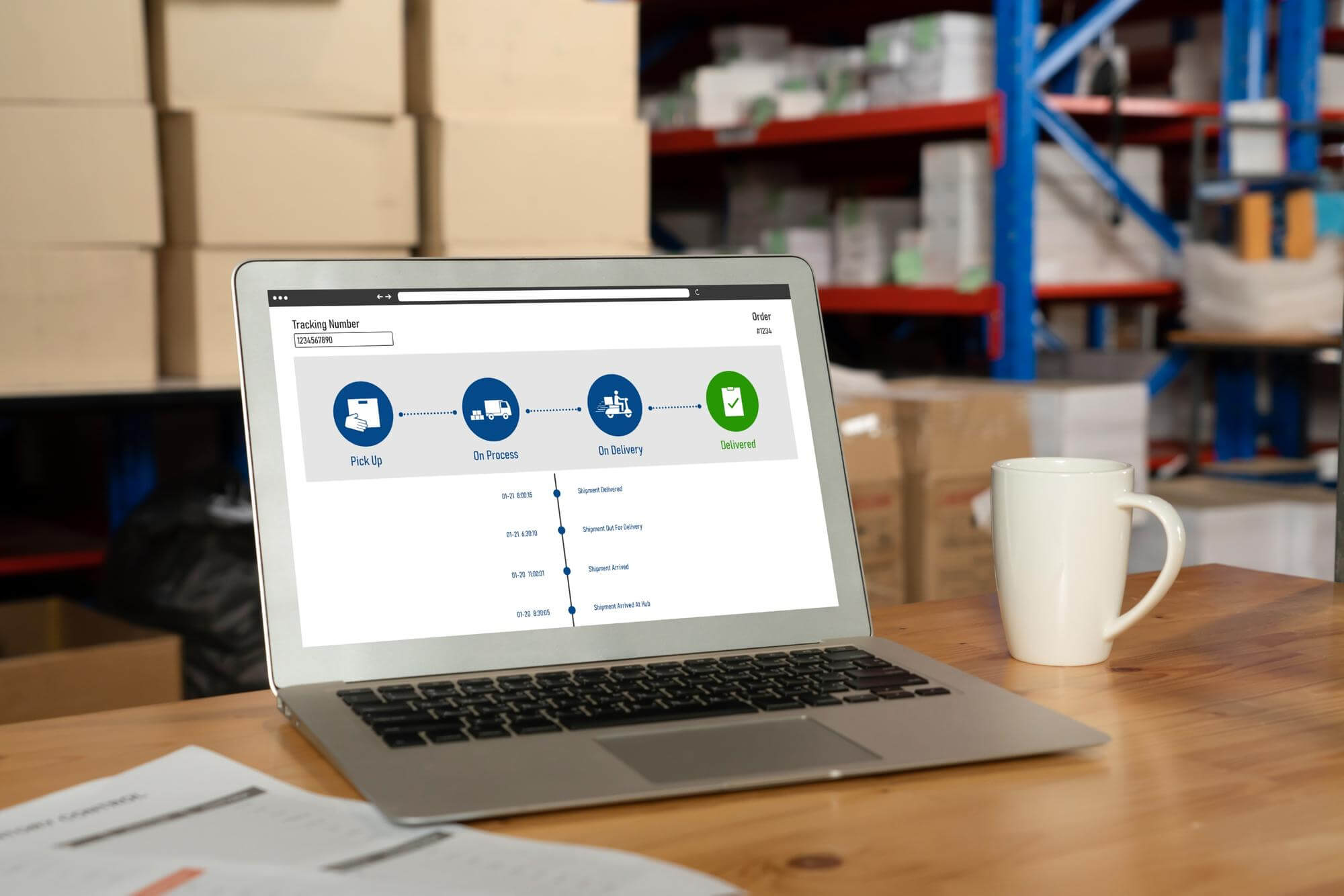 LogisticsMiniMoves Orders Management PlatformA custom-built moving order system that simplifies booking, boosts automation, and improves operational efficiency.Double digit growthMaintained without a substantial increase in staffing
 LogisticsApp Store for warehouse managementOur client Bitergo offers a collection of business apps to optimize warehouse management, scalable from start-ups to 4PL companies. Given the business drivers, the client decided to upgrade the front-end of all their applications to the latest version of Angular.Rapid increaseOf test accounts ordered by potential customers after the site launched
 LogisticsCustom software for USA moving companyAn end-to-end SaaS platform for managing household moves and every business operation of a logistics company.Built from scratchAn end-to-end SaaS for household moves and the operations behind them
09Reviews
Logistics clients on our delivery
Our business simply wouldn’t function without the Order Management system. We have made numerous functional and performance enhancements that has increased productivity and allowed us to maintain double digit growth without a substantial increase in staffing.
After launching the site we saw a rapid increase of test accounts ordered by potential customers. Now the site provides a steady source of sales leads.
I’m consistently humbled by Artelogic’s performance. Projects of this caliber are hard to outsource. Teams come and go, and this type of work almost never gets done. They’ve kept their priorities straight as they’ve grown and always deliver.
They’re a highly ethical and well-managed organization. I was amazed by the CEO’s skill level and business acumen.
I’ve been impressed by their work ethic and how they put me as the customer first. They’re always ready to jump in and go the extra mile. They put great effort into communicating to ensure that tasks are updated in a timely manner. The team keeps us apprised of exactly what they’re working on.
10Facts
Engineering and procurement credentials
Our in-house engineering team works across six countries, supported by certified information-security and quality-management practices. The Clutch rating and review count above are as of 31 July 2026.
- The companyFounded in 2012, and trading as Artelogic until the rebrand.
- 100+ senior in-house engineers across six countries
- Five offices: Ukraine, Poland, Estonia, the UK, and a US business address in Ormond Beach, Florida
- 120+ projects across 12 countries since 2012
- Certified, and auditedBoth certifications renewed through a multi-stage audit with Quay Audit UK.
- ISO 27001:2022 for information security
- ISO 9001:2015 for quality management
- ISTQB-certified QA engineers
- Operational data handling scoped to applicable GDPR and NIS2 requirements
- How it startsConfirm the start window and commercial model when scoping the work.
- Most engagements start within two to four weeks
- Inbound enquiries are replied to within 1 business day
- Time and materials, fixed price or team extension
11FAQ
Questions about scope, data and delivery
We quote by scope: time and materials (billed hourly, quoted per project), fixed price (outcome based, quoted per project), or team extension (billed monthly per team member). Integration count, data quality and workflow complexity determine the estimate. Dedicated teams and team extension carry no recruitment or placement fee. Compare time and materials versus fixed fee for the model decision.
Most engagements start within two to four weeks of signature. That is the start window; delivery dates follow the assessment and agreed scope. We select the first release with your operations and IT leads, using workflow priorities, data readiness and system dependencies to decide what ships first.
We assess the TMS, WMS or ERP you already run and retain the parts that fit the required workflow. The recommendation identifies what to integrate, extend or replace, with transitions scoped around your operation. ERP-specific engineering is covered in custom ERP for logistics.
We map existing feeds and integrations before recommending changes. The assessment establishes record ownership, checks data quality and identifies the dependencies to preserve. unicrew holds ISO 27001:2022 and ISO 9001:2015, renewed through a multi-stage audit with Quay Audit UK. We agree the operational data-handling requirements as part of scoping.
Yes. We scope AI around an operational decision and assess the data it needs. Demand forecasting requires usable history; route optimization can use explicit constraints and current inputs without training a model. Where forecasting data is incomplete, we include feed repair and preparation before model delivery. See AI integration services for the implementation scope.
You receive a written inventory of the platforms and feeds, data-quality findings, priority workflows and a recommended order of work. It identifies useful existing modules and the integrations or changes needed around them. Operations, IT and procurement can use that assessment to agree the delivery scope and investment.
unicrew fits operations commissioning custom software across existing systems, with responsibility for integration, modernization and delivery. We work remotely with your operations and IT leads and integrate packaged software where it fits. The engagement is shaped around your workflows, whether the next step is connecting systems, extending a platform or building a new module.
Scope your supply-chain software work
Share your operational priorities and the systems involved. We discuss the assessment scope, then set out the recommended first work and commercial terms in writing.