The Role of Logistics in a Supply Chain Management
Supply chain management (SCM) is one of the main ways to optimize the budget of enterprises producing goods and/or services.

Olivia NolsTech Writer
Published · Updated
Share
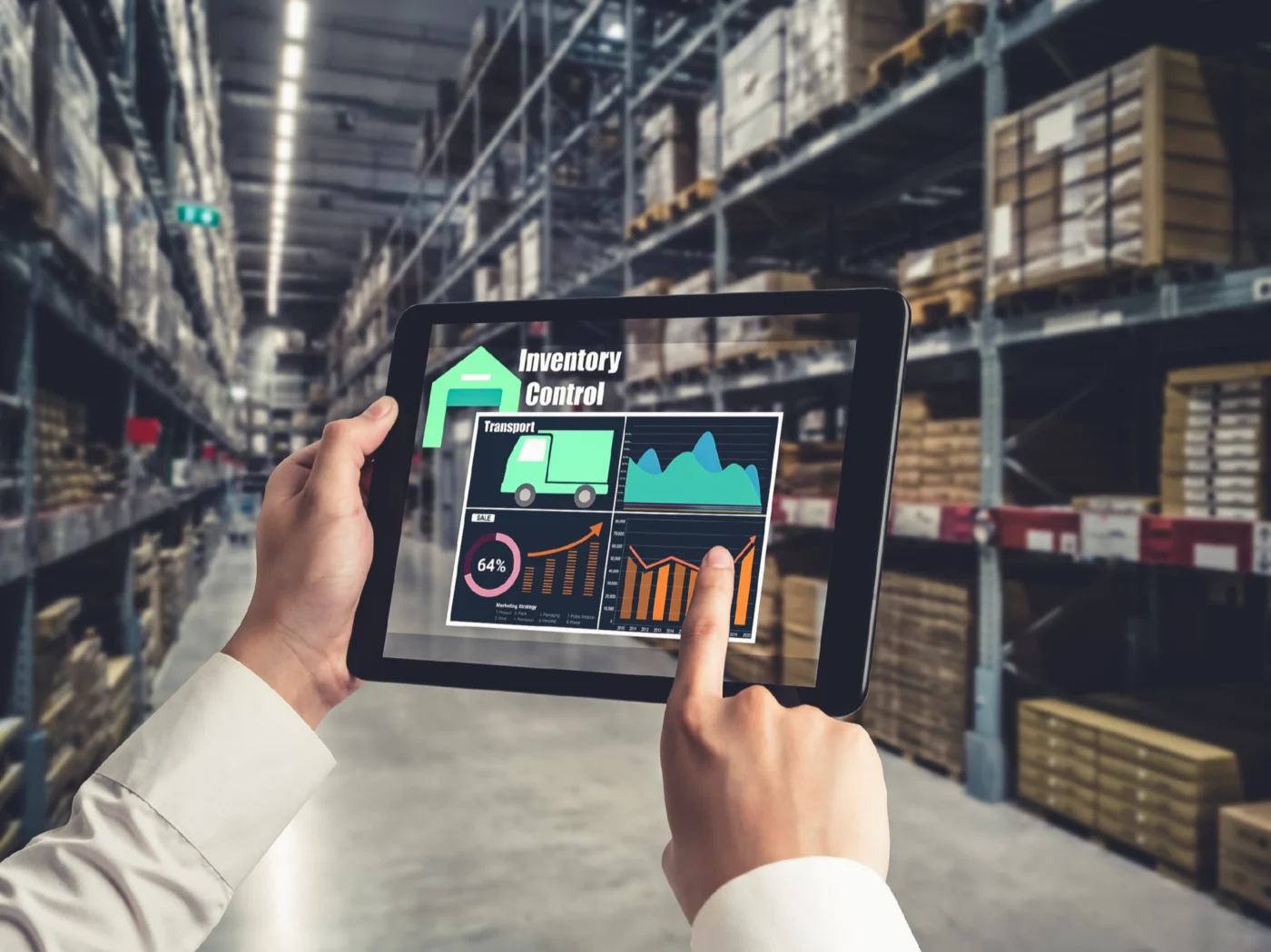
Logistics is the management of physical, informational, and human flows, aimed at optimizing them and avoiding unnecessary waste of resources, and it plays a central role in supply chain management (SCM). SCM is one of the main ways enterprises producing goods and/or services optimize their budgets. Across a chain that includes many suppliers, transit points, points of departure, and destinations, logistics in supply chain management is what keeps those flows efficient.
What is the difference between logistics and supply chains?
Logistics and supply chain should not be confused. Logistics is a rather narrowly focused concept (narrower than SCM) that simply means the globalization of resource management, from every local unit to the entire network of production points.
Supply chain management is a more complex category. It involves logistics and thus performs end-to-end optimization, that is, not only within the enterprise but also when working with counterparties.
The purpose of efficient logistics management is to achieve maximum competitiveness and profitability for the company, as well as for the entire network structure of supply chains, including the end user. For that reason, integrating and introducing innovations into supply chain and logistics processes should aim to increase the overall productivity of all their participants.
What functions does logistics perform within supply chain management?
If we systematize all the areas of logistics that need to be developed for the rational management of production resources, we can single out the following functions:
- Warehouse design and management. This covers several tasks at once, from the design of storage facilities, to the requirements for storing products, to the introduction of various automation solutions (for example, machinery intended for transporting goods within warehouses).
- The formation of packages. Packaging, tracking, and accounting all allow end-to-end control of goods on the way to the customer or distributor.
- Transportation of products. This includes work with cargo carriers and vehicles listed in the company’s fleet: planning their routes, calculating fuel costs, and so on.
- Working with customs. When an enterprise plans international delivery of goods, it is very important that during transportation the goods fully comply with customs requirements and carry all the necessary documentation.
- Working with intermediaries. Intermediaries in logistics are all third-party, non-company resources that are directly involved in implementing supply chains. Finding intermediaries with the most acceptable ratio of quality to cost of services, and establishing long-term, reliable relations with them, are also part of efficient logistics management.
- Working with written-off and returned goods. There is also “reverse logistics,” which establishes the rules and routes for transporting returned or discarded goods, as well as ways to dispose of them.
What challenges does logistics help overcome in supply chain management?
Given the tasks that logistics performs in supply chain management, we can single out a number of advantages provided by its correct implementation:
- Minimization of enterprise expenses. The main role of logistics is primarily to increase the overall value of each delivery, which is identified by customer satisfaction. This means the reduction and optimization of labor resources must be tied to maintaining a certain level of quality customer service. This is solved both by reducing total labor resources (primarily by eliminating unnecessary chain links) and by introducing automation solutions.
- Consolidation of traffic volumes. Transportation costs are one of the largest expense categories in logistics management. In general, transportation costs increase depending on the distance, batch size, and product exposure to damage. On the other hand, the transportation cost per unit of weight decreases as the lot size increases on long runs. Thus, maximum consolidation of transportation volumes can help reduce transportation costs. Enlargement can be achieved by combining small lots into a single large one, intended for a long run (that is, for a longer distance).
- Improving the quality of service. Service quality is largely influenced by the speed of delivery of the goods to the end user, by transportation in proper conditions (for example, many products today are supplied with RFID tags so that both the manufacturer and the end customer can track whether all storage conditions are being observed during transport), and by delivery within the allowed time limits (this refers primarily to perishable goods).
- Reduction of actual losses and possible risks. A business is profitable if the value it creates exceeds the costs associated with its activities. To achieve a competitive advantage, a company must either carry out these activities at lower costs or carry them out in a way that leads to differentiation and a price increment. The first thing to do is reduce the losses associated with the return of goods. It is very important to plan not only the routes on the way to the distributor or the end user, but also the routes by which the goods are delivered back to the warehouse or to establishments for disposal. The second factor affecting risk reduction is the correct planning of enterprise resources, which minimizes the likelihood of damage or loss of goods or manufacturing components on the way from the extraction of raw materials to delivery of the finished product or service to the end user.
- Minimization of the need for intermediary services. Intermediary services (transportation, storage, marketing, recycling, and so on) take up the lion’s share of the cost of implementing supply chains. Experienced logisticians plan routes so as to minimize the need to involve third-party services for efficient logistics management.
- Supporting goods with the necessary documentation. Insurance and support of documentation are two fundamental tasks of logistics. Solving them helps eliminate any problems associated with legal restrictions on the storage, transportation, and marketing of goods.
- Timely response to changing market demands. Advanced logistics scenarios also help you quickly adapt to changing market requirements and thereby maintain top positions against competitors and remain in demand with the target audience.
What value does logistics provide to a supply chain business?
With the help of logistics tools, supply chain management helps ensure a consistently high level of customer service with some reduction in the cost of extracting raw materials, storing, transporting, and selling goods and services to end users. Thus, the role of logistics in supply chain management is to carry the following values:
- Ensuring the smooth operation of all parts of the supply chain. Continuity of workflow is a rapid step toward both reducing expenses and increasing overall customer satisfaction. Usually this is achieved through proper planning and the formation of a fault-tolerant scheme of interaction between the individual links in the supply chain.
- Release of labor resources. On the other side of fault tolerance is the elimination of redundant elements (intermediaries) whose participation entails additional costs. It is very important to find a balance in which the reduction in labor resources does not entail forced downtime during the implementation of supply chains.
- Coverage of a new target audience. Increasing overall customer satisfaction is a rapid step toward popularizing your brand by means of word of mouth. An additional advantage is that such advertising, which is also one of the most effective methods, comes absolutely free for you.
- Net cost reduction. By eliminating a number of intermediary links in the supply chain, you will be able to reduce the net cost of a product or service, and thus increase its availability to the end user.
Conclusion
Logistics and supply chain management are two inseparable concepts that help not only reduce a company’s overall costs for producing goods and/or services, but also improve the overall impression of service quality for your target audience. The choice of the right software also plays a significant role in optimizing logistics tasks. After all, automation today is at the head of progress for industrial enterprises.
If you are interested in developing a customized solution for your business, in particular for optimizing supply chains and solving logistics problems, feel free to contact unicrew. We will create budget-friendly but at the same time scalable and reliable products that you can customize to the specific needs of your company.