
React development services with clear data ownership
We build React product interfaces and shared component libraries for growing software teams. Our React development services define who owns the data and how components change, so new features and gradual front-end rewrites can ship together.
01Capabilities
React interfaces, shared components and live rewrites
Our React JS development services cover web interfaces; React Native covers mobile delivery.
- Product
Interactive interfaces with clear data ownership
We build dashboards, booking flows and operational tools, including for hospitality and leisure platforms. Our booking-platform work is one example. We separate cached server data in TanStack Query or RTK Query from client state in Redux Toolkit or Zustand to handle simultaneous changes, optimistic updates and failed requests.
- Systems
Shared component libraries and design systems
We version shared components as their accessibility and theming contracts change. We build the library in Storybook before applications depend on it, use Material UI for established patterns and bespoke primitives where the interface differentiates the product. Our design systems practice connects those decisions.
- Rewrites
Gradual replacement while releases continue
For React interface work within our web application development practice, we first define where old and new screens can run together. We replace each route while feature delivery continues, with each surface live before the next starts.
- Data
Data-dense scientific and healthcare interfaces
We build research and healthcare interfaces for experts working with complex data. Large structures need to render without stalling the browser. This work combines React and Redux with TypeScript, Node.js and AWS.
02Case studies
React delivery across new and established platforms
New booking and order-management systems sit alongside improvements to existing SaaS and healthcare platforms. Booked It recorded a 19% increase in bookings, on average, and a 13% increase in spend per head, on average.
See all case studies HospitalityAdaptable booking platform for entertainment venuesunicrew developed a platform for Booked It that improved the experience of customers at nightclubs, entertainment centers and festivals.600+Businesses using the platform
 LogisticsMiniMoves Order Management PlatformA custom-built moving order system that simplifies booking, boosts automation, and improves operational efficiency.Double-digit growthMaintained without a substantial increase in staffing
 LogisticsCustom software for a US moving companyAn end-to-end SaaS platform for managing household moves and every business operation of a logistics company.Built from scratchAn end-to-end SaaS for household moves and the operations behind them
- Climate TechRebuilding a carbon-footprint SaaS platform for a European climate-tech startupunicrew embedded three full-stack developers and a UI/UX designer in a European climate-tech startup's SaaS product, rebuilding many parts of it from scratch.
- HealthcareStabilizing and Scaling a Home Health Monitoring PlatformA U.S. consumer health tech company needed system stability and an experienced partner. unicrew stabilized the platform, optimized infrastructure costs, and delivered new features, becoming a long-term technology partner.
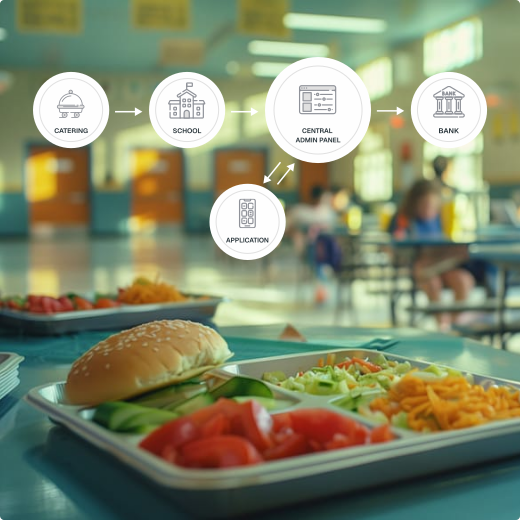 FoodtechDigital Transformation in the Food IndustryOur client is an innovation-oriented group of food companies based in Germany that produces and distributes a wide range of products for well-known retail businesses and food services.

03Fit
How we choose the React scope
We recommend React when shared components and substantial client-side interaction justify it. Existing team skills and the amount of public content determine whether to keep the current framework or choose a different rendering approach.
| Your situation | What we recommend |
|---|---|
| A product behind a login, substantial client state, several teams sharing components | Use ReactUse a shared component layer and explicit state boundaries so teams can develop features against the same interface contracts. |
| Mostly content, where load speed and search visibility decide the outcome | Rendered pagesStart with static or server-rendered pages and add interactivity where readers use it. The amount of interaction determines the client-side scope. |
| A public product surface where first paint and indexability both matter | Next.jsNext.js adds a framework for React rendering and routing. We settle the public-page rendering choice there, alongside its hosting responsibilities. |
| A small, stable interface: one screen, one team, no growth planned | Plain markupUse plain markup and focused JavaScript for a small, stable interface. The maintenance scope stays proportional to the behaviour it needs. |
| A team already productive in Vue or Angular | Keep Vue or AngularBuild on the team's existing Vue or Angular expertise. A framework change needs a product or maintenance reason; productive teams can improve the interface within their current stack. |
| An existing React application that has become slow or unpredictable | Assess the interfaceMap state ownership and measure the important routes before choosing targeted improvements or a staged rewrite. |
Scope
We own React interface decisions: how data moves, what shared components promise and how upgrades or migration reach the live product. We leave those boundaries clear for your developers to maintain. unicrew has 100+ senior in-house engineers across six countries and holds ISO 27001:2022 and ISO 9001:2015 certifications, renewed through a multi-stage audit with Quay Audit UK.
On a React front end, we first agree what owns the data. Server state lives in TanStack Query or RTK Query, so screens stay in sync with the database. Keeping it apart from client state is usually a bigger win than any rendering optimisation.
 Andrii BurdaSenior Engineering Manager, unicrew
04Delivery
From a state map to released React routes
For an existing React front end, we start with repository access and the routes that matter commercially. The assessment establishes which boundaries to keep and where replacement should begin.
- Find where the data livesWe map the server cache, global store and component state before changing ownership. The output is a written map showing where application data lives and which layer is responsible for it.
- Measure the important routesWe record interaction timings and bundle composition on the routes you identify as commercially important. Those measurements set the performance priorities.
- Establish the migration seamWhen replacement is warranted, we run old and new interfaces side by side behind React Router. The routing boundary lets us move individual surfaces while the rest of the product remains live.
- Migrate by route and keep releasingWe release each migrated surface before starting the next. Testing Library and Playwright cover the changing routes through our QA and test automation practice, with the existing product available throughout the migration.
05Client voices
Client testimony on code quality
06Stack
The contracts around a React component
Set the boundary between server data and client state before choosing supporting tools. Use the linked pages to scope component libraries and rendering.
 TypeScriptTypes for the props and data contracts components share.
 Next.jsRendering and routing around the React interface.
 ReduxShared client state, separate from the server-data cache.
 StorybookBuild and review components before applications depend on them.
 Material UIA component foundation when standard UI patterns fit.
07Questions
Questions about React ownership and delivery
Settle whether you need a React assessment, engineers within your product team or ownership of the interface build.
Yes, our React engineers can work within your product team.
They build interfaces and reusable components, manage application state and test the routes users rely on through our QA and test automation practice.
For ongoing React work that we coordinate, choose a managed team. If you want us to own the whole interface build, choose web development.
We provide both React development services and fixed-scope React consulting services.
Consulting produces a written assessment of where data lives and what to change first. It can sit within our quality audit practice, with the recommendation sized to the interface.
Use Next.js when public pages need a deliberate rendering and routing strategy. A predominantly interactive application behind a login can use React without that framework.
React is the interface library in both. Rendering and hosting requirements decide what belongs around it.
Yes. We replace the interface route by route while feature delivery continues.
Old and new screens share a routing layer. Each migrated surface goes live before work starts on the next, with route coverage in place. The assessment identifies that boundary before a rewrite is approved.
We can deliver product design and React implementation, or build against your existing design system.
Our product design work covers UI and UX. Our design systems practice connects component behaviour, design tokens and the library your application consumes. With an existing design team, we clarify those contracts together before implementation.
We define accessibility as part of the component contract.
Keyboard interaction, focus management and semantics are decided during component design. Share a formal conformance target at the start so it can guide the library and its testing.
An engagement starts with a scoping call about the product and the interface work you want to commission.
For an existing front end, we agree repository access for the assessment and identify the routes that matter commercially. The assessment produces a written map of data ownership and recommended changes.
Most engagements start within two to four weeks.
The cost of React development services or hiring React engineers depends on the agreed scope and engagement model.
- Time and materials: billed hourly and quoted per project.
- Fixed price: outcome based and quoted per project.
- Team extension: billed monthly per team member.
Scope the next change to your React interface
Bring your product goals and, for an existing front end, repository access. We will scope the interface decisions and the next release.