
Legacy Software Rescue when the project has stopped moving
We take over stalled and struggling projects: a software project rescue starts at the deploy, then a senior team on the code.
WaiverKing came to us when its previous vendor disbanded, and has run on this team since 2014.
The offer, in full
- Fee
- Quoted at scoping: time and materials, fixed price or team extension
- Duration
- Agreed at scoping
- You receive
- 4 deliverables, one of them a release
- What we need
- The codebase you inherited, and its history
- Typical start
- 2 to 4 weeks from signature
- Ends with
- A team on the code, and a release you can watch
NDA before any access. Read-only, least-privilege, and agreed with your technical contact before anything starts.
01Track record
Who takes it over
unicrew takes over other people's code, which is a different job from starting a project from nothing.
- 120+Projects delivered across 12 countries since 2012
- 100+Senior in-house engineers, six countries
- 5.0Unified rating across 61 client reviews on Clutch
- ISO 27001Certified security practice, audited by Quay Audit UK
02Overview
What a rescue actually involves
A software project rescue is a takeover of a stalled or struggling project: an independent read of the code you inherited, then a senior team shipping it again. unicrew works it in one order, and getting a release out of the door comes first. In our experience the blocker is rarely exotic. It is a build nobody can run, a deploy nobody is willing to press, tests switched off eighteen months ago, and the one person who understood the system has left.
03The answer
The three things that stop a stalled project
A rescue ends in a release. A code audit consultancy ends in a report; a rewrite quote prices a different system. These three blockers are what stand between you and that release, and the order matters, because each one blocks the next.
- Blocker 01
Nobody can ship
No working pipeline, an environment only one departed person could rebuild, or a deploy so manual that everyone quietly avoids it.
- First move
- Make a release possible again
- Blocker 02
Nobody knows what is safe to touch
No tests worth trusting and no documentation, so every change is a gamble and the team has stopped taking them.
- First move
- A legacy code audit, with the evidence
- Blocker 03
Nobody is left who knows why
The people who made the decisions have gone. What remains looks arbitrary until someone reconstructs the reasoning from the code itself.
- First move
- A senior team reading, not guessing
The audit is yours whatever you decide next
Take the salvage read and act on it with your own team, or with anyone. It is written to be read by whoever ends up doing the work.
04Fit
Rescue, or something else?
Rule yourself in or out before you call. The first set is what a takeover is for; the second looks the same from the inside and is not, so each item names the offer that fits.
Call us if
Good fit- Releases have stopped, or the deploy has become something everyone avoids.
- The previous team or vendor has gone, or is on its way out, and the context is leaving with it.
- You inherited a codebase and need an independent read on whether it is worth keeping.
- Large parts of the codebase were generated by an AI assistant, and nobody left can tell you which parts were reviewed.
- Your users are finding the outages before your monitoring does.
Something else if
Better elsewhere- The product is fine and what you need is more hands. That is a dedicated development team.
- Nothing is broken and the rebuild is a plan rather than an emergency. That is legacy modernization, on a system that still works.
- It works, and the problem is what it costs to run. See the Cloud Cost and AI-Readiness Audit.
- There is no system yet, or what is left is genuinely past saving. Either way the answer is a much smaller first version: MVP in 6 Weeks.
- What is blocking you is a buyer's security review rather than the code. Clear it with the Security and Compliance Readiness Sprint.
When we take a project over, the code is almost never the worst thing we find. The worst thing is that nobody remembers how to get a change in front of a customer. The release process broke a year ago, the one person who knew the workaround has left, and the team has quietly stopped trying. So that is where we start, before anyone argues about the architecture. Everything else on the list gets easier once you can put something live again.
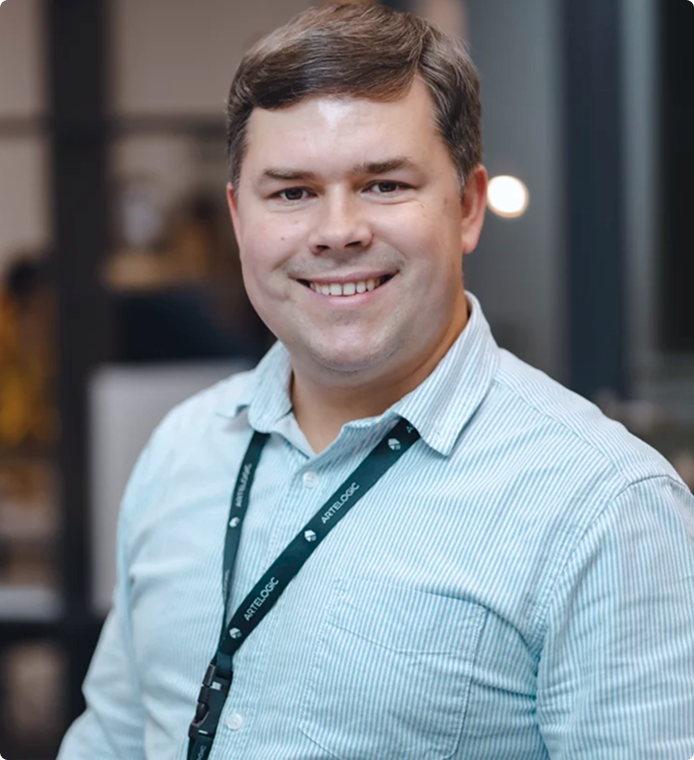 Oleksandr TrofimovChief Technology Officer
05Deliverables
What you have after the first weeks
unicrew reads the salvage question module by module rather than project by project, so the answer is a list you can argue with. All four land with you, whoever does the rebuild.
- 01
A legacy code audit
What you inherited, read properly: architecture, dependencies, test coverage, and the parts nobody has touched in years.
- Format
- Findings, with the evidence either way
- 02
An honest salvage read
Which modules to keep, which to rebuild and which to replace outright, with the reasoning attached to each.
- Format
- Keep, rebuild or replace, per module
- 03
A working release
A build that runs and a deploy that someone is willing to press. Usually the first visible thing to change.
- Format
- A pipeline, and a deploy you watch
- 04
A senior team and a plan
Named people on the code and a sequenced recovery plan, with estimates we can stand behind rather than optimistic ones.
- Format
- Named team, sequenced roadmap
06Delivery
How a takeover runs
Four stages, and the first visible result is usually a deploy. Access is agreed with your technical contact and kept to the least the work needs, with nothing granted before the NDA. The practice handling it is ISO 27001:2022 certified, audited by Quay Audit UK.
- Read what you haveWe go through the codebase, the infrastructure and whatever history survives, and we tell you what we find rather than what you hoped.You getA legacy code audit and a salvage readFrom youRepository access, and whoever still holds the context, the incumbent vendor included
- Make a release possibleA build that runs, an environment that can be rebuilt, and a deploy path someone is willing to use. Everything else waits on this.You getA working pipeline and a first deployFrom youAccess to environments, and whoever holds the credentials
- Stop the bleedingThe outages, the data problems and the security gaps that are costing you users right now, before anyone reopens the roadmap.You getThe urgent list closed, in priority orderFrom youYour real incident history, including the embarrassing parts
- Move againA senior team on the recovery plan, shipping on a cadence you can see, with estimates we will stand behind.You getA sequenced plan and a shipping teamFrom youOne decision-maker who can settle scope questions
07Proof
Projects we took over from someone else
A rescue is only worth anything if it holds, so the proof that matters is what happened years later rather than in the first month. Among the systems handed to us already running are a healthcare monitoring platform and a financial-media platform rewritten to .NET Core.
- Being able to ship is the first resultWaiverKing has run on the same team since 2014. The refactor and the release automation that came with it took an update's time to reach live from weeks to hours.Weeks to hoursWaiverKing's update release time, after the refactor
- Somebody else checked the workBooked It's platform was read, broken into modules and rebuilt on Laravel. Its CEO says on Clutch that the refactor left the code base "more stable, easier to maintain and easier to add new features". He then had the code audited by a third party, who he says was "extremely complimentary" of the work.3rd partyAudit of our refactored code, commissioned by the client
- Nobody has to be hired firstThe senior engineers on a rescue are unicrew employees rather than subcontractors, so a takeover does not start with recruitment. Nobody has to be sourced, vetted or placed before someone senior can start reading your code.100+Senior in-house engineers, six countries
08Case studies
Keep it, rebuild it, or replace it
A salvage read has three possible answers, and these are one of each. One was kept and refactored in place after the previous firm disbanded. One was rebuilt module by module onto Laravel. One was replaced outright by a system that times rentals on NFC wristbands, and the revenue increase on that card is the client's own reported figure.
See all case studies SaaSWaiverKing: Software Development for Waiver Form CreatorWaiverKing is a document management business serving primarily the health and fitness industries. The platform is partnered with MindBody Online, one of the largest business-systems providers for gyms and yoga studios.Weeks to hoursTime for an update to reach live
 HospitalityHighly Adjustable Platform for entertainment industriesunicrew developed a platform for Booked It that enhanced the customer experience for nightclub, entertainment center, and festival goers.600+Businesses using the platform
 LeisureSaaS modernization for Paddle Sports Center in CaliforniaA kayaking and paddleboard rental business in the Santa Barbara area wanted one system for equipment, customers, time and billing. That system is Adventure Rental System.15-20%Increase in revenue
09Client voices
Clients who handed us code somebody else wrote
Our platform has been refactored to Laravel ensuring the code base is more stable, easier to maintain and easier to add new features. Their professionalism and quality of work have stood out in the partnership. We have had the code audited by a 3rd party who was extremely complimentary of the work.
We’re one of unicrew’s smaller clients, but they’re always incredibly quick to respond. When we have issues, they treat them as if they’re extremely important. We feel like we have a partner, and that’s been incredible. That’s why we’ll keep them on for as long as we can.
Site was migrated and re-written, the new system is much more stable, and performance highly improved. Excellent technological level. highly responsive and communicative. They are highly committed to the project and business goals.
They’ve been helping us grow our platform together since the beginning, from a couple hundred companies to around 2,000. Artelogic has been front and center in this process.
The goal was to replace legacy UI elements with new UI components. The new UI components already existed, key challenge was to map the existing implementations to the new ones while not losing functionality. They were super responsive and did exactly as we agreed upon. The colleague they send to us was an extremely good fit to the problem that we have described.
Get the project moving again
Three things get us started: what you inherited, what has stopped, and what has already been tried. We come back with the first thing we would look at, and whether a rescue is honestly the right call.
What happens after you contact us
- We reply within one business dayA senior engineer reads what you send, not a bot.
- A short scoping callWhat is broken, what has been tried, and who is left who knows the system.
- Scope and terms, in writingWhat we would do first, and how it is billed.
- NDA, then the codeSigned before any access, and the audit runs with no write access to production.
10Questions
Questions before handing over a codebase
The questions that come before the repository access does.
A takeover of a stalled or failing project: an independent read of the code and infrastructure you inherited, then a senior team shipping it again.
The first work is usually mechanical rather than architectural:
- a build that runs
- an environment that can be rebuilt without the person who left
- a deploy someone is willing to press
Alongside it you get a legacy code audit and a salvage read, module by module, which is yours whatever you decide next.
Quoted at scoping, under whichever of our three models fits: time and materials billed hourly, fixed price for an outcome, or team extension billed monthly per team member.
A rescue is not a fixed-fee diagnostic like our assessments, because what the audit finds legitimately changes what the work is. What we commit to instead is estimates we can stand behind and no surprises halfway through.
By not pricing the recovery before anyone has read the code.
The first piece of work is the audit and getting a release out, scoped against things we can see: a repository, an environment, a deploy path. What the recovery itself costs is quoted after that, when the salvage read exists and the surprises are already on the table.
Estimates come with the reasoning attached. Where a module is genuinely unpredictable we say which one and why, rather than padding every line to cover it.
Most engagements start within two to four weeks of signature.
The engineers who take it over are unicrew employees rather than people recruited for your project, so none of that window is a hiring process.
How long it then runs is agreed at scoping, after the audit: nobody can put a length on a codebase nobody has read.
If you are in an active outage rather than a stall, say so in the first message and we will say on the call what the first week can cover.
Then the audit says so, with the evidence, and that is a finding rather than a failure.
It is rarely all or nothing. The answer is usually per module:
- some are sound and stay
- some get rebuilt behind the interfaces they already expose
- one or two get replaced outright
A full rebuild we scope as legacy modernization. Where the honest answer is a much smaller product than the one you have, that is an MVP in 6 Weeks conversation instead.
Repository access, whatever infrastructure and environment access exists, and any surviving documentation.
Access is least-privilege and agreed with your technical contact, read-only wherever the work allows, and with no write access to production systems during the audit. Where your customers, insurers or shippers require it, we work inside your own cloud environment.
Where the previous vendor is still in place, that same list is the changeover, settled before the audit starts: repository ownership, the credentials somebody else holds, the documentation that has to move across.
NDA before any of it.
Work with them, in almost every case.
The people still there are usually the only remaining source of context, and burning that relationship on day one makes the rescue harder rather than easier. What changes is the standard rather than the roster: a working pipeline, tests that mean something, and code review that is not optional.
Where a team is genuinely under-resourced rather than under-supported, we say so, and adding capacity is a dedicated team engagement rather than a rescue.
No. The audit, the pipeline and the plan are yours, and none of it is written to be readable only by us.
Plenty of clients stay, and one takeover has been running here since 2014. If you want the recovered project back in-house instead, the handover is part of the work rather than a negotiation.
The one thing we will not do is leave a project mid-stabilization, because a half-rescued system is worse than the one you arrived with.
11Where to go next
If a rescue is not what you need
A recovered project usually needs one of the four services here. The five offers beside them are for when a rescue is the wrong diagnosis. The full set, compared.
Once the system is stable, whether AI can pay off inside it and what has to change first.
A working voice or call-AI pilot on your own data, in 30 days.
For when it runs fine and the problem is what it costs every month.
For when a buyer's security review is what is holding the product back.
For when the honest answer is to start again with a much smaller first version.
The rebuild half of a salvage read, done module by module with the business running throughout.
The standing team a recovered project usually needs next, priced monthly per engineer.
Pipelines, environments and monitoring: the machinery whose absence is usually why nobody can ship.
The tests that make the next change safe, which is what turns a rescue into a working project.