
MCP Server and Integration Development that exposes your systems once, not once per agent.
An MCP server is one interface over a system you already run, publishing its data as resources and its permitted actions as tools, so every MCP-capable client you adopt uses that instead of its own integration.
- 120+Projects delivered across 12 countries since 2012
- 100+Senior in-house engineers, six countries
- 5.0Unified rating across 61 client reviews on Clutch
- ISO 27001Certified security practice, audited by Quay Audit UK
- AWS CertifiedSolutions Architects on the team
01Overview
What an MCP server is, and what we build
MCP development builds the server that lets AI clients reach the systems your business runs on: the ERP, the CRM, the database, the internal APIs. MCP, the Model Context Protocol, is an open standard Anthropic released in late 2024 to give AI models a universal way to connect to external tools, data sources and services. What you buy first is not the server, though: it is the map of which actions are worth exposing at all.
- The access model is agreed firstAuthentication, per-tool scopes and the deny path, what happens when an agent asks for something it should not have, go in writing before any server code.
- Tool names are an interface decisionAn agent picks a tool by reading its name and description, so what a tool is called is a design decision rather than a label.
- The data layer, when there is not oneWhere nothing query-ready sits behind a system, that access layer is the first project, and we say so rather than building on top of nothing.
- If the server is not the thing to buyAI agents when the question is what the software decides, AI integration when one model goes into one workflow, custom models when the intelligence is the build, and the AI cluster behind them.
02Proof
How to judge an MCP vendor, including us
Nobody has a decade of MCP behind them, ours included: the protocol was released in late 2024. Judge an MCP vendor on the integration work underneath it, on what it builds on the other side of the protocol, and on what it refuses to expose.
- We built the integrations MCP standardizesJewelCandle's Shopify storefronts and its Microsoft Dynamics ERP stay in step through middleware we built, with an AWS-based product information system behind them. We integrated Opera Cloud for a UK hotel booking platform, updated its Shift4 and IBS Software connections, and built the booking engine that sits between the platform and those third-party systems. MindBody API connectivity on WaiverKing. SharePoint automation on Azure functions for a German Microsoft-cloud consultancy, authenticating between the systems on Microsoft 365 frameworks.Since 2012wiring ERP, PMS, booking and accounting platforms together, the half of an MCP build that takes the time
- We build what sits on the other side of the protocolunicrew builds and runs two AI products of its own, Snaplore for knowledge management and Talkmetry for call intelligence inside HubSpot, and builds agents for clients to their own requirements rather than selling an agent of its own. Our internal timesheet agent runs on AWS Bedrock and LangChain and drives a web UI through browser automation, which is the shape you fall back on when a system has no interface built for software.2revenue-generating AI products of our own in production, with the agent work built to each client's own specification
- What gets exposed is a decision, not a defaultSecure MCP design starts with four non-negotiables: OAuth 2.1 authentication on every endpoint, strict input validation on every tool call, defenses against tool poisoning and prompt injection, and hardened deployment behind an API gateway. The specification standardized on OAuth 2.1 for HTTP-based transports as of the June 2025 revision, and OWASP maintains a dedicated MCP Top 10. Which of them applies where, and which actions exist on your server at all, is what the access model settles. We wrote the guide.ISO 27001:2022 and ISO 9001:2015, renewed through a multi-stage audit with Quay Audit UK
03Compare
MCP versus a one-off API integration
The deciding question is not which approach is more modern, it is whether a second AI client is coming. If one is, a point-to-point integration gets rebuilt and an MCP server does not. If none is, the server and its access model are a cost paid up front for nothing, which is what the trade-off row says out loud.
| An MCP serverunicrew | Point-to-point API integrationIntegrate | Browser or RPA automationAutomate |
|---|---|---|
| Best forTwo or more AI clients that need the same system, or an access boundary that has to be stated in one place. | Best forExactly one agent will ever use it, and the system already has a documented API. | Best forA system with no API and no data access at all, only a screen a person drives. |
| Trade-offYou pay for the server and its access model up front, so it is overkill for one agent and one system. A tool contract change is versioned and yours to schedule. | Trade-offAccess rules scatter across each integration, and a vendor API version bump breaks whichever one depended on it. | Trade-offWhatever the human account can do, the bot can do, and a front-end selector change breaks the script. |
| You end up owningOne server every MCP-capable client reuses, with authentication, per-tool scopes and the record of what was called in one place rather than scattered. | You end up owningPlumbing bound to the one agent it was written for, and a rebuild for the next one. | You end up owningA script bound to the exact screens it was built against. |
Quick self-check
Tick what is true for you. The read-out updates as you go.
0 of 4 true
An MCP server is the wrong buy
Nothing here says build one. One agent reaching one system is a direct integration, which AI agent development already covers. If the system has only a screen, the first project is the data access layer.
Tell us anywayOne signal, not yet a server
A single signal is usually one integration to write rather than a protocol to adopt, and a server plus its access model is a cost you carry before the second client exists.
Talk it throughWorth mapping before you build
Two signals usually means the same plumbing is about to be written twice. Mapping is the cheap way to find out, and it returns what is worth exposing before you commit to a build.
Book a discovery callA server is the right shape
Three signals is the case this page exists for. What is left to settle is how much of the server takes actions rather than reads: a write needs the access review, a read does not.
Book a discovery callA server, and the access model before the code
All four, and this is the profile a second point-to-point integration makes worse: the access rules then live inside both, and nobody can say what a given agent may do. Most engagements start within two to four weeks.
Talk about the work04Capabilities
What we build
Six pieces of work. Which of them you need depends on what your agents have to reach, and what those systems already expose.
- Custom MCP server development
Custom MCP servers over your internal systems
Resources and toolsYour database, internal APIs, CRM or domain logic exposed as MCP resources and tools, so any MCP-capable agent can read your data and take the actions you allow.
- Third-party platform MCP integration
MCP integration of third-party platforms
ERP, PMS, booking, paymentsThe platforms you already run, wrapped behind an MCP server, so your agents get one interface instead of a pile of vendor SDKs. It is the middleware pattern we have built between a hotel platform and its PMS and between storefronts and an ERP, with a standard interface on the agent side.
- API to MCP migration
Migration of existing API integrations to MCP
Converted, not rebuiltWe convert the point-to-point integrations you already run into MCP servers, so every AI client you adopt reuses them instead of rebuilding the same plumbing per agent.
- MCP security and access design
Security and access design for MCP deployments
Auth, scopes, what gets recordedWhat authenticates a client, what each one is scoped to, and what gets recorded, decided before an agent touches anything real. It covers the agent-specific risks a normal API review is not looking for, and it runs under our ISO 27001:2022 practice.
- Data access layer engineering
The data layer underneath the server
Pipelines, indexes, embeddingsWhere the data is not query-ready we build the access layer first: pipelines, indexes, and the kind of tagging and embeddings that sit under an edtech platform's search.
- Agent tool-use evaluation
Evaluation and monitoring of agent tool use
Watched after launchWhich tool an agent reaches for, how often it reaches for the wrong one, and what changes when a definition is rewritten. Testing the server and its auth boundary is a QA deliverable of its own, and it belongs there rather than folded into the build.
05Trust
What an MCP build hands over
An MCP build is bought for what it leaves behind rather than for the protocol. These are the three things an engagement hands you, and you keep all three whether or not we run the server afterwards.
- Exposed onceOne server, reused by every MCP-capable clientInstead of a fresh integration each time you adopt another AI client
- In writingAn access model settled before any server codeAuthentication, per-tool scopes, what gets recorded, and the deny path
- YoursThe server, its tool definitions, and the decisions behind themHanded to a named owner, written down rather than explained in a call
06Stack
What we build MCP servers with
A server speaks the language of the system it fronts, so this list records what clients already run rather than a preference. AWS Bedrock and LangChain are here because they are what our own internal agent runs on: Bedrock hosts the model, LangChain orchestrates the steps.
 TypeScript
 Python
 Node.js
 .NET
.NET AWS Bedrock
 LangChain
 OpenAI / ChatGPT
 PostgreSQL
 Azure
Azure Docker
07Engagement
How you engage us on an MCP build
Three models, and the scoping call comes first in all of them. What changes is whether you are buying a defined server or capacity that stays with it once agents start using it.
A scoped server build
Defined buildOne system, or a small set, mapped and exposed and tested against MCP clients. Discovery is what makes the scope real enough to quote against.
- Best when
- The systems are known and you want a defined deliverable
- You pay
- Outcome based, quoted per project
- Typical start
- Two to four weeks
Time and materials
Scope movingThe list of systems keeps growing as agents find work to do, so the scope firms up while the work runs.
- Best when
- You are still learning which actions deserve to be tools
- You pay
- Billed hourly, quoted per project
- Typical start
- Two to four weeks
Team extension
Long-runA named senior pod that builds the servers and stays with them, working from Ukraine, Poland, Estonia and the UK. Tool definitions get iterated as real usage patterns emerge, and somebody has to own that after launch.
- Best when
- Servers keep being added and someone has to own them
- You pay
- Billed monthly, per team member
- Typical start
- Two to four weeks
A read of what exists first, and the rebuild is a separate decision
If you already run an MCP server, or a pile of point-to-point integrations you want to converge, a takeover starts with a read of what is there: which actions are exposed, what authenticates them, and what gets recorded. You get that as a written assessment with a keep, harden or rebuild recommendation. There is no minimum engagement period. If the read says keep what you have, that is the whole engagement.
08Industries
Industries where we have already built the integrations
The integration layer is the part of an MCP build that takes the time, so what counts is whether we have already been inside these systems: what a PMS, an ERP or a carrier API does badly, and which of its actions an agent should never be allowed to call.
Logistics and transportation
Order management, warehouse and fleet tooling for operations that cannot pause. A US logistics startup's live-quote engine pulls freight-carrier APIs so a user can pick a carrier, which is the exact shape of a read-only MCP tool.
Hospitality and leisure
A hotel estate is a PMS, a payment gateway and a distribution platform that all have to agree. We have put Opera Cloud, Shift4 and IBS Software behind one booking engine, and built a web GUI over an application that had until then been API-only for an IT partner in hotel content and distribution.
E-commerce
A manufacturer selling in seven EU countries, B2B and B2C, that made more than 10,000 products the old systems struggled to serve. The storefront-to-ERP flow we built is exactly the interface an agent would otherwise get its own private copy of.
Fintech and accounting
Accounting and payment estates: bookkeeping automation for a UK financial advisory firm, where the software now reconciles transactions against invoices automatically, with encryption around the financial data and secured user accounts part of the same job.
Healthcare
We stabilized and still support a US home health monitoring platform and integrated further third-party data sources into it. With health data, which actions get exposed at all stops being a design decision and becomes a compliance one.
EdTech and learning
We built the AI tagging and embeddings under an edtech platform's search, which is the data layer an MCP tool would read from.
Name the systems your agents need to reach
You get a straight answer on which of those systems belong behind a server, including the answer that none of them do yet.
What happens after you contact us
- We reply within one business dayThe reply says which of the systems you named look like tools, and what we would need to see before anyone could scope a server.
- A call about which systems and which actionsWhat your agents have to reach, what those systems already expose, and which actions in them should be tools at all.
- A written list of what to expose, and what not toThe resources and actions worth exposing, each with a reason to exist, and the ones we recommend leaving out.
- Contracts and NDAs, then a start dateSigned before anyone touches a sandbox or a credential. Most engagements start within two to four weeks.
09Delivery
How an MCP build works
MCP is almost never what sets the schedule; the state of the systems underneath it is. Access runs least privilege, agreed with your technical contact, read-only wherever the work allows, and with no write access to production systems during discovery.
- Map the systems and actions worth exposingWe inventory the systems your agents should reach and, more importantly, which actions deserve to be tools. Not everything should be exposed. From you: the systems, and somebody who knows what actually happens inside them.You getA written list of the resources and actions worth exposing, each with a reason to exist, and the ones we recommend leaving out.
- Design the server and the access modelTool and resource definitions, authentication, per-tool scopes, and what happens when an agent asks for something it should not have. Settled before the first line of server code. From you: whoever gets to decide what an AI client may do in each system.You getTool and resource definitions, an authentication and scope model, and the deny path, in writing before any code.
- Build, then tune what the agent readsTool names and descriptions decide which tool an agent picks, so they get tested against MCP clients and rewritten until the right one is. A server that reads correctly and that agents misuse is still a failed server. From you: sandbox access, and a technical contact who can grant it.You getA working server tested against MCP clients, with tool descriptions tuned and the failure cases written down.
- Harden and runThe access model gets enforced where it can be seen, and tool definitions keep being revised as real usage patterns emerge. Behind an API gateway, that gateway is the single enforcement point for authentication, authorization, rate limiting and logging. From you: the call on where it runs, which we will make a recommendation on.You getA running server with a named owner, enforcing the access model you agreed.
10Client voices
In our clients' words
Artelogic anticipates our needs and meets them before we even identify them. My team lead wants to keep both of Artelogic’s developers on the project until the product’s release. We have a backlog of 40 big projects, so I only see Artelogic’s involvement increasing.
We’re very pleased with Artelogic, and they’re very much a part of our company. They’ve been a part of our success for the last four years. If Artelogic’s team doesn’t know how to do something, they’ll find out, and come back with a functional solution within a couple of days.
Shippable and well received web GUI for previously API only application. The whole team is highly dedicated to the success of the project and delivers the planned artefacts on time. We are very happy to have chosen Artelogic.
The module was integrated in our systems and almost doesn’t requires any maintenance till now. Project was managed in Jira in very effective way. The most impressive part of this company is people. It was a great pleasure to communicate with every person in this company.
Communication is always a concern for me when working with overseas companies, but Artelogic was exceptional. I would say that Artelogic seems to be focused on making sure they have great customer service. They put me at ease. Artelogic delivered their product on time and in good condition.
11Case studies
Integration and AI work in production
unicrew was Artelogic until the rebrand, and all five reviews above were written under that name. The work below covers both halves an MCP build draws on: a client platform we took over and kept releasing, and the agent and the AI product we built for ourselves.
See all case studies SaaSWaiverKing: Software Development for Waiver Form CreatorWaiverKing is a document management business serving primarily the health and fitness industries. The platform is partnered with MindBody Online, one of the largest business-systems providers for gyms and yoga studios.Weeks to hoursTime for an update to reach live
 AIAI-Powered Automation for Project ManagementAn AI bot that enhances operational efficiency by automating a critical, time-consuming, internal administrative task.30%Improvement in timely work-time logging compliance
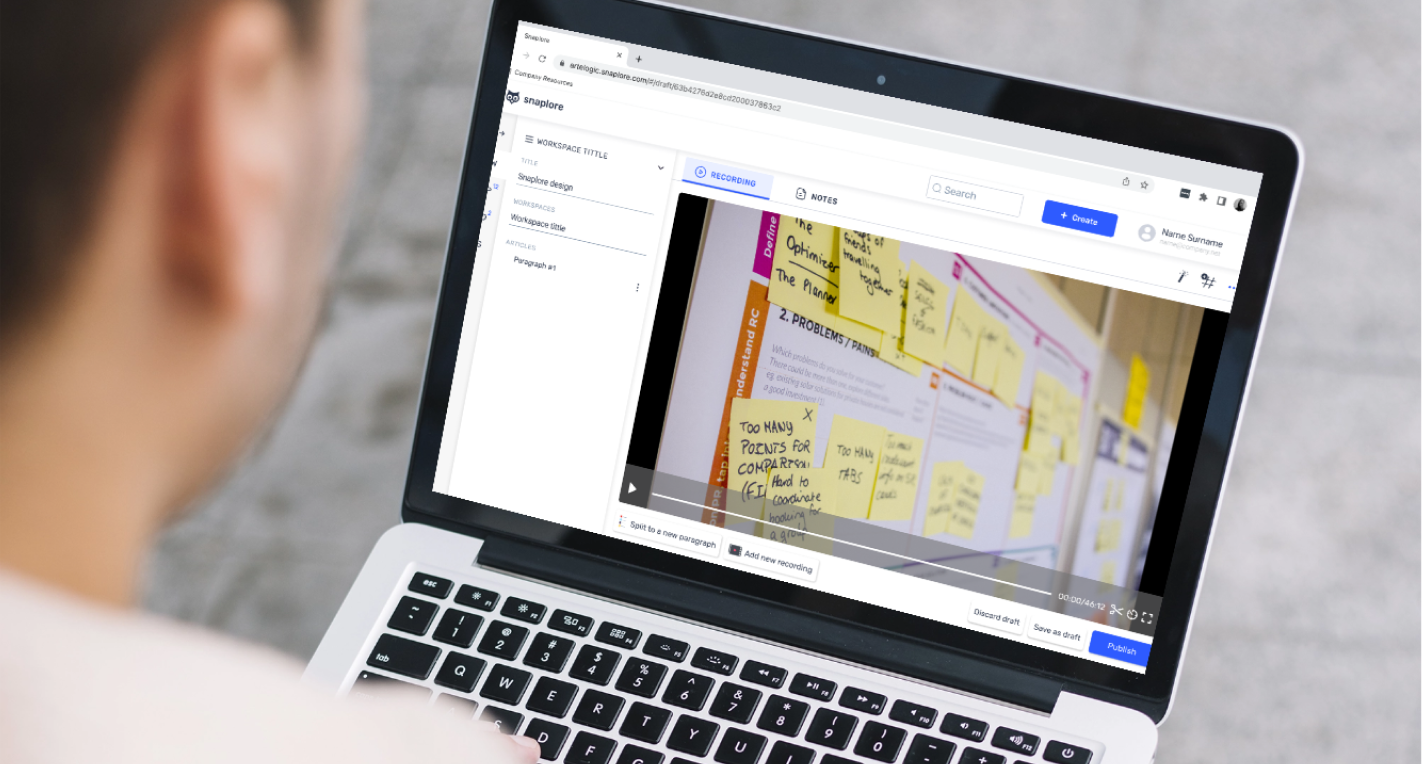 AIRevolutionizing Knowledge Management powered with AISnaplore is unicrew's own product, built and operated in-house. It uses AI to transform how organizations document, structure, and share information, making meetings, training, and project discussions instantly accessible and actionable.Up to 60%Less time on documentation
12Questions
About MCP development
Cost is the first question every time, and the honest answer is not a number: what drives it is not MCP but how many systems you expose, whether they already have clean APIs, and how many write actions the server carries. A write needs a review a read does not.
MCP (Model Context Protocol) is an open standard Anthropic released in late 2024 to give AI models a universal way to connect to external tools, data sources and services. Before MCP, every AI application needed a custom integration for every system it touched, so the same plumbing was rebuilt for each new agent or model. With MCP a system is exposed once, through an MCP server, and any MCP-capable client can read its data and use its tools. It plays roughly the role a standard port plays for hardware: build to the standard once, connect many things.
An MCP server is a service that exposes a system's data and actions to AI clients in the standard MCP format. It publishes capabilities through three primitives: tools (functions the model can call, like creating a ticket or querying an order), resources (data the model can read, like records or documents), and prompts (reusable templates for common tasks). Any MCP-capable client can connect and use them. The server sits between the agent and your real system, which is exactly where authentication, authorization and a record of what was called belong. A well-built MCP server is as much an access-control boundary as an integration.
Because one-off integrations do not scale across AI clients. A bespoke integration binds one agent to one system, and when you add a second agent, swap models or adopt a new AI tool, you rebuild the same plumbing again. An MCP server is built once and works for every MCP-capable client, so your integration spend becomes an asset instead of a recurring cost. We have spent a decade building those point-to-point integrations across PMS, ERP, payment and accounting systems.
We publish no headline figure, because on this work the protocol is not what sets the number, the systems are. Four things drive it: how many systems you want to expose, whether they already have clean APIs or need a data-access layer built first, how many write actions (rather than read-only resources) the server carries, and how strict your access and audit requirements are. Discovery produces the estimate. If what you want is an ongoing team instead of a defined deliverable, that is team extension, billed monthly per team member.
We will not quote a duration before discovery, because the protocol is almost never the long pole. What sets the schedule is the state of the systems underneath: a documented API with a sandbox is quick; an undocumented internal system, or one that needs a data-access layer built first, is not; and the access review adds time whenever the server exposes actions rather than reads. For software projects generally, in our delivery experience, an MVP takes a few weeks when development is supported by AI or 3 to 4 months with a traditional approach, while a complex enterprise system can take over 12 months.
Usually yes, and that is the work we have been doing since 2012. The pattern is the one we used for a European manufacturer, where Shopify storefronts talk to a Microsoft Dynamics ERP through middleware we built, and for a UK hotel booking platform, where a new booking engine sits between the platform and Opera Cloud, Shift4 and IBS Software. An MCP server is that same middleware with a standard interface on the agent side. Where a system has no usable API, we build the access layer first and say so up front.
By treating an MCP server as what it is: a new access path into your systems that needs the same rigor as any production API, plus agent-specific controls on top. Secure MCP design starts with four non-negotiables: OAuth 2.1 authentication on every endpoint, strict input validation on every tool call, defenses against tool poisoning and prompt injection, and hardened deployment behind an API gateway. The specification standardized on OAuth 2.1 for HTTP-based transports as of the June 2025 revision, and OWASP maintains a dedicated MCP Top 10 vulnerability list. What that means for your server is settled in the access model: which client authenticates how, what each one is scoped to, what gets recorded, and which actions are exposed at all, which is the cheapest control of the four. unicrew is ISO 27001:2022 and ISO 9001:2015 certified, renewed through a multi-stage audit with Quay Audit UK.
When one agent talks to one system and no second client is coming. Build the direct integration; a server plus its access model is a cost you do not need yet. It is also the wrong first step when the system you want to expose has no API and no data access, only a user interface: that is a data-access project, and a server sitting on nothing helps nobody. And if you need something in production next week with no room for an access review, we are the wrong firm, because we do not put a server that can take actions in front of an agent before the authentication, scoping and audit design are agreed.
Three things: which systems you want your agents to reach, documentation or API access for those systems, and a technical contact who can grant sandbox access. If you already know the agent use cases you are targeting, that shortens the mapping step; if not, we work it out with you in discovery. From there we come back with a scoped proposal.