
Case study Marketplace
How a Forward Deployed Engineer Helps Pet4Me Keep Shipping with Claude
Following a five-person build phase, one unicrew Forward Deployed Engineer took over the rest of the build and ongoing delivery. Working with Claude, they continue to ship trust, safety, and new features with roughly 80% fewer billed hours per month.
Pet4Me is a free pet adoption and community marketplace in the US, running on a modern Laravel and Nuxt platform on AWS, with trust and safety built into its conversations and listings. unicrew designed and built it, and for more than six months has kept building it with Claude Code, Claude Design, Claude.ai and Claude Cowork.
- Client
- Pet4Me
- Focus
- Marketplace
- Market
 United States
- Engagement
- Forward Deployed Engineer, building with Claude
- Stack
 Claude CodeClaude Design
 Laravel
 Vue
Vue Nuxt+8
Outcome at a glance
What this project delivered, in numbers.
- 5 to 1Delivery team, from the build phase to continuous deliveryone Forward Deployed Engineer working with Claude, the rest of the team moved to other unicrew projects
- ~80%Fewer billed hours per month for Pet4Meaverage, measured from billing, against the five-person build phase
- 6+ monthsIn production on this modelas of September 2026
A platform built to be trusted
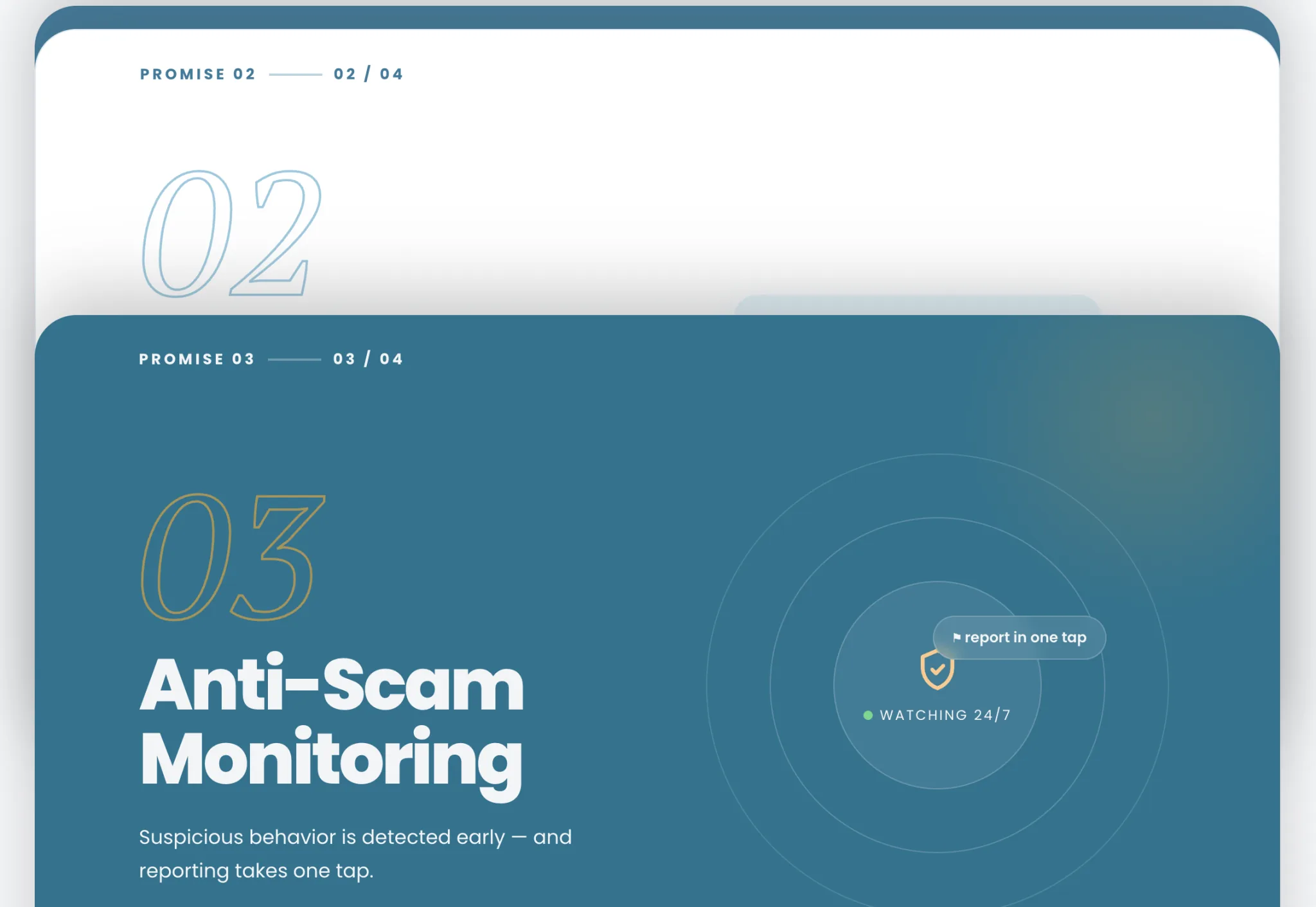
Pet4Me’s own promise is to make pet connections simpler and safer, without subscriptions, fees or gated messaging. People list pets for adoption and rehoming, report lost pets, announce studs and offer local services, and they coordinate through in-app messaging without sharing personal contact details upfront. The platform is monitored, listings are validated automatically before publication, and reporting takes one tap.
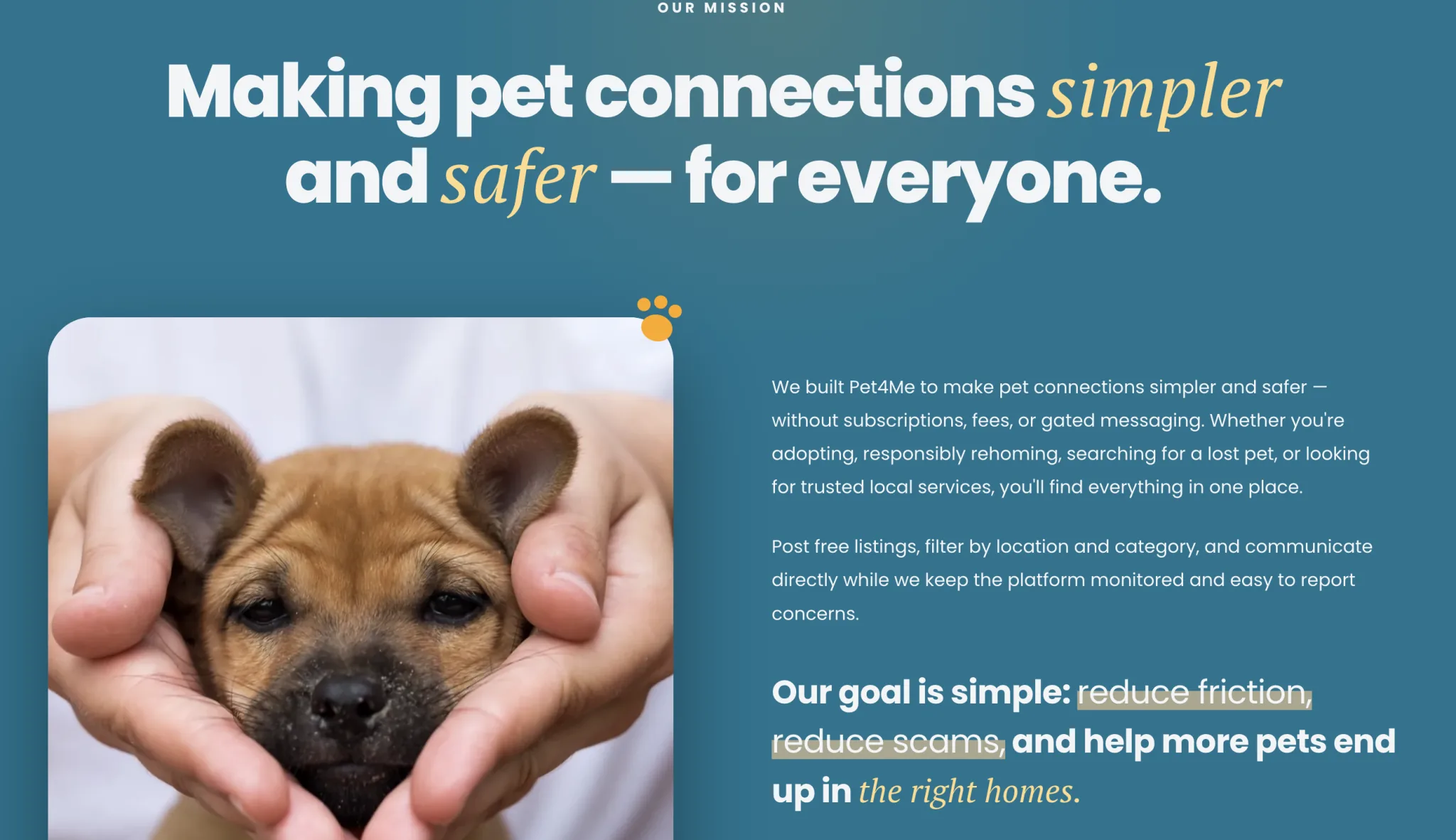
The first part of the story, how unicrew researched, designed and built Pet4Me, covers its journey from concept to a live product at pet4me.org. This part covers the work since then.
Why a Forward Deployed Engineer
After the build phase, Pet4Me needed a different kind of team: one that could complete the platform, harden trust and safety and keep shipping improvements, with design, QA and project management still covered.
By then Pet4Me had a complete design system, a working platform on Laravel and Vue/Nuxt, and its four core feature layers: listings, communication, trust and safety, and pet profiles. A build team and a continuous-delivery team are not the same shape. Two engineers, a QA engineer, a designer and a project manager are sized for building the foundations in parallel. Finishing the platform and shipping new features on top of it goes fastest with someone who holds the full context and ships without hand-offs.
So unicrew proposed a Forward Deployed Engineer: one senior engineer from the build team, embedded in Pet4Me’s delivery, owning it end to end and working directly with the founder, with Claude covering the capacity of design, QA and project management. The other four members of the build team moved on to other unicrew projects. It works here for two reasons: the engineer is senior and carried the full context from the build, and the founder is closely involved, knows exactly what he wants and needed a fast pace, which one engineer working directly with him delivers better than a team with hand-offs.
One engineer, four Claude tools
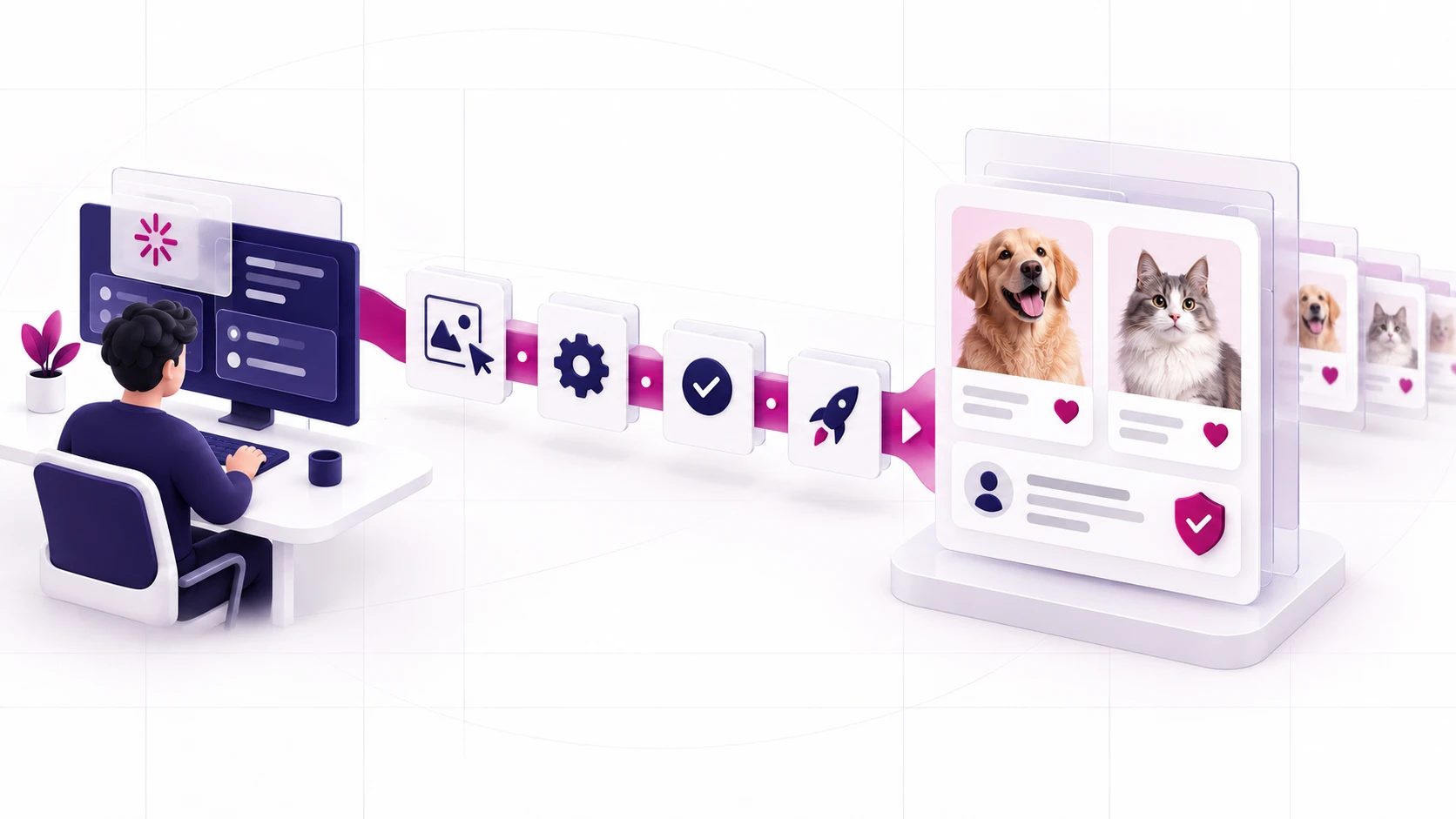
A Forward Deployed Engineer powered by Claude owns the whole loop, from the code to the conversation with the founder, and Claude is what makes that loop fit one person’s week. The founder brings the requirements. The engineer turns them into a PRD, designs the screens, implements the feature, writes the tests and the documentation, and publishes it to staging, where the founder verifies it before it goes live. There is no hand-off to QA, no design ticket waiting for a mockup, no PM writing the status update. Each of those is a step the engineer runs with Claude:
-
Engineering.
Claude Code is the primary development environment. Features are implemented against the existing codebase conventions, tests are written in the same pass, and a second Claude Code pass refactors and optimizes before anything ships.
-
Design.
New screens and components start in Claude Design, fed with the UI kit from the build phase (typography, color tokens, spacing and component states). Claude Design produces layouts that match the established system, Claude Code turns them into production components, and the result is consistent with the screens the original designer produced.
-
Quality.
The test suites written alongside each feature are the automated QA function. Claude Code writes them, the engineer reviews them, and CI runs them. Acceptance happens on staging: the founder verifies every feature there before it is released.
-
Project management.
PRDs, task breakdown, documentation, release notes and client updates are drafted with Claude.ai and Claude Cowork and finalized by the engineer. The founder receives the same cadence of communication he had with a dedicated PM, now straight from the engineer who builds the product.
What keeps this accountable is simple: the engineer reviews what Claude produces and decides what ships, and the founder verifies every feature on staging before release. Claude is used to build Pet4Me: it works on the code, designs and documents, but never touches real user data. The product’s knowledge does not live only with the engineer: it sits in the test suite, the documentation and release notes, and the UI kit.
What shipped
Messaging, security-reviewed with Claude Code
Messaging is where a marketplace earns trust, and Pet4Me’s lets people coordinate without sharing personal contact details upfront. The engineer hardened the messaging layer and ran a security review with Claude Code on every feature before it shipped, working through what an attacker would try and how the code holds up.
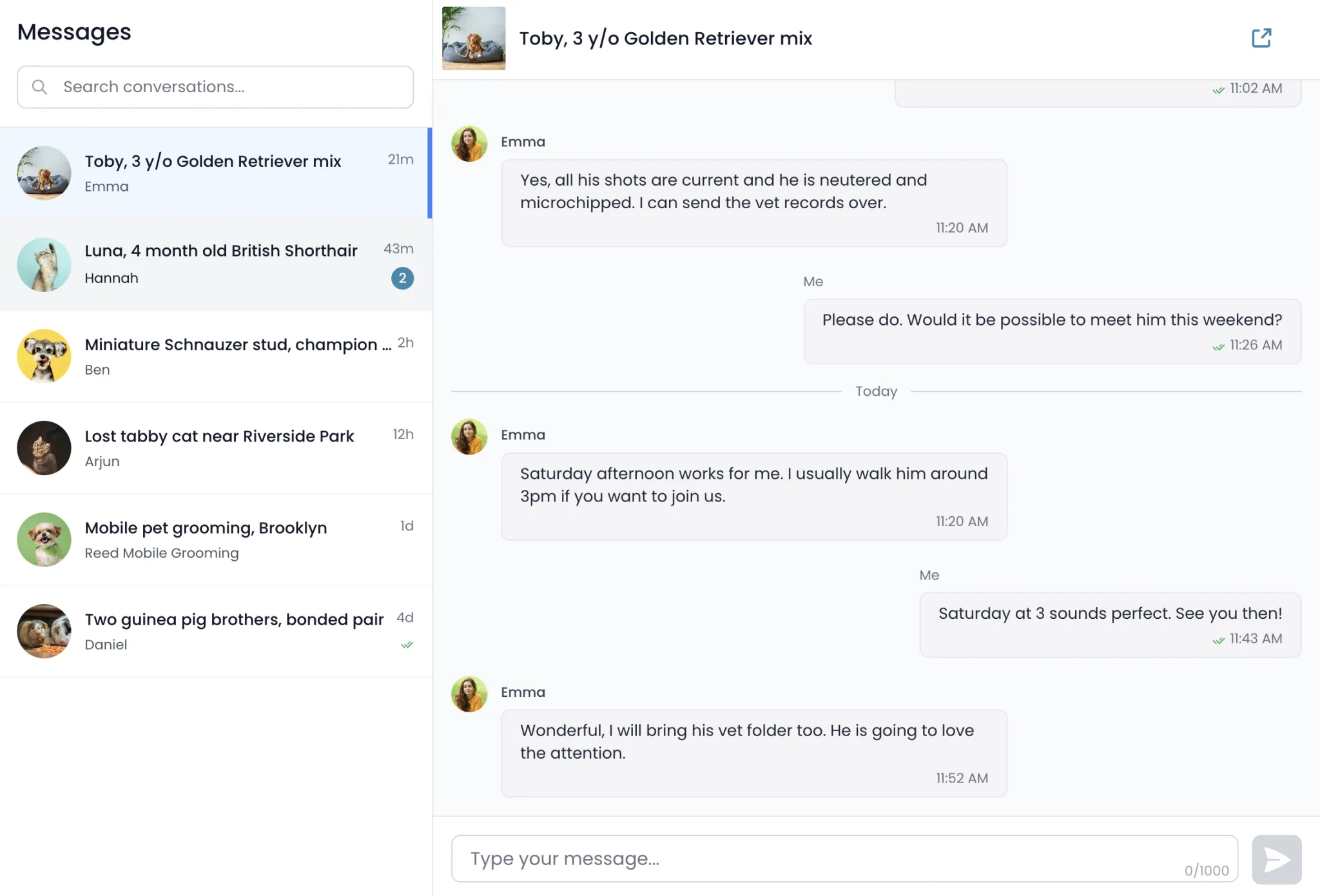
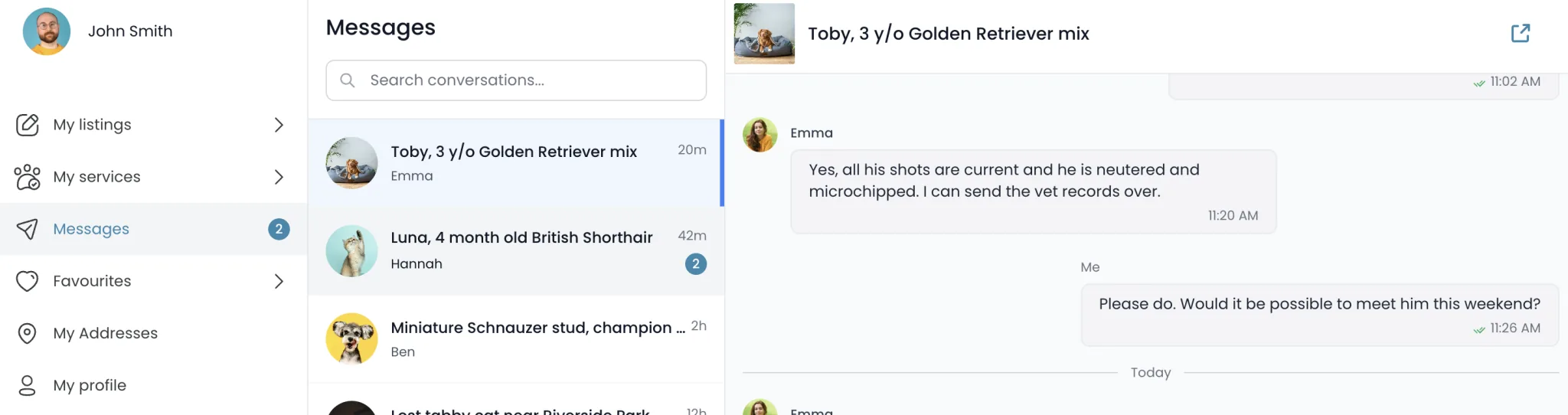
The inbox groups conversations by listing rather than by person, so every thread is anchored to what it is about: an adoption listing, a stud announcement, a lost pet report, a grooming service. Unread counts, delivery status and search across conversations are all there.
A scam warning inside the conversation
Pet scams follow a small number of well-known scripts. In a typical one the seller cannot meet in person, a third party handles delivery, and the buyer is asked to pay fees upfront before the animal ships. Nobody meets the pet. The money leaves. The pet never existed.
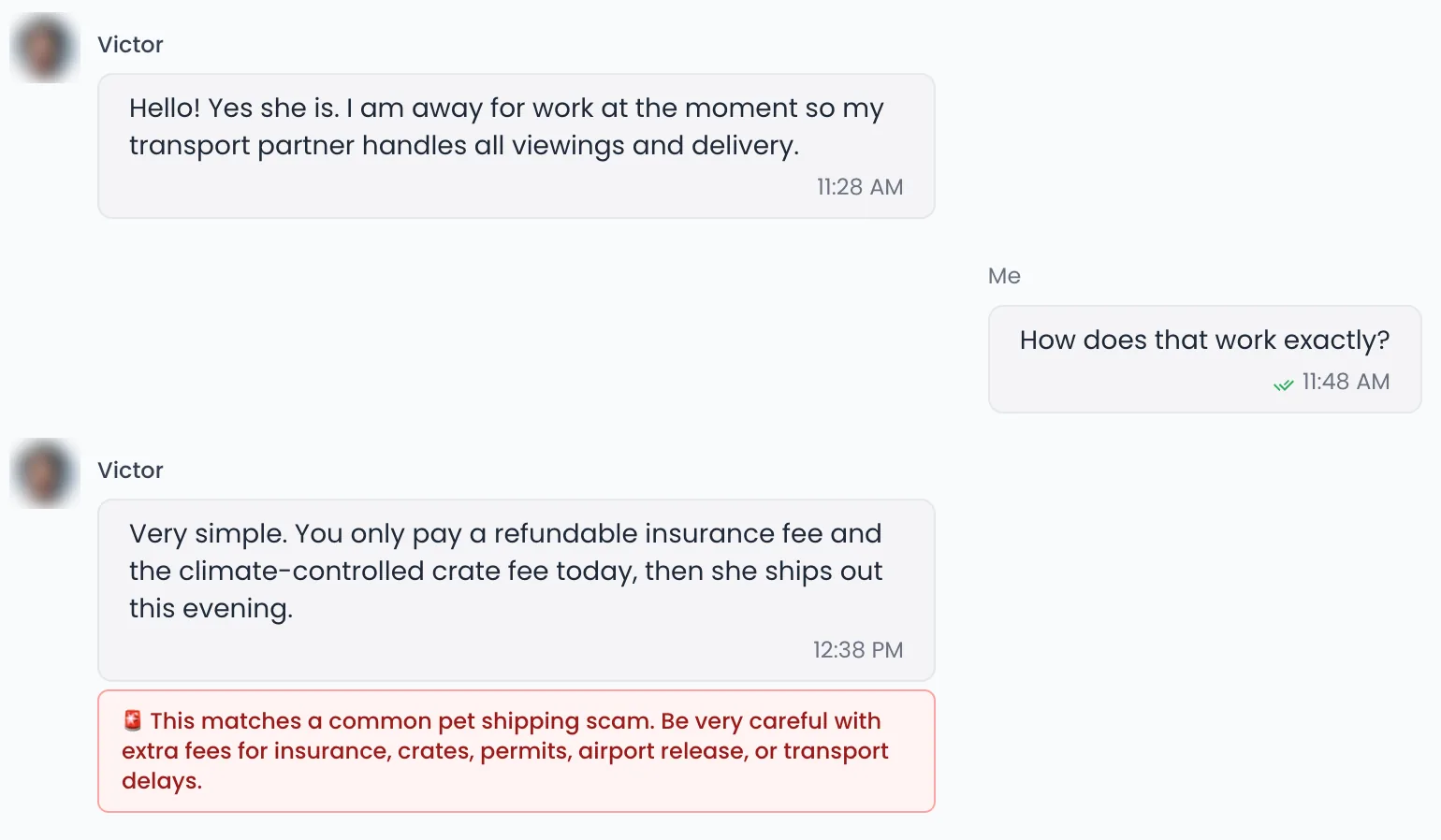
Pet4Me recognizes these scripts and attaches a warning directly under the message, in the thread, at the moment the user reads it. The platform tells them before they reply. The engineer built the detector with Claude Code, using Claude to research the well-known scam scripts it needed to recognize. The detector runs inside Pet4Me’s own platform: Claude helped build it and never sees users’ messages or any other real user data.
Listings screened before they go live
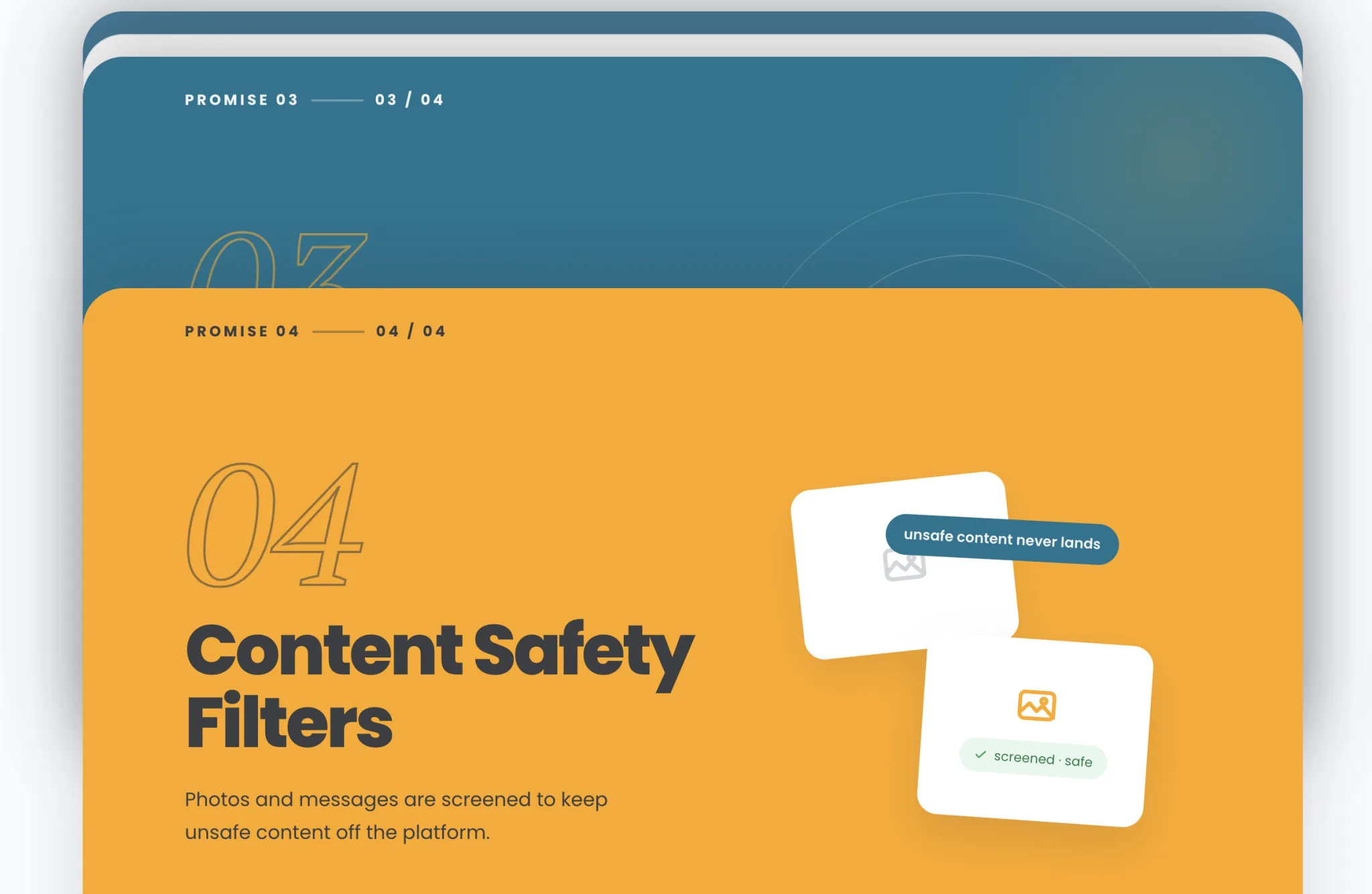
Every listing on Pet4Me, whether adoption, rehoming, stud, lost and found or a service, goes through automatic validation before it goes live. Every uploaded photo is screened for sexual content, drugs, violence, smoking and other categories that have no place on a pet marketplace, and every free-text field for abusive language, threats, violence and other prohibited content. A listing that fails is blocked with a clear message, and the user sees which field failed and why.
The aim is to block prohibited content before publication rather than remove it after a complaint, and user reports remain a second line of review. The first version of these filters shipped with the build, and the engineer extended and hardened them with Claude Code.
The promise cards, designed with Claude Design
Pet4Me’s homepage makes four promises: it is free to use, messaging stays inside the platform, suspicious behavior is detected early, and unsafe content is kept off the platform. The scam warning and listing validation are part of the last two. The cards that present them, with their numbered layout, outlined display numerals and alternating teal and amber panels, were designed in Claude Design from the build-phase UI kit and built with Claude Code, as were the messaging screens above.
SEO for a marketplace that lives on discovery
A free marketplace lives or dies on organic discovery, and the build chose Nuxt in part for its SEO capabilities. With Claude as a reviewer and reference, the engineer applied a full pass of SEO best practices across the platform, from page structure and metadata on listing and category pages to structured data, sitemaps and image optimization. Claude brought the checklist and the reasoning, and the engineer decided what fit Pet4Me and shipped it.
Results
-
Team: from five people to one Forward Deployed Engineer.
The build phase needed two engineers, a QA engineer, a designer and a project manager. Since then, one engineer from that team, working with Claude, has covered all five roles, with no roles backfilled. The other four moved to other unicrew projects.
-
Monthly billed hours: roughly 80% lower than in the build phase.
Average, measured from billing against the five-person build phase, with the platform still being built and new features shipping throughout.
-
Time in production: more than six months.
As of September 2026. The rest of the build was completed in that time.
-
Shipped in that period.
The in-chat scam warning, the hardened listing validation, new screens from the design system and a full SEO pass, all live on pet4me.org.
-
Quality: coverage maintained.
Tests are written alongside every change with Claude Code, every feature is verified by the founder on staging, and new UI stays consistent with the original designer’s work.
-
Transition: no ramp-up.
No new hire: the engineer came from the build team. The project was well documented and well structured, so taking over design, QA and project management needed no onboarding period.
Where a Forward Deployed Engineer fits
Many products reach this point: a finished design system and a working platform, with a roadmap of features still to build. That is where a Forward Deployed Engineer earns its place: one senior engineer who, working with Claude, runs engineering, testing, design and project management. It works when the foundations are in place and the product owner is closely involved and decides quickly, and then it is a fraction of the cost of carrying a full build team through the rest of the roadmap.
Pet4Me’s switch rested on an engineer who already knew the product. Two situations differ from Pet4Me’s. If another team built your product, the first step is a written assessment of what you already run, the way our software maintenance and support engagements start on systems we did not build. A greenfield product with no design system or architecture yet is a different job, and it needs a team built for parallel work.
Most engagements start within two to four weeks, and there is no minimum engagement period. What changes about roles and code review once AI sits inside a team is the subject of our guide to building AI-native development teams. For a different kind of Claude Code work on a live platform, see our CRM API migration for WaiverKing.
07/Technologies
Technologies on this project
 TypeScript
 Pinia
Pinia Axios
Axios MySQL
MySQL Redis
Redis AWS
AWS08/Quick answers
The questions behind the project
What is a Forward Deployed Engineer?
The term comes from Palantir, and AI companies such as Anthropic and OpenAI now use it for engineers who embed with one customer, write production code in that customer's live systems, own the outcome end to end, and carry what they learn back into a product. On Pet4Me, unicrew's engineer is embedded in its delivery, ships production code to its live platform, owns the outcome and works directly with its founder, covering the five roles of the build team. Claude Code, Claude Design, Claude.ai and Claude Cowork are part of that work on Pet4Me's own product: its code, its screens, its tests and its documentation.
What did Claude do on Pet4Me?
Claude Code builds Pet4Me's product with the engineer: it implements features against the existing codebase, writes tests in the same pass, and runs a refactoring and optimization pass before anything ships, and it checked the messaging code for security issues before each release. Claude Design produces new screens from the build-phase UI kit, and Claude.ai and Claude Cowork draft task breakdowns, documentation, release notes and client updates. Claude also helped research the scam patterns the in-chat warning recognizes. The engineer reviews what Claude produces and decides what ships, and the founder verifies each feature on staging.
Did Claude see Pet4Me's user data?
No. Claude never saw any real user data. It worked with the engineer on the code, the design and the documentation, and the screens on this page use demo data.
Why one engineer after the build phase?
Fit. A five-person team is sized for building a platform's foundations in parallel. Once those were in place, the rest of the roadmap was feature work that one engineer with full context could ship faster, working directly with a founder who knew what he wanted and needed a fast pace. One Forward Deployed Engineer from the build team, working with Claude, has covered the same five roles for more than six months at roughly 80% fewer billed hours a month, and started with the full project context already in hand. The other four team members moved to other unicrew projects.
How were design and QA covered without a designer or a QA engineer?
Claude Design is fed the UI kit from the build phase: typography, color tokens, spacing and component states. It produces new layouts within that system, and Claude Code builds them as production components, which is how the promise cards and the messaging UI on this page were made. Automated QA is the test suite written alongside each feature: Claude Code writes it, the engineer reviews it, and CI runs it. Acceptance happens on staging, where the founder verifies every feature before it is released.
What happens first if another team built our product?
A written assessment of what you already run, the same way unicrew's maintenance and support work starts on systems it did not build. Pet4Me's switch rested on an engineer who had helped build the product, so on a product another team built, that knowledge has to be built before anything else.
Is this model right for my product?
It fits when the design system and architecture are in place and the product owner is closely involved: finishing a build, shipping a feature roadmap on top of it, growing a live product. It fits less well for a greenfield product with no foundations. If you are not sure, that is a short conversation we are happy to have.