
Automotive software development for the fleet, the forecourt and the workshop.
We build the software around the vehicle: field inspection and condition capture, service and parts history, dealer booking and aftersales, and the integrations that connect them to the DMS, shop CRM and warehouse systems already in place.
Where the software sits decides more about its cost and its lifespan than the framework it is written in. We will say which of the three you are actually buying on the first call, including when the answer is a different kind of supplier.
- 120+Projects delivered across 12 countries since 2012
- 100+Senior in-house engineers, six countries
- 2 to 4 weeksTypical time from signature to start
- ISTQBCertified QA inside every sprint
- ISO 27001Certified security practice, audited by Quay Audit UK
01Overview
Where automotive software sits, and how long it has to last
Automotive software development is the building, integration and modernization of the systems around the vehicle rather than inside it: field inspection and condition capture, fleet and telematics feeds, service and parts history, dealer booking and aftersales, and the integrations into the DMS, shop CRM and warehouse systems a business already runs. unicrew (formerly Artelogic) publishes two named-client builds in automotive: the vehicle inspection platform for Jack Cooper and Service Intelligence, a vehicle-maintenance product we rebuilt for eAutoClub from desktop tool to multitenant cloud SaaS.
- In the field, at the vehicleWork done standing next to a car, usually somewhere with bad signal and no desk.
- Inspection and condition capture
- Damage marking and photos
- Offline-tolerant sync
- On the fleet sideThe vehicle as an asset moving through a process, and the record of who touched it.
- Assignment and scheduling
- Telematics and event feeds
- Audit and chain of custody
- On the dealer and aftersales deskEverything between the customer and the workshop, from the booking to the invoice.
- Service booking
- Customer contact and CRM
- Invoicing and payments
- Under all of itThe unglamorous half, and the half that decides what the system costs in year six.
- DMS and shop CRM integration
- Service and parts history
- Reporting and modernization
02Where it sits
In the vehicle, on the fleet, or on the forecourt: which one are you buying?
The argument people have is about the stack. The decision that sets the budget, the supplier and the lifespan is where the software sits relative to the car. Five placements below, and what you are actually buying if you commit to one. The first row is the one to buy from someone else.
| Where the software sits | What that decides | What you are actually buying |
|---|---|---|
| Inside the vehicle: ECU, head unit, firmware over the air | A homologation and safety cycle measured in years | An automotive tier supplier with the functional-safety process to match. Once the data has left the car, ingesting and reporting on it is an ordinary integration job, and that is the half we build.Platform development and integrationOr book a meeting |
| In the field, next to the vehicle | Paper inspections, disputed damage, no evidence | A cross-platform app an inspector can work from standing at the car: photos attached to the record, damage marked on a vehicle diagram, pushed to one web platform behind it.How we did this for Jack CooperOr book a meeting |
| In the workshop and the parts room | Service recommendations the customer does not believe | Condition-based service intelligence over the shop’s own history of parts, lubricants and fluids, delivered through the CRM and warehouse systems it already runs.How we did this for eAutoClubOr book a meeting |
| On the dealer’s desk and the customer’s phone | Booking and aftersales are whatever the DMS vendor shipped | A custom layer beside the DMS for booking, aftersales contact and invoicing, kept at the edge so a vendor upgrade does not take it out.How we build custom systemsOr book a meeting |
| The system that already runs all of it | A framework out of support and one person who understands it | Modernization module by module against an unchanged data model, so the business keeps running while the stack moves underneath it.Legacy software modernizationOr book a meeting |
03Solutions
What we build on the fleet, dealer and aftersales side
Six kinds of work, each drawn from a build we have shipped in this sector, and each naming the situation it is right for.
A cross-platform app for inspectors working next to the vehicle: assigned inspections, arrival records, photos attached to the inspection, damage marked on a vehicle diagram, pushed to the server over the air.
- Right when
- Your evidence is photos in someone's phone
Every part, lubricant and fluid tracked through its life on a given vehicle, so a recommendation can be justified from that car's condition and usage rather than a mileage table.
- Right when
- Customers argue with the recommendation
The desk side: appointments and service workflows, the contact a customer gets between visits, and invoicing that reconciles against the job rather than beside it.
- Right when
- The workflow is three tools and a phone
The middleware that bridges your product and the platforms your customers run: a needs assessment first, then the APIs each platform exposes, then connectors with explicit validation and synchronization rules.
- Right when
- Every customer runs something different
Event feeds off vehicles and field devices landed in one operational store, so assignment, audit and chain-of-custody questions have an answer that does not need a phone call.
- Right when
- The answer lives in three systems
Desktop to multitenant cloud, or an out-of-support framework moved forward module by module against an unchanged data model, with the operation running throughout.
- Right when
- The stack is older than the team
04Stack
What these systems are actually written in
Our automotive work is .NET on the server with a web or cross-platform mobile client in front of it, which is what these systems tend to be when they are still running a decade later. Integrating with something else? Send your integration list with the enquiry and we will tell you what is realistic before you commit to anything.
 JavaScript
 TypeScript
 Angular
 Vue.js
 Xamarin
 iOS
iOS Android
 ASP.NET
- .NET
 C#
C#
 MS SQL
A dealer or fleet system will outlive its framework's support and its original team. So the decisions that matter are the dull ones: whether the data model survives a change of supplier, whether the integrations are documented, whether a new engineer can build it on day one. That is worth a week the demo will never show.
 Oleksandr TrofimovCTO & Co-Founder, unicrew
05Proof
What our automotive work has on the record
Two named clients with published builds, and two more verified Clutch reviews describing vehicle work. Every figure below is already published, none of it inferred from the write-up.
- Vehicle inspection, at national scaleFor Jack Cooper, one of the largest US automotive-logistics providers, we built the inspection platform: an iOS and Android field app over a web platform holding every data flow in one database. unicrew's software supports inventory and inspections across well over 9 million vehicles for OEMs, car rental companies, lending institutions, dealerships and auctions. ASP.NET, JavaScript and Xamarin, with Angular in the front end.9M+vehicles the platform supports
- A desktop product rebuilt as multitenant SaaSFor eAutoClub we rebuilt Service Intelligence, which works out what a vehicle needs from its own condition and history rather than formal metrics: the multitenant web application, the thin client syncing data off the shop's machines, and the integration layer bridging it to the CRM and warehouse platforms repair shops run. Onboarding and supporting new clients took significantly less time.
- Two more automotive clients on the recordLogic Screen Solutions, an automotive-aftermarket specialist in Karlsruhe, staffed a project database build with us. Its CEO writes: "Close deadlines have always been met so far." Mover Technologies' founder describes a manufacturer buyback app we built: "Our app helps inspectors evaluate minor damages to determine whether vehicles qualify to eventually be pushed to auctions and sold." Both were written under our former Artelogic brand.2verified reviews describing vehicle work
06Client voices
What clients on vehicle and aftermarket software say
They always seem to have a suitable developer on standby when we require an additional skillset and they always respond very quickly and help to work out a solution if e.g. the project requirements are suddenly changing.
I’m consistently humbled by Artelogic’s performance. Projects of this caliber are hard to outsource. Teams come and go, and this type of work almost never gets done. They’ve kept their priorities straight as they’ve grown and always deliver.
07Case studies
The automotive platforms we publish
Two builds, two different problems: one replacing paper in the field for a national automotive-logistics provider, one moving a maintenance product off the desktop and into multitenant cloud.
See all case studies AutomotiveJack Cooper: Software for automotiveA sophisticated vehicle inspection tool for one of the biggest transportation providers.
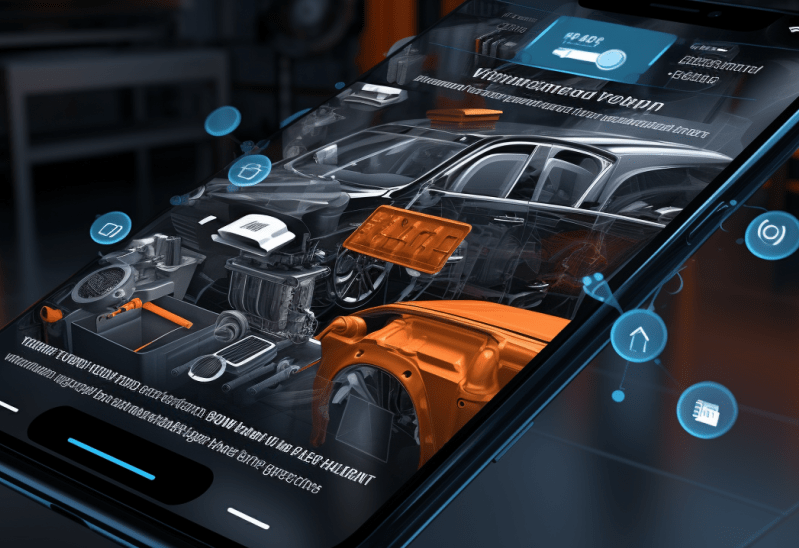 AutomotiveService Intelligence: App for vehicle maintenanceunicrew helped eAutoClub launch Service Intelligence, an app that works out what service a vehicle needs from how it is actually used.
08Questions
Automotive software development: frequently asked questions
In-vehicle software (ECU, head unit, firmware over the air) runs a homologation and safety cycle measured in years and belongs with an automotive tier supplier. Fleet-side software (inspection, telematics, assignment, audit) is a normal mobile and web build with a hard offline requirement. Dealer and aftersales software (booking, CRM, service history, invoicing) is a custom layer beside the DMS, not a replacement. Most companies are buying one of the three and describing it as all three.
No. unicrew builds the software around the vehicle rather than inside it: field applications, fleet and dealer platforms, service and parts data, and the integrations between them. ECU, head-unit and firmware work carries functional-safety and homologation obligations that belong with an automotive tier supplier, and we say so on the first call rather than take the work.
Yes, and usually the largest part of the work. For eAutoClub we built the integration layer bridging Service Intelligence to the CRM and warehouse management systems repair shops run: a needs assessment on what data had to be shared, then the APIs each platform exposes, then a plan covering the data flow, the synchronization points and the validation and transformation rules. Where a platform exposes no usable API, that layer is the first thing we build.
We work on three engagement models: time and materials billed hourly and quoted per project, fixed price quoted per project against an agreed outcome, and team extension billed monthly per team member. Which fits depends on how firm the scope is, and we recommend one after discovery. We do not publish a price band: one DMS integration and a national inspection platform are too far apart for a number to help. Fixed-scope work carries a post-launch warranty, its length agreed in the contract.
Most engagements start within two to four weeks of signature. The constraint on duration is usually the vehicle data, not the engineering: each car brand carries its own inspection requirements, and on the Jack Cooper platform adding a new client into the operational databases could previously take up to two years, which is what that system was built to make configurable. We sequence so the highest-pain workflow ships first, in front of inspectors or service staff, before the rest of the scope is committed.
It is the normal end of an automotive system's life, and it arrives sooner than the business expects. We move the system module by module against an unchanged data model rather than rewriting it, which is how a desktop product becomes a multitenant cloud application without a cutover weekend. What makes that cheap or expensive was decided years earlier, in the data model and the documentation.
Contracts and NDAs are signed before anyone starts, and we work from least-privilege access agreed with your technical contact, read-only wherever the work allows. Delivery runs with ISTQB-certified QA engineers, and unicrew holds ISO 27001:2022 and ISO 9001:2015, renewed through a multi-stage audit with Quay Audit UK. We do not hold SOC 2. A vehicle platform accumulates personal data nobody planned for: inspector locations, owner contact details, a service history tied to a VIN. GDPR covers all of it.
Tell us where the software has to sit, and get a straight answer on what to build
A call with a senior engineer who has shipped field-inspection and dealer-side work, not a sales qualifier. You leave with an opinion on placement, sequence, and what the thing costs to keep alive.
What happens after you contact us
- We reply within one business dayA senior engineer reads your message, not a bot.
- A call about the vehicle and the deskWhat you run, where the software has to sit, and who has to sign off.
- Placement and engagement model, in writingBuild, integrate or modernize, priced as time and materials, fixed price, or team extension.
- NDA, then discoveryMost engagements start within two to four weeks of signature.