
Whisper speech-to-text engineering
Whisper made accurate transcription cheap. What it did not solve is everything after the transcript: who said which sentence, timing you can rely on, cost at volume, and what happens when the audio is bad.
01Capabilities
Four shapes of work that begin with a transcript
Whisper is a speech recognition model, not a product. The work is the pipeline around it: splitting long audio, attributing speakers, coping with recordings that are nothing like a podcast, and turning the text into something a system can act on. That last step is usually where the value sits, and it is AI and machine learning development rather than transcription.
- Meetings
Calls and meetings as knowledge, not text
Recordings turned into something searchable rather than a wall of words. Snaplore, below, is this shape, and it is our own product. So is Talkmetry, a revenue-generating call-intelligence product for HubSpot that unicrew owns and runs, built on GPT models and AssemblyAI. Both are the same problem seen from two ends.
- Audio
Pipelines that survive real recordings
Conference-room microphones, phone lines, crosstalk, two people on one channel, and forty minutes of silence. Handling these is engineering work rather than model work: splitting the file, detecting where speech actually is, and having a rule for what to do when the model is unsure.
- Archives
A backlog of audio made searchable once
Existing recordings processed in bulk, indexed, and left searchable. This is the cheapest Whisper workload there is, because nothing is waiting on an answer and you can size the hardware for throughput rather than for response time. It is also the easiest one to cost accurately before you start.
- Field
People speaking instead of typing
Drivers, technicians and warehouse staff dictating, as in our logistics and transportation work. The hard parts are the words specific to your business and what happens with no signal, not the model. We build these under an ISO 27001:2022 certified information-security management system.
02Case studies
A product we own, running on this model
Snaplore is a revenue-generating AI product with active users that unicrew owns and runs, in AI and productivity, built on Whisper and GPT models.
See all case studies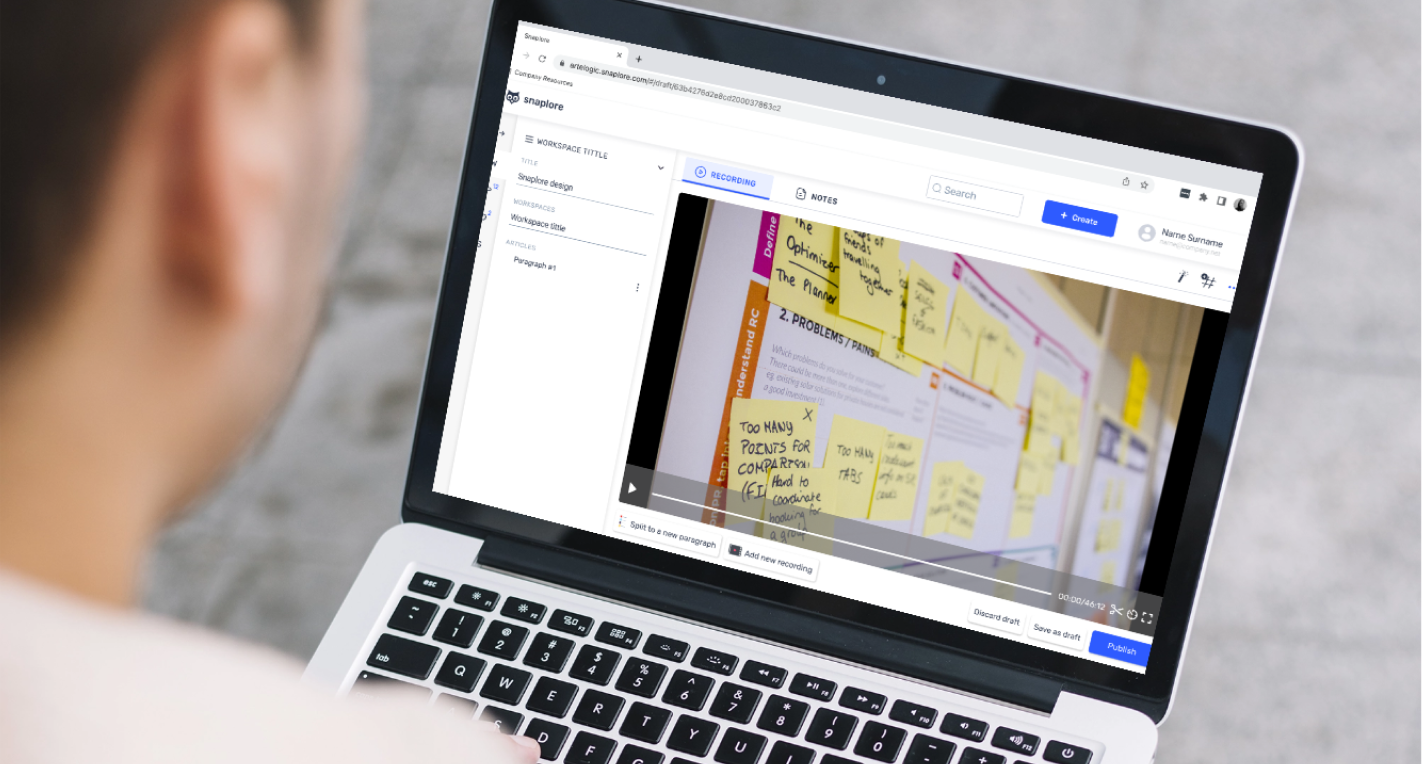
03Fit
Choosing between Whisper and a hosted API
Whisper is our default for recorded audio, for more than one language, and for anything that has to stay inside your own network. It is a poor fit for live captioning, and it does not answer several questions people assume it answers. Each row below matches the audio to the setup that fits, from Whisper on your own servers to a live-audio service or a hosted API.
| Your situation | What we recommend |
|---|---|
| Recorded audio, processed after the fact, at a volume worth optimising | Use WhisperAccuracy is competitive, the model weights are open, and work that nobody is waiting on is cheap to run. |
| Audio that is not allowed to leave your own network | Run it yourselfThis is the strongest reason to choose Whisper that has nothing to do with accuracy, and it comes up constantly in healthcare. |
| Live captions, or a voice assistant that has to answer in under a second | A live-audio serviceUse a service built for live audio. Whisper reads a window of sound at a time, so going live means cutting the audio up, which costs you delay and broken words at every seam. |
| Speaker labels are a product feature rather than a nice-to-have | Budget separatelyWhisper does not provide them. Telling voices apart is a second model and a second accuracy problem, so either pay for that layer or pick a vendor whose product already includes it. |
| Low volume, no appetite for servers, no rule about where the data sits | Use a hosted APISkip the hardware entirely. Standing up your own transcription for a handful of files a day is a hobby, not a project, and a hosted API already does the job. |
| What you actually want is meaning, not the words themselves | Different pageThe transcript is only the input. Summaries, extraction and routing come from a language model, so see ChatGPT API and Anthropic Claude. |
Scope
What we own on Whisper work is the measured accuracy on your own audio rather than on a benchmark, the cost per hour of recording, the behaviour when a file is unusable, and whether the pipeline still runs when somebody uploads four hours at once. unicrew has been building systems like this since 2012, with 100+ senior in-house engineers across six countries, under an ISO 27001:2022 certified information-security management system. Where a hosted service is the better answer, that is the route we recommend.
04Delivery
Measure first, harden second, add the value last
The first step is the one people skip, and skipping it is why transcription projects get judged on feelings instead of numbers.
- Build a reference set from your own audioThirty to fifty recordings that represent your worst cases, corrected by hand, kept as the yardstick. Without one there is no way to tell whether a change helped, and every accuracy discussion turns into an argument between two opinions.
- Decide hosted or self-hosted on the numbersHours of audio per month, how long a result can take, and whether the data is allowed to leave your estate. Those three answers decide the deployment, and only one of them is a technical question at all.
- Harden the pipeline before improving accuracySplitting long files, retries, safe re-processing, and a queue that survives a bad upload. Most production incidents in transcription systems are file-handling bugs rather than model failures, and they are far cheaper to fix first.
- Build the step that creates the valueSummaries, extraction, search, routing. This is where the AI integration work happens, and it needs its own test set, because a fluent summary of the wrong meeting is worse than no summary at all. It goes through the same QA and test automation practice we use on our own builds.
05Stack
The rest of the pipeline around the model
What a transcription system is actually made of, beyond the model that reads the audio.



06Questions
Asked on the first call about audio
The six that come up most, answered the way we would answer them live.
Yes, and on audio work it often makes sense, because your people hold the vocabulary. Our engineers own the accuracy target from the start, because a pipeline with no measured error rate on your own recordings is not finished. An architect outside the delivery team reviews the design, and the work goes through the same QA practice as our own projects. Team extension is managed teams.
Volume, delay and where the data may sit decide it. Commercial services hand you speaker labels, live streaming and a support contract with no infrastructure work, which is worth a great deal at low volume. Whisper wins when you process a lot of audio, when recordings must stay inside your own network, or when you need the model pinned so a vendor cannot change it under you.
Yes, and that is one of the main reasons to choose it. The model weights are openly available, the smaller versions run on an ordinary processor, and the large ones want a graphics card. For regulated audio this is often the whole argument: nothing leaves your network, and you can prove it in a review. We size the deployment from your hours per month.
Unknown until we measure it, and anyone quoting a percentage before hearing your audio is guessing. Clean audio with one speaker in a common language transcribes very well. Accents, crosstalk, poor microphones and specialist words all degrade it. Whisper has one habit worth knowing about: on silence or noise it can produce fluent text that nobody said, so we test for that explicitly.
A scoping call with an engineer, and we ask for a few of your hardest recordings beforehand, because an hour with real audio settles questions a week of meetings will not. You get back a written read on the accuracy to expect, the cost profile, and what we would build first. Most engagements start within two to four weeks, so the answer on the call will be specific to your audio.
Three shapes. Time and materials is billed hourly and quoted per project, which suits work still moving. Fixed price is outcome based, and we offer it once the first read is done, because a fixed number on audio nobody has listened to is a guess with a contract around it. Team extension is billed monthly per engineer. The rate depends on the seniority mix the work needs, so it is quoted rather than listed.
Turning audio into something your systems can use?
Send us a handful of your genuinely difficult recordings and tell us what you need out of them. You will get an engineer's read on accuracy, cost per hour and where the pipeline will break, and on running Whisper yourself or using a hosted service.