Advantages And Disadvantages Of Tailor-made Software
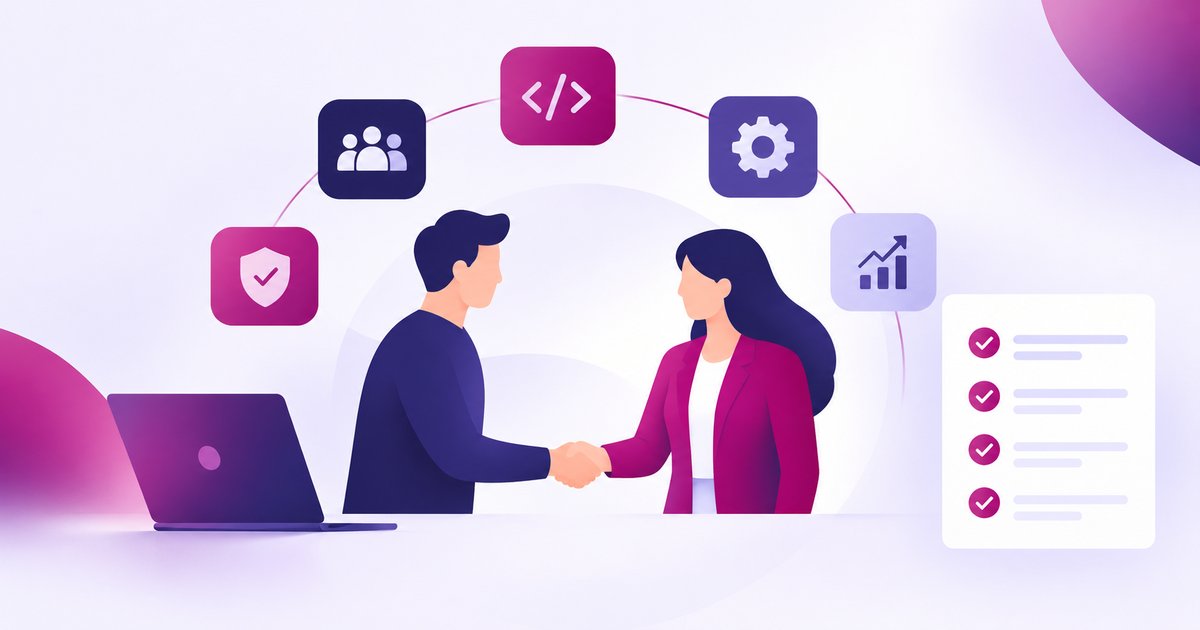
Custom or tailor-made software is about a personalized approach to the implementation of a product you as an entrepreneur have in mind

Volodymyr KhitsiakSenior Marketing Manager
Published
Share

Tailor-made software (also called custom or bespoke software) is a product written at least partially from scratch by a hired development company or team, with custom functions that depend on the client’s needs. Its main advantages are development focused on your specific tasks, more control over the process, open source code you can support and change yourself, scalability, no extra expenses when adding modules, step-by-step documentation, and the ability to differentiate in the market. Its main disadvantages are longer development time, the risk that the team lacks the qualifications you need, and higher investment at the initial stage.
Faced with the need for software to improve the performance of your enterprise or company, the first right thing to do is to evaluate the pros and cons of each approach to solving a particular problem. This article gives a brief overview of tailor-made software development to help you make a final decision.
Tailor-made software: advantages and disadvantages
What is tailor-made software?
Custom or tailor-made software solutions are all about a fully personalized approach to building a certain product you, as an entrepreneur, or your company have in mind. This type of contracted development means you translate your vision of the result precisely and define detailed requirements to be met as closely as possible. It usually takes detailed joint planning of the project stages and a thorough discussion of the custom requirements with the client.
There are many examples of tailor-made software solutions. These can be anything from programs that register hospital patients or goods in a store to web applications created to store data about students in schools or customers in a restaurant.
What does “tailor-made” actually mean?
Basically, it means the software was at least partially written from scratch by a hired development company or team. Unlike off-the-shelf production, bespoke software includes custom functions depending on the needs of the client.
What are the types of custom software?
Generally, there are four types of customized software:
- General-purpose software
- Entertainment software
- Special-purpose software
- Professional software
There is also a classification by the degree to which a software solution is really custom:
- Fully custom-made. As the name suggests, these are solutions made completely from scratch. This is a relatively rare type of software, as using already existing libraries as the foundation for the app is usually far more beneficial. Few software projects have such an unusual design that the entire thing needs to be created from the ground up.
- Semi-custom. The most common of the development methodologies, with most custom apps falling into this category. This type of solution is developed using some already existing software to make the process faster and avoid reinventing the wheel. By using pre-developed libraries, the development team can focus on other, more important aspects of the project.
- Systems of custom software. Some companies use software developed by other organizations with business requirements similar to their own. This is somewhat similar to the previous type, except the development team uses concrete apps and packaged software as the basis for their work.
When do you need tailor-made software?
Custom software solutions can make a firm foundation for your up-and-coming business or new big project, one that reflects your major business attributes in an authentic manner and stands as an original build among the market’s numerous competitors. You may feel the need for custom software development when there are grand corporate ambitions to fulfill, along with a sufficient budget to fuel the process.
To really understand whether bespoke software will be advantageous for your business model, you need to not just analyze custom-made web development, but also compare it to the off-the-shelf variant.
What are the advantages of tailor-made software?
There are pretty good reasons why so many companies go for tailored software. Here are a few:
- Developing for you. By focusing on specific tasks for a given company or enterprise, developers create web software or a mobile app that includes specific solutions for those tasks. Before development begins, the software development company or team you work with discusses the features and functionality you want your app to have.
- Process management. During custom software development, you can get information about the stage of the project any time you want to make corrections or additions. This gives you a higher degree of control over the development process and confidence that the software you get in the end is what you paid for.
- Support and maintenance. You are not dependent on a specific vendor or product owner as you would be with off-the-shelf software. Your developers can provide quality support for the embedded system because the source code of all system components is open. You can supplement and even change the system without involving the developer company.
- Scalability. It lets you add components to your software technology at the right time. Tailor-made software can help a company improve functionality and performance by eliminating the purchase of new products and devices.
- No extra expenses. Cost estimates are made separately as modules are added to the system. The risk of needlessly spending a significant amount of money is minimal, and you can accommodate a new requirement at a reasonable cost.
- Step-by-step documentation. User and production documentation is released throughout the whole process, which makes the process convenient to control.
- Ability to differentiate in the market. The uniqueness of your bespoke software lets you solve common market tasks in an individual way, which ultimately increases productivity and sales for the business.
As you can see, there are plenty of reasons to choose custom-made software. However, this type of development service is not without its disadvantages.
What are the disadvantages of tailor-made software?
- Time. Creating custom software can be time-consuming. Since the software is created from scratch, it can take more time than adjusting an already finished product.
- The risk of incompetence. Since custom software is not standardized, the burden of changing and correcting falls entirely on the company you work with. There is always a risk that they lack the qualifications and extensive experience required to develop a software solution that suits your needs.
- Higher investments at the initial stage. Both the individual approach and expertise come at a price, so you will have to invest more money than if you purchased a finished product.
All in all, compared with a ready-made digital product, a customized software solution will most likely cost you more and require more of your or your managers’ time for planning and negotiations, yet it grants you practically unlimited opportunities to build and customize digital assets, along with an authenticity status.
Off-the-shelf software: advantages and disadvantages
What is off-the-shelf software?
Off-the-shelf software describes ready-made software solutions you can simply buy on the market. Such products usually come in packages with different pricing and tariffs to choose from, offering different layers of compatibility, range of capabilities, or customer support. They are also designed to be fast to deploy and to fit easily into certain existing systems without much customization and configuration.
When do you need off-the-shelf software?
If you own a small to mid-scale business, or wish to enter the commercial arena with a more or less defined budget at hand, then a ready-made product may be your most reasonable choice for achieving these goals. You can choose from numerous options just the thing that fits your business or promotion ideology, easily purchase it, and continue your business journey with an owned operational product that carries your or your business’s name.
Having a package of standard solutions for common tasks, as with customized products, obviously has its advantages and disadvantages.
What are the advantages of off-the-shelf software?
- Availability. Ready-made software of various qualities is always available for everyone who can afford it. Just buy the thing, and it is done.
- Reliability. This applies to software that has already been in use for some time. You can expect reliable performance from such solutions, and they are likely to have no issues with the trickier parts of the app that some custom developers might struggle with (like user interfaces).
- Good documentation. Usually the system is well documented, so you always know what to expect.
What are the disadvantages of off-the-shelf software?
- Poor scalability. A step away from the logic of the purchased system’s operation can lead to an insoluble problem, or to significant financial and/or time losses.
- Poor support. Your developers will not be able to provide quality support for the embedded system because the source code of most of the system components is closed.
- Unchanged documentation. The documentation does not reflect the changes that were made during implementation and that were not tested at the same enterprise.
- Not industry-specific. The software is not tested in the same conditions.
- Limited control. The vendor’s plans for the future may not always align with your own.
With all the pros and cons considered, compared with custom solutions, ready-made products can be quite a bit cheaper, more accessible in terms of implementing the necessary asset, and less resource-demanding as a whole, yet it would be difficult to find something really unique without giving it your own authentic corporate or private business input.
What can you buy off the shelf?
The range of purposes of ready-made solutions spans the area of digital services identical to that which custom solutions cover, with many IT business and technical iterations. Apart from CSMs, CRMs, and eCommerce websites, you can also purchase off-the-shelf:
- Automated invoicing solutions
- Bug and code issue tracking products
- Completely built official websites
- Business efficiency-boosting tools
- Affordable, templated corporate or private landings
Custom software development
An authentic business is worth its weight in gold. Your brand standing out among the masses can be your most powerful competitive advantage and road-to-success paver in the long run. That is possible, however, only with a professional, consistent approach, so make sure to only work with and employ top-notch contractors to do the custom work. The overall success of your future solution depends directly on their level of expertise.
Summary
What do you strive for the most? Authenticity and high status, or practical use with reasonable cost boundaries? Your ultimate choice may depend on a number of decisive factors, from a budget and the project’s marketing ambitions to raw practicality and a personal approach to doing and building a business.
It is difficult to divide the two major software development approaches by definite directional terms, but if we must, we would define them as reliability and uniqueness.
Conclusion
Pre-developed software is the more reliable option, so if reliability is what you are looking for in your business, you might want to choose off-the-shelf software.
However, if you want your customer service app to have that one unusual feature that gives it a competitive advantage over its rivals, you are better off going for custom software development services.