Top Logistics API For The Supply Chain Industry

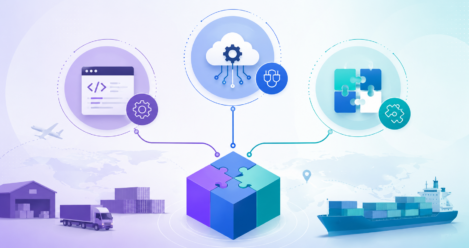
Logistics API (application programming interface) is a set of ready-made classes, functions, procedures, and structures that can be employed within third-party solutions. In particular, APIs are used to interconnect the performance of multiple apps in a centralized system. 

This highly efficient solution brings benefits to logistics developers, end system users, and clients on the other side of the system. But let’s have a bit more detailed look at APIs in the aspect of software for planning and implementing supply chain logistics.

How API Optimizes Your Supply Chain

It’s hard to overestimate the use available supply chain API can potentially bring. Software developments in this niche are complex, and customizing their separate parts would be too cumbersome. Different APIs can be employed separately and connected from the outside, thereby accelerating and facilitating the development of supply chain solutions and reducing the number of bugs.

Comprehensive Logistics API Solutions for Supply Chain Management

We decided not to go far and provide a brief overview of the top logistics APIs for the supply chain to serve you greatly in this business niche. 

  • Flexport API: The Flexport Logistics API remains a top choice for managing freight data. It allows for programmatic interaction with Flexport’s services, giving you real-time information on your shipments and logistics operations.
  • Tive APITive’s Logistics API offers real-time tracking of shipments, providing data on location, temperature, shock, and more. It’s an excellent tool for ensuring the quality and integrity of your goods in transit.
  • Motive (formerly KeepTruckin) APIMotive’s Logistics API provides a comprehensive solution for fleet management. It offers data on vehicles, drivers, and compliance, helping you manage your fleet efficiently and safely.

Specialized Logistics API for Niche Needs

  • SAP Taulia API: Now part of SAP, the Taulia Logistics API integrates with SAP ERP systems to streamline supply chain finance and invoicing. It’s a powerful tool for managing payments and improving supplier relationships.
  • Exiger’s Ion Channel: For businesses concerned with software supply chain security, Exiger’s Ion Channel is a critical tool. It provides a risk management platform to analyze and monitor the software bills of materials (SBOMs) of your logistics software, ensuring your supply chain is secure from digital threats.
  • Lokad APILokad specializes in supply chain optimization through probabilistic forecasting. Their Logistics API helps businesses make better decisions on inventory management, pricing, and production, especially in the face of uncertain demand.
  • Seametrix API: For maritime logistics, the Seametrix API offers detailed sea-routing and distance calculations. It’s an invaluable tool for planning voyages, estimating costs, and optimizing shipping routes.

For Shipping and Freight

Royal Mail Shipping API: For businesses shipping in and from the UK, the Royal Mail Shipping API is an essential tool for integrating Royal Mail’s services into your existing systems.

FreightCenter API: The FreightCenter API provides a simple way to get shipping rates from hundreds of carriers. It’s a great tool for businesses looking to find the most cost-effective shipping options.

ShipEngine APIShipEngine’s API is a multi-carrier shipping solution that allows you to compare rates, generate labels, and track packages from a single platform.

Summary

Without some of the top logistics APIs for the supply chain involved with your in-house business workflow, any solutions and processes will perform slower and consume more resources. In turn, using APIs solved two major issues in one shot, allowing developers to focus on the main functionality of a supply chain logistics app.

If you need or are interested in creating customized supply chain solutions of top quality, let’s make your concept a reality – we are ready to take on a task of any sort and complexity.

Choosing Reliable Logistics Software for Supply Chain Success

As the supply chain becomes increasingly complex, companies rely heavily on software to manage inventory and procurement processes. However, choosing the wrong logistics software can cause numerous problems that negatively impact business operations.

In this article, we’ll explore the importance of selecting reliable software for supply chain management, the consequences of poor software quality, and how to measure the quality of the software and avoid mistakes with the choice of the service provider.

20% Delivery Delay and $500K Loss: The Impact of Poor Software Implementation

Jenny is a supply chain manager at a large manufacturing company producing consumer electronics. Recently, the company implemented a new software system to manage its inventory and procurement processes. However, since the implementation, the software has been causing various issues affecting the company’s operations.

The consequences of the inaccurate demand forecasts generated by the software were severe. Overstocking of certain products and understocking of others led to a significant loss of revenue for the company, estimated at $500,000. This loss not only affected the company’s financial performance but also affected the company’s reputation among customers. Moreover, the software was slow and unresponsive, causing delays in procurement processes and making it difficult for Jenny and her team to track orders and shipments. This led to a 20% increase in delivery times and customer dissatisfaction. In the long run, this could lead to customers switching to competitors, resulting in market share and revenue loss.

“The failures occur not only for the reason of poor software or platform quality, – says Ihor Prudyvus, Engineering Director at Unicrew. – One of the biggest challenges businesses face is selecting and implementing the right software. While they may opt for the best-in-class solution, it’s not uncommon for them to end up paying for needless functionalities. An ill-suited logistics software implementation or an inappropriate choice could result in erroneous data, missed deadlines, and reduced revenue. Choosing software that caters to your specific needs and offers dependable assistance is crucial to prevent expensive blunders and disruptions in your supply chain operations.”

The consequences of the software issues were not limited to financial losses alone. It also caused stress and frustration among the supply chain team, as they struggled to work with a system that was not functioning correctly.

Four Ways to Avoid the Costly Consequences of Poor Software Quality

According to Capterra’s 2023 SMB Tech Trends Survey, supply chain management software is among the top five most commonly purchased software types by small and medium-sized businesses. However, struggling with software that fails to meet expectations is one of the top reasons businesses experience buyer’s remorse, with 33% of software buyers citing this as a concern. Here are five ways businesses can ensure software quality to avoid these costly consequences.

  • Prioritizing Software Quality Over Cost Savings

Businesses must prioritize software quality over cost savings when selecting software vendors. Poor software quality can lead to lost revenue, missed sales opportunities, and damage to a business’s reputation. 

For example, British Airways has been issued a £20m ($26m) penalty by the Information Commissioner’s Office (ICO) following an investigation into their data breach that impacted over 400,000 customers. The airline was deemed to have utilized inadequate software security, exposing them to cyberattacks.

  • Preventing Costly Consequences with Proper Software Testing

“Quality assurance and software testing are essential investments for any successful software development project. Regularly investing in these processes helps businesses effectively identify potential risks, minimize security breaches, protect confidential data, and avoid costly errors or defects that can arise later in the development process” – Yaroslav Havryliv, Senior Engineering Manager at Unicrew.

  • Choosing Software that Integrates Well

Businesses should prioritize software that meets their needs and integrates well with existing systems. Incompatibility issues can cause delays and inefficiencies, resulting in lost productivity and revenue. For example, the US Navy’s aircraft carrier USS Gerald R. Ford was delayed by over a year due to software integration issues that amounted to a $13 billion price tag.

Businesses should regularly evaluate and update their software to ensure it remains secure and up-to-date. Outdated software can be vulnerable to cyberattacks and malware, resulting in data breaches and costly downtime.

  • Keeping Your Software Up-to-Date

Businesses should regularly evaluate and update their software to ensure it remains secure and up-to-date. Outdated software can be vulnerable to cyberattacks and malware, resulting in data breaches and costly downtime.

Measuring the effectiveness of your logistics software implementation

When evaluating the success of a software investment, it can be difficult to measure. But several factors should indicate if you’ve made a favorable decision – from staff engagement and customer satisfaction to workflow optimization and cost savings. By considering these markers, businesses may determine whether their implementation was worth every penny!

The first step in conducting a software for logistics management  ROI assessment is identifying the goals you hoped to achieve by implementing the software. This could include streamlining processes, reducing costs, or increasing productivity.

Capterra’s 2023 SMB Tech Trends Survey

Once you have identified your goals, you can use specific metrics to measure your progress toward achieving them. For example, if your goal was to reduce costs, you could track expenses before and after the software adoption. 

To ensure the successful adoption of new software, defining the metrics it should impact and project future growth is crucial. This accountability provides a roadmap to measure progress and refine strategies for optimal outcomes. For instance, the project manager can gauge the time it takes for team members to complete specific tasks, identify areas for improvement, and anticipate potential reductions in time with the right tools or platforms in place.

Regarding supply chain and logistics software, businesses can apply industrial benchmarking or regulation requirements.

“To get the most accurate results, ensure the most exact results from your assessment by utilizing someone with a deep understanding of how the software has been integrated into company operations. As an added benefit, ensuring that staff is familiarized with its usage for at least six months will ensure accurate insights can be gleaned.” – said Ihor Prudyvus, Engineering Director at Unicrew.

There are several vital points in measuring the success of your software adoption.

  • Investing in the right tools pays off. 

Your people are invaluable resources – their time is worth its weight in gold, and investing with software that saves both money and time is like a double bonus! Let’s look at how this new technology has shifted our employees’ roles: they have more capacity to do meaningful work now because tedious tasks no longer weigh them down.

  • You don’t always see direct profits.

Investing in the right software for logistics management can have significant hidden benefits. Maybe security measures protect your business from fines and audits; perhaps compliance regulations require specific programs to be up-to-date—whatever it is, these investments are essential for long-term success!

  • Investing in software can be like planting the seeds for future growth. 

After a period of cultivation and tender care, investment returns blossom with time. Measuring ROI is an ongoing journey – have projects been running more efficiently since implementation? Has employee productivity increased due to automation freeing up their time from mundane tasks? By regularly assessing what advantages are being gleaned from this technology, its boundless potential starts unlocking at lightning speed! So why wait any longer—look back now and discover how much faster that flower has grown until now!

It’s also important to take into account the total cost of ownership (TCO) of the software, which includes not just the initial cost but also ongoing maintenance and support. By factoring in the TCO, you can get a more accurate picture of the financial impact of the software adoption.

To sum up, it’s important to pick reliable logistics software to avoid any issues that could harm business operations. If you end up with crappy software, it could cause many problems, like lost revenue, missed sales, and a damaged rep. So, it’s crucial to prioritize quality over saving money when picking software vendors, get the software tested and QA’d properly, choose software that works well with your current setup, keep it updated, and track progress by setting goals and using metrics. Investing in the right software tools will save time and money and free up your employees to do more meaningful work.

From Globalization to Localization

In the last few decades, companies have been grappling with the challenges of globalization and localization in the wake of the tumultuous security and political climate. A primary hurdle among them is the increasing need to relocate their manufacturing capabilities to secure jurisdictions. In this way, the implementation of enterprise mobility solutions is increasing demand. 

This shift towards localization is not solely motivated by the political instability and risks associated with Russia’s aggression in Ukraine but also by economic factors. In this blog, we will explore the evolution of manufacturing logistics, from globalization to localization, examining the role of digitalization and specific technologies, like blockchain, IoT, and AR, in this evolution.

The Evolution of Manufacturing Logistics

With the current unrest in the security and political landscape, businesses face new challenges that must be addressed. One of these challenges is the increasing demand for relocating manufacturing capacity to safer jurisdictions. Economic reasons also contribute to this trend besides political uncertainty and risks like Russian aggression in Ukraine.

In the 1990s, many companies were looking for ways to maintain their competitiveness in the global market, and some corporations adopted global strategies. These strategies aimed to reduce production costs while taking advantage of operating on a larger, worldwide scale. The integration of these global strategies became a defining factor in reshaping the business landscape during the latter half of the 20th century.

Recent years have seen significant increases in risks associated with some business strategies, such as rising oil prices, natural disasters, and the 2008 financial crisis. As a result, companies have been compelled to alter their tactics and invest more in local production. This can help mitigate the risks associated with dependence on external factors, leading to more stable and sustainable operations.

By concentrating on local production, companies can better manage their supply chain, control costs, and ensure they can deliver high-quality goods and services to their customers despite unforeseen challenges. Moreover, investing in local production can have positive effects on the broader community, creating job opportunities and fostering economic growth in the region.

“The COVID-19 pandemic and the trade war between China and the US have highlighted the need for adaptable and resilient localized sourcing strategies. Companies seeking to stay competitive in the changed economic reality must reduce their reliance on outsourced supply chains by building agile and efficient sourcing networks. Although localization comes with its own challenges, it also provides an opportunity to strengthen relationships with suppliers, reduce lead times, and improve the quality of products. As we navigate the post-pandemic world, businesses prioritizing localization must invest in enterprise mobility solutions that drive flexibility and reduce operational costs.” – said Oleksandr Trofimov, Chief Technology Officer at unicrew.

The Pros and Cons of Globalization and Localization

Globalization has its advantages and disadvantages. On the bright side, it provides access to cheaper labor and local R&D centers. Additionally, it allows companies to distribute their supply chain risks across multiple regions, which can be beneficial in unexpected events like natural disasters or political unrest. 

However, there are also some drawbacks to globalization. It can be challenging to handle the various regulations and systems in different countries and face intellectual property issues. Furthermore, cultural differences can arise, leading to miscommunication or conflicts. Additionally, political risks such as sanctions can also impact globalization efforts.

One example of the advantages of globalization is the manufacturing industry in China. Many companies from around the world have set up factories in China to take advantage of the country’s lower labor costs, which ultimately leads to lower production costs. For instance, Apple Inc. produces most of its iPhones in China to take advantage of cheaper labor costs. Additionally, many companies establish their research and development (R&D) centers in countries where the cost of research is lower, such as India and China, to take advantage of the local talent and knowledge. 

On the other hand, a real-life example of the drawbacks of globalization is the intellectual property issue faced by many multinational companies. In 2018, the US imposed tariffs on Chinese goods due to allegations of intellectual property theft by Chinese companies. Many Chinese companies were accused of stealing trade secrets and technology from US firms, which is a significant challenge for companies operating in countries with weak intellectual property laws. Additionally, companies face different regulations and standards in different countries, which can be challenging to navigate, leading to increased compliance costs.

By operating locally, companies can benefit from a more unified culture, which can enhance relationships with customers and employees. Additionally, local regulations can be simpler to understand and manage, and keeping track of the company’s activities can be more manageable. Furthermore, companies often have a greater sense of social responsibility when closely involved with their local communities. Nevertheless, there are also some disadvantages to localization. Hiring a local workforce can be more expensive, which can cut into profits. Additionally, managing logistics and supply chains when delivering products or services globally can be more complicated and costly.

“Although localization comes with its own challenges, it also provides an opportunity to strengthen relationships with suppliers, reduce lead times, and improve the quality of products. As we navigate the post-pandemic world, businesses prioritizing localization must invest in enterprise mobility solutions that drive flexibility and reduce operational costs.”

Oleksandr Trofimov, CTO at unicrew

An example of localization in logistics can be seen in the operations of McDonald’s in different countries. While McDonald’s is a global brand, it adapts its menus and marketing strategies to suit its regions’ local tastes and preferences. For instance, McDonald’s offers vegetarian options like the McAloo Tikki burger in India. In Japan, McDonald’s offers items like Teriyaki Burgers and Green Tea McFlurry, which cater to Japanese taste buds.

By localizing their menus, McDonald’s can appeal to the specific tastes of their customers, enhance their relationships with the local communities, and adhere to local regulations. However, this also means that McDonald’s must manage their logistics and supply chain differently in each country to accommodate the sourcing of local ingredients and packaging, which can be more complicated and costly.

Enterprise Mobility Solutions: Blockchain, IoT, and AR

Whether corporations will keep the global expansion or decide to reshape their business by localization, it is clear that they rely on digitalization more than whenever before. 

In recent years, low- and no-code platforms, Blockchain, IoT, and AR have revolutionized manufacturing logistics. As Oleksandr Trofimov, Chief Technology Officer at unicrew, said, enterprise mobility solutions have transformed how manufacturing logistics operate, enabling companies to optimize their supply chains and improve efficiency through real-time tracking and monitoring. Using emerging technologies such as blockchain, IoT, AR, and AI has allowed logistics companies to analyze data, forecast demand, optimize routes, and manage inventory levels, ultimately resulting in increased earnings and revenue growth.

Digitalization is likely to play a crucial role in this transition. As companies seek to optimize their logistics operations, they will need to leverage data analytics to gain insights into their supply chains and identify opportunities for improvement. By leveraging artificial intelligence, machine learning, and predictive analytics, enterprise mobility solutions can help logistics companies forecast demand, optimize routes, and manage inventory levels more effectively. The McKinsey research suggests that, on average, companies that aggressively digitize their supply chains can expect to boost annual earnings growth before interest and taxes by 3.2 percent—the most significant increase from digitizing any business area—and annual revenue growth by 2.3 percent.

Blockchain technology can be a big help to a food company that values the safety and quality of its products. Using blockchain, the company can easily track its products as they move through the supply chain, from the farm to the store. Everything that happens to the product is recorded on the blockchain so nobody can change it. This helps prevent fraud and ensures the company follows all the rules. Plus, customers can feel confident that the food they buy is safe and high-quality. 

Other technologies that are changing manufacturing logistics are IoT and AR. Companies can use these tools to keep an eye on what’s happening in real-time and make smart decisions based on data. For example, IoT sensors can monitor things like temperature and humidity during transportation, while AR can help workers on the factory floor get real-time guidance.

The transition to localization holds ethical and political implications. The CHIPS Act, signed into law in the US on August 9, 2022, aims to elevate competitiveness, innovation, and national security by spurring domestic semiconductor manufacturing capacity developments. It isn’t a secret that labor costs in developed countries in higher than in their developing counterparts. Thus, digitalization, in turn, could be the remedy to align the extra costs with an acceptable efficiency level. 

Six areas of opportunity for localized manufacturers

Let me highlight several areas where the technological leap could keep manufacturing competitive despite the localization drawbacks.

  • Сountering industrial espionage. It’s a fact that many dictators regimes are hunting for cutting-edge technology and stealing patents and even prototypes. Backed by digital enterprise solutions, localization can reduce the risks of leakage of important information. 
  • Customers’ loyalty. Localizing your product/service can enhance customer loyalty considerably if they view it as originating from a trusted jurisdiction. Technology can boost customer loyalty for manufacturers in several ways. For instance, predictive analytics can help refine and fine-tune the design of loyalty programs by better understanding different types of consumers, how much they’re spending, and how valuable they are to the manufacturer. Manufacturers can also build loyalty with customers by anticipating seasonal demand so that products are readily available. Additionally, building communication, collaboration, and user experience into product offerings can give customers the tools they need to stay loyal.
  • Manufacture safety. For instance, the use of automated machines, robotics, and machines equipped with sensors and cameras has made it possible to detect potential problems before they can cause harm. Safety sensors can detect possible malfunctions, and machines can even stop themselves when they detect a hazardous situation. Additionally, technology has provided advanced training techniques that can simulate real-life scenarios to train employees to react effectively to any hazardous situation. Moreover, using augmented and virtual reality technologies enable workers to experience a virtual environment that simulates a hazardous situation and prepares them for emergencies. 
  • On-demand manufacturing. An increasingly popular concept in the industry uses technology to automate production, creating higher efficiency and flexibility. This means that companies can produce their products according to consumer demands faster than ever before. Additionally, 3D printing technology enables companies to prototype and test products before producing a final product for sale.
  • Faster time-to-market and MVP development. Using agile methodologies and modern software development tools has dramatically reduced the time it takes to develop a Minimum Viable Product (MVP). This enables companies to test their products quickly and modify them without wasting resources.
  • Enterprise mobility solutions. Mobility advancement could be the best way to address productivity challenges and reduce labor costs. Such technologies allow companies to move their operations anywhere they want. This means that employees can work and collaborate from different locations, allowing them to be more productive than ever before. Additionally, cloud computing has allowed businesses to store large amounts of data remotely, enabling faster access and better collaboration between all team members.

In conclusion, the trend toward localization is likely to have far-reaching implications for the logistics industry, with companies needing to adapt to a new reality of shorter supply chains and closer collaboration between stakeholders. Digitalization, Blockchain, IoT, and AR have played a critical role in this evolution by enabling companies to achieve greater efficiency and control over their supply chains.

While globalization and localization have pros and cons, companies must choose the strategy that best aligns with their goals and objectives. As the industry adapts to these new challenges, we can expect to see significant innovation in logistics technologies and processes, driving increased efficiency and sustainability across the entire supply chain.

From Workflow Automation to Supply Chain Analytics: Make Your Data Work

Hi-tech concepts implemented in the last few years allowed to significantly reduce production expenses without affecting the end product quality. Thus, automating processes and supply chain analytics software are sweepingly replacing lots of unnecessary manual labor, providing cost-saving opportunities for all types of projects and concepts. The human factor-caused risks are also reduced due to that.

On the other hand, the field of supply chain management is yet to achieve the budget-saving tendencies that are abundant in production and it’s not all about efficient logistics either. Let’s dive deeper into the subject and discuss some of the ways to decrease expenses related to logistics and major strategies in the supply chain.


Like any other business process, management of supply chain and logistics are influenced dramatically by up-to-date market trends and tendencies, such as:

  • Localization of production. Many establishments choose this approach to explore transportation-related cost-saving opportunities and minimize custom charges. In terms of localization, they simply move a part of production powers to particular sales regions; 
  • Automated processes. High, constantly-growing human labor resource taxes required to be paid by every other business along with human factor risks make automation the most reasonable way to lower logistics costs. A good share of automation will come in very handy for all establishments working with logistics and supply orders;
  • Narrowed scope of dealers, distributors, & other supply intermediaries. People gradually become much less impulsive in making purchases. That’s why many productions exploit electronic ordering systems instead of looking for yet another bunch of live dealers;
  • Analytics. By employing analytical software logistics solutions, enterprises are able to regularly monitor all the processes involved with the supply chain. This, in turn, helps to understand which ways to improve should best be chosen next. That is why advanced logistics software development comprehends the powerful supply chain analytical tools for processing big data by using machine learning.
  • Expansion of logistics experts’ scope of competence. Logistics ceased to be a trendy specialization, which lead to a steady decrease in the number of ‘random people’ in the profession. Nonetheless, logistics specialists that possess deep expertise in the fields of supply, warehouse, transport, production, and distribution logistics, production process management, math analysis tools, and IT will stay more than relevant;  
  • Outsourcing. Companies have already learned well to subdivide in-house business processes by key and auxiliary aspects, safely passing the latter on to outsourcers. Logistics software development companies can help enterprises create products with high intellectual value. 

RELATED CASE STUDY:

Our client Bitergo offers a collection of business apps to optimize warehouse management, scalable from start-ups to 4PL companies. Given the business drivers, the client decided to upgrade the front-end part of all their applications to the last version of Angular.

Read more


Practically all the issues are based on the choice of insufficient strategies in the supply chain and can be subdivided into several types, like:

  • Human factor-caused. A conflict of interest is a frequent happening when the optimal course of supply chain actions for a certain company may contradict the general business goal. The key word here is ‘conflict’, as in-house business environments often need to endure internal, interpersonal conflicts and such; 
  • Supply delays & inefficient transport routing. This leads to the production hiatus and affects the rates of customer satisfaction most negatively;
  • Sudden demand fluctuations. Such situations can cause inconvenient spikes in supply volumes. Even when the production is able to efficiently react to such spikes, heavy fluctuations can reflect in product defects and  undermine other processes;
  • Informational inexactness. Data slips can be caused by inefficient forecasting tools, lack of info sources, and even manual data input, which often spawns errors in pricing, order numbers, etc.;
  • Pricing-related. These issues happen due to errors in processes taking place between partner organizations. This leads to the end product’s increased price and negatively affects competitive pricing.  


Formally, we can point out five aspects of efficient supply management that reflect how much you may reduce supply chain costs:

  • reliability (all sides of the process must be confident that a product is delivered on the time, to the proper place, in the proper condition, packaging, quantity, with proper documentation, etc.);
  • the speed of a product passing through a supply chain on its way to an end consumer;
  • the pace of the supply chain reacting to the changing market situation while retaining competitive advantages;
  • a volume of expenses related to supply chain operations;
  • the efficiency of asset management for the satisfaction of consumer demand.


In fact, technologies that can be employed for the sake of good supply chain cost reductions are quite numerous. There are, however, four major, must buzzing tech concepts of the last years – blockchain, Big Data, the Internet of Things, and artificial intelligence.

How Can Advanced Technologies Aid Supply Chain, namely, Supply Chain Analytics Software? Let’s take a look at how the above-mentioned concepts can help solve common supply chain issues in more detail.

Blockchain

Being, basically, a constant, subsequent chain of blocks that store data, which is distributed over several remote storages, blockchain in supply chain management can be used for documenting processes, tracking shipments, making deals, implementing financial operations in logistics processes, etc. Nevertheless, blockchain solutions are mostly implemented to keep the shipping conditions in check or monitor the authenticity of the product by restricting the chances of it being transferred to faking outlets. All in all, blockchain is certainly efficient when it comes to reducing supply chain costs.

Big Data

Big Data is a tech concept that covers a whole range of specialized logistics optimization software for rapidly processing and analyzing huge volumes of different data. Big Data-based supply chain analytics software usually processes data related to the product’s origin, destination, dimensions, weight, and current location. Analyzing big data volumes, you also get to gather info on customer behavior models, market tendencies, and tech maintenance cycles. It spawns lots of cost reduction strategies and solutions to improve supply chain performance. 

Internet of Things

The IoT is a network of interconnected online devices that interact mostly autonomously. In terms of logistics cost and supply chain management optimization, it offers data scanning from RFID tags for tracking products and supplies, automation of the product delivery systems, interaction with tracking sensors for defining the most optimal routes, and more for reducing supply chain costs. There are many reliable providers that develop third-party logistics software empowered by IoT connection and monitoring. According to the Gartner predictions, by 2020, the world will have seen over 20 billion interconnected ‘things’.

Artificial intelligence

Usually, the Big Data concept we’ve described above coexists closely with AI-based solutions. Thus, AI-based software provides extensive analytical capabilities that pave new ways to improve the activity of logistics providers. For instance, DHL established a project that’s based on a huge volume of logistics data that is processed with AI and transformed into regular forecasts. Such forecasts can be a strong foundation for various cost reduction strategies.


Last but not least, let’s take a look at some real cases of how prominent businesses were able to reduce supply chain costs.

  • Coca-Cola. Being among the global beverage production leaders, back in the day, Coca-Cola decided to focus its manufacturing activity on producing concentrates. The company purchases packing materials from over 250 suppliers from all over the world. Moreover, it employs ERP systems to manage corporate resources. 
  • Zara. It’s a Spanish mass-marketing fashion brand that distributes products globally. Zara is well-known for its energy- and resource-efficient technologies as well as for constant optimization of the amounts of production wastes. The company uses biodiesel fuel in transportation. 
  • Amazon. Amazon’s FBA is a special paid service for vendors that guarantee optimal storing and shipping conditions for certain products. The products are transported to specialized hi-tech Amazon storage where practically everything is automated and are shipped to customers by the modern, energy-efficient means of transport (e.g., drones). 
  • Philipp Morris. E2open – a prominent company focused on supply chain planning has been cooperating with Philip Morris International (PMI) for several years now. Together, they employ unique methods of optimizing fuel emissions. E2open urged PMI initially to produce only smoke-free products which caused the iCos lineage of products. 
  • Nestle. In globalizing their strategies in the supply chain, Nestle employs numerous ERP solutions that integrate various stages of the formidable process with one another, like raw material management, auto-generation of supplier orders, raw materials logistics by the ‘supplier-storage’ route and vice versa. This is the ultimate way to significantly reduce supply chain costs.

Conclusion

The sweeping integration of IT with the new supply chain analytics software won’t stop in its further enhancement anytime soon. If you wish to be among the technological forerunners in the field, contact us and we’ll provide a top-notch custom solution for your industry that will guarantee dramatic supply chain cost reduction!

Technologies that optimize your transportation business metrics

Do you need to optimize your transportation business? Look at this article about using technologies in your transportation business.

Efficiency, optimization, speed, and timing have always been crucial in any business, especially when it comes to logistics and transportation, no matter whether it concerns distributors, end customers, transportation firms, retailers, or any part of a supply chain. Without doubts, modern-day manufacturing, and retail transformations, technology disruptions, and digitalization of data made modern logistics providers more flexible, fast, and reliable. As a result, we’ve seen evident growth in transportation software and similar solutions in the logistics industry.

Nevertheless, there are still numerous challenges the owners of the supply chain and transportation companies and the people dealing with the logistics industry, in general, have to deal with in terms of digitalization. Just to name a few pitfalls in embracing digitization and re-engineering a company’s supply stream:

  • A lack of robust preparation and an exact understanding of what is needed to make multiple systems properly work together. It’s crucial to know how to properly integrate standalone services and software into one transportation management system.
  • A lack of understanding of how to achieve the best technological security possible and a lack of resources required.
  • The necessity to build a pragmatic and executable vision of the right digital supply chain strategy.
  • Insufficient integration of transport networks, information technology, and warehousing & distribution facilities.
  • A lack of a trustworthy and trained workforce. Essentially, today the logistics sphere lacks digital culture and training of employees for efficient and controlled functions.

Basically, there are lots of other risks associated with overhauling the supply pipelines to conform to a digital platform. With this in mind, is there a way out? Let’s try to figure that out.

In order to run a successful transportation business, it is essential to combine both hardware and software solutions. Mobility is the core of transportation, so well-equipped vehicles are essential for gathering data and making better managerial decisions. There are a number of transportation software options on the market that can help with things like route planning, dispatching, and tracking. In addition, there are also a number of apps that can be used for transportation purposes. These apps can help with things like booking transportation services, tracking shipments, and managing invoices. By using both hardware and software solutions, transportation businesses can improve their efficiency and effectiveness.

A decent transportation and logistics management system can help companies dealing with the transportation and supply chain industries solve many of the business challenges they face on a regular basis:

  1. For instance, a good management system can optimize operational relationships between services and end consumers.
  2. What’s more, it can solidly soften the impact of the driver shortage by giving a number of alternatives, innovative and more efficient and cost-effective ways of finding the required capacity beyond a shipper’s core carrier base, in particular, broadcast tenders, digital freight matching, spot bidding, and, of course, auctions.
  3. Moreover, it’s also possible to leverage management CRM’s strategic modeling capabilities to spark the impact of these industry changes and test the solutions. 

The transportation industry is in the midst of a data revolution. Thanks to advances in transportation software and the proliferation of apps for transportation, companies are now able to track their assets and goods with unprecedented accuracy. This, in turn, is helping to improve customer relationship management and workforce optimization.

According to Deloitte research, nearly half of surveyed transportation and manufacturing executives in the United States and Europe expect data to improve visibility into assets and goods in the next three years. Over the same time horizon, many say data will help improve customer relationship management (44%) and workforce optimization (35%). As data becomes increasingly ubiquitous in the transportation industry, it is clear that it will continue to transform the way companies do business.

However, investing in digital transformation doesn’t come cheap. Businesses need to ensure those investments pay off and the real value is being delivered. That’s why setting the right KPIs is of utmost importance.

Which technologies favor the transportation business in 2022?

When it comes to transportation, there are a few key technologies that can help assure the best ROI for transportation companies.

  • ERP systems with AI-based functions

The first is up-to-date ERP systems with AI-based functions of data analysis. These systems enable transportation companies to collect data from vehicles and then deeply analyze it. This data can be used to improve transportation routes, optimize vehicle utilization, and more.

  • Cloud solutions

Second, transportation companies rely on cloud solutions. Cloud solutions make IT assets more resilient and flexible, which is essential for transportation companies.

  • Microservice architecture

Many transportations and logistics companies leverage the microservice architecture. Microservices are standalone services that can be integrated into one well-managed unit. This architecture makes it easy to add new services and scale existing services. As a result, transportation companies can easily adapt to changing needs and assure the best ROI possible.

  • Security Solutions

A transportation company’s IT network combines many standalone devices and processes data that is shared among them. So, all gateways, routes, and middlewares have to be highly protected and the management should implement both engineering and organizational measures for keeping the IT infrastructure uncompromised.

Some of the most suitable technologies for transportation software security are firewalls, intrusion detection/prevention systems, virtual private networks, and encryption. Firewalls can be used to control traffic between networks and to protect internal network resources from unauthorized access.

Intrusion detection/prevention systems can detect and prevent attacks on networked transportation software systems. Virtual private networks can be used to secure communications between transportation software systems. Encryption can be used to protect transportation software system data from being read by unauthorized individuals. All of these technologies are essential for assuring the best ROI for transportation companies.

When you examine transportation metrics KPIs, they should cover the following three performance indicators:

  1. Percentage of faulty products delivered.
  2. Percentage of issues caused during each step in the process.
  3. Percentage of correctly delivered orders.

Once evaluated, such reports can provide greater insight into the day-to-day and long-term operations of the business. But that is not all when it comes to logistics and supply management systems evaluation. Advanced analytics and predictive analytics capabilities used in route planning, demand forecasting, and other industry-related affairs are the other important risk management issues to keep in mind. Such features as GPS tracking, real-time surveillance, and real-time temperature feed can be integrated with your existing customer service software, enhancing the product’s quality in your customer’s eyes.

One critical aspect to remember for business owners and top managers is – Employee motivation is directly related to a company’s competitiveness.

Needless to add, since every transportation and logistics technology solution product is unique, even when belonging to one subcategory of the logistics industry, you can hardly find an all-in-one solution fitting to all logistics businesses. The best way is to have your supply chain management software custom-made from scratch.  Wondering why?

Consider the following benefits of a custom-made transportation management service:

  • All features are implemented according to your ultimate needs
  • Flexible and personalized services
  • Automation of warehouse management, shipping, distribution, and administrative support deployed simultaneously.
  • Secure and snap online sharing, digitized internal and customer documentation with automatic backups and document archiving, automating processes and forms.

To put it simpler, with a good supply chain management software product, your business has all chances to:

  • Improve the quality of your process and productivity,  diminishing mistakes
  • Optimize costs, eliminating major daily tactical execution activities
  • Make more informed and strategic decisions, therefore raising the company’s benefits
  • Meet your customer expectations, improving the customer experience as a whole
  • Have a real-time view of our business, being able to predict possible issues as soon as possible.

Therefore, custom-made management solutions deliver a more strategic approach to your ultimate project’s transportation requirements, letting you boost all business operations and take advantage of the opportunities made available in the new digital age.

One of the examples of transportation and logistics digital solutions Unicrew has developed from scratch is MiniMoves – a cloud-based service for managing household moves including transportation, loading, unloading, packing, and unpacking. We can develop a similar product for your business as well.

Key Takeaways

When there is a strong demand for collaboration improvement, connectivity, and real-time visibility with service providers, opt for a strong logistics operations management solution vendor, which can improve the level of your customer satisfaction, bringing more value to the brand in general. By implementing a full-featured transportation and logistics management system, shippers can improve compliance, cut down on expenses, and find alternative capacity when needed. However, before investing in a powerful transportation management system, ensuring that your company is performing at an optimal level regardless of the challenges that come is of vital importance. So, make sure you take into consideration the main key performance indicators that were described above.

One more important thing to mention: reinventing and digitizing all of your most essential business processes in a powerful management solution made easy with Unicrew because we have the needed resources and the know-how. It’s high time you optimized your transportation business, leaving your competitors in the rearview mirror! Unicrew will help you to achieve this.

The Role of Logistics in a Supply Chain Management

Supply chain management (SCM) is one of the main ways to optimize the budget of enterprises producing goods and/or services. At the same time, a great role in the supply chains is played by logistics – the management of physical, informational, and human flows in order to optimize them and avoid unnecessary waste of resources.

Below we will talk about the important role of logistics in supply chain management that includes many suppliers, transit points, as well as points of departure, and destination

What is the Difference Between Logistics and Supply Chains?

Logistics and supply chain should not be confused. Logistics is a rather narrowly focused concept (narrower than the SCM), which simply means globalization of resource management — from every local unit to the entire network of production points.

In turn, supply chain management is a more complex category. Supply chain management involves logistics and thus performs end-to-end optimization – that is, not only within the enterprise but also when working with counterparties.

The purpose of efficient logistics management is to achieve maximum competitiveness and profitability of the company, as well as the entire network structure of supply chains, including the end-user. In this regard, the integration and introduction of innovations into the processes of supply chains, as well as into the processes of logistics, should be aimed at increasing the overall productivity of all their participants. 


If we systematize all areas of logistics that need to be developed for the rational management of production resources, we can single out the following functions:

  • Warehouse design and management. This role of logistics in supply chain management covers several tasks at once: from the design of storage facilities to the requirements for storage of products and ending with the introduction of various automation solutions (for example, for machinery intended for transporting goods within warehouses);
  • The formation of packages. Packaging, tracking and accounting – all of these tasks allow for end-to-end control of goods on the way to the customer/distributor;
  • Transportation of products. This includes work with cargo carriers and vehicles listed in the company’s fleet: planning their routes, calculating fuel costs, etc.;
  • Working with customs. When an enterprise plans international delivery of goods, it is very important that during their transportation the goods fully comply with customs requirements and contain all the necessary documentation;
  • Working with intermediaries. Intermediaries in logistics are all third-party, non-company resources that are directly involved in the implementation of supply chains. In turn, finding intermediaries with the most acceptable ratio of quality to cost of services, as well as establishing long-term, reliable relations with them are also included in the list of tasks for efficient logistics management;
  • Working with written off and returned goods. There is also such a thing as “reverse logistics”, which establishes the rules and routes for transporting the returned/discarded goods, as well as ways to dispose of them.

Given the above list of tasks that logistics performs in supply chain management, we can single out a number of advantages provided by its correct implementation:

  • Minimization of enterprise expenses. The main role of logistics in supply chain management is primarily to increase the overall value of each delivery, which is identified by customer satisfaction. This means that the reduction and optimization of labor resources must be tied in with keeping up a certain level of quality customer service. This problem is solved both by reducing the total labor resources (primarily by eliminating unnecessary chain links), and by introducing automation solutions;
  • Consolidation of traffic volumes. Transportation costs are one of the largest expense categories in logistics management. In general, transportation costs increase depending on the distance, batch size, and product exposure to damage. On the other hand, the transportation cost per unit of weight decreases as the lot size increases on long runs. Thus, the maximum consolidation of transportation volumes can help reduce transportation costs. Enlargement can be achieved by combining small lots into a single large one, intended for a long run (i.e., for a longer distance);
  • Improving the quality of service. With regard to the quality of service, it is largely influenced by the speed of delivery of the goods to the end-user, as well as its transportation in proper conditions (for example, many products today are supplied with RFID tags so that both the manufacturer and the end customer could track whether all storage conditions are being observed during the transportation of the goods) and within the allowed time limits (this refers primarily to perishable goods);
  • Reduction of actual losses and reduction of possible risks. As you know, a business is profitable if the value it creates exceeds the costs associated with the implementation of activities. To achieve a competitive advantage, a company must either carry out these activities at lower costs or carry them out in a way that will lead to differentiation and price increment. The first thing to be done to effectively solve this problem is reducing the losses that are associated with the return of goods. It is very important to plan not only the routes on the way to the distributor or the end-user but also the routes by which the goods are delivered back to the warehouse or to the establishments for their disposal. The second factor affecting risk reduction is the correct planning of enterprise resources, which minimizes the likelihood of damage or loss of goods or manufacturing components on the way from the extraction of raw materials to delivery of the finished product/service to the end-user;
  • Minimization of the need for intermediary services. Intermediary services (transportation, storage, marketing, recycling, etc.) take up the lion’s share of the cost of the implementation of supply chains. Experienced logisticians plan routes so as to minimize the need for involving third-party services for efficient logistics management;
  • Supporting goods with the necessary documentation. Insurance and support of documentation are two fundamental tasks of logistics, solving which helps to eliminate any problems associated with legal restrictions in the storage, transportation, and marketing of goods;
  • Timely response to changing market demands. Advanced logistics scenarios also help to quickly adapt to changing market requirements and, thereby, maintain top positions against the backdrop of competitors and remain in demand for the target audience.

Supply chain management with the help of logistics tools helps to ensure a consistently high level of customer service with some reduction in the cost of extracting raw materials, storing, transporting, and selling goods/services to end-users. Thus, the role of logistics in supply chain management is to carry the following values:

  • ensuring the smooth operation of all parts of the supply chain. Continuity of workflow is a rapid step towards both reducing the expenses and increasing overall customer satisfaction. Usually, this is achieved through proper planning and the formation of a fault-tolerant scheme of interaction between the individual links in the supply chain;
  • release of labor resources. On the other side of fault tolerance is the elimination of redundant elements (intermediaries), the participation of which entails additional costs. Thus, it is very important to find a balance in which the reduction in labor resources does not entail forced downtime during the implementation of supply chains;
  • coverage of a new target audience. Increasing overall customer satisfaction is a rapid step toward popularizing your brand by means of word of mouth. An additional advantage is a fact that such advertising (which is also one of the most effective methods) comes absolutely free for you;
  • net cost reduction. By eliminating a number of intermediary links in the supply chain, you will be able to reduce the net cost of a product or service, and thus increase their availability to the end-user.

Conclusion

Let’s sum up the role of logistics in supply chain management. As you can see, logistics and supply chain management are two inseparable concepts that help not only reduce the company’s overall costs for the production of goods and/or services but also improve the overall impression of the level of service for your target audience. The choice of the right software also plays a significant role in optimizing logistic tasks. After all, automation today is at the head of the progress for industrial enterprises.

If you are interested in developing a customized solution for your business, in particular, for optimizing supply chains and solving logistics problems, feel free to contact us at unicrew. We will create budget-friendly but at the same time scalable and reliable products that you can customize to the specific needs of your company.

Unlocking the value of blockchain in the logistics industry

For most of logistics industry-related professionals, the technology of blockchain is no more than a buzzword since its applications can be obscure and difficult to understand. But, in reality, the blockchain technology is a new way of managing data. The impact of blockchain is pretty obvious in every industry. Today, it is being implemented industrywide. And the logistics industry is not an exception.

Yes, you have read this correctly – the blockchain technology is not only about Bitcoins. Wondering how blockchain can streamline the logistics industry? Let’s try to figure that out.

But before anything else, let’s examine the current problems the logistics industry faces. We will also review the logistics technology ecosystem and highlight the key emerging trends.

[NAVIGATION LIST]

So, what do the logistics feature? The logistics industry includes services offerings in a number of areas, including warehousing, international/freight forwarding, fulfillment, packaging, and pick & pack, full truckload (TL), intermodal, air, and ocean, as well as small parcel/package. Apart from the mentioned above, technology, logistics software and outsourcing solutions that people buy to manage their logistics also belong to the logistics services.

When it comes to the major problems the logistics industry faces, we have to say that all logistics-related businesses suffer from clumsy infrastructure and bureaucracy.

  • Huge timing. Due to globalization, payments between the involved parties (vendors, suppliers, and customers) might take several days to get processed while contracts being reviewed by bankers and lawyers comes with extra cost and delays.
  • Big costs. Growing fuel prices increased wages, and peaking inflation indexes all work in tandem to increase transportation costs daily.
  • Lack of transparency. Today, it’s incredibly difficult for customers or buyers to truly know the value of products because there is a significant lack of transparency in our current system.
  • Numerous figures and a lot of data. Indeed, people working in the logistics industry have found it rather tough to coordinate smooth discharge of operations since they have to deal with a lot of figures and data on a daily basis. Thus, it’s of vital importance to keep all of the data in real time.
  • Trade disputes. Sometimes, it’s difficult to find the guilty one if any logistics industry business issues occur. As a result, an organization has to spend lots of time on issue investigating to find who was that guilty one.

Not surprisingly, with all of the pitfalls the business owners, brokers and other people working in the logistics industry face it might be rather complicated to stay ahead of the competitors. So, any solutions? Take use of blockchain data!

 The blockchain is a record-keeping system that makes it easier and safer for businesses to work together over the internet. It provides a scalable, immediate solution for order tracking and authentication. Plus, the technology of blockchain promises to solve all of the logistics industry issues we have mentioned above and moreover, it has the potential to make all of the business processes absolutely trouble-free. Already intrigued, right?  Let’s spread some light on how blockchain can transform the logistics industry.

In fact, blockchain for logistics can bring numerous capabilities, including the following ones:

  • Streamline and integrate all business processes and transactions. Just for the record, blockchain let’s transfer of funds anywhere in the world without the use of a traditional bank. Plus, it can make it easier to link physical goods to serial numbers, barcodes, digital tags like RFID, etc.
  • Automate all common activities and delivers zero hard-copy paperwork. So, the blockchain technology makes it possible to automate numerous activities and smart contracts will also improve the transaction flow and security in the supply chain. Therefore, it seriously enhances freight auditing and invoice management.
  • Reconcile issues. Blockchain can enrich practically every industry related to logistics. Blockchain with its decentralized database system can be used for any exchange, agreements/contracts, tracking and, of course, payment. The use of IoT technology can take things even further.
  • Increase transparency. Blockchains create visibility and traceability. There is no dispute in the chain regarding transactions because all entities on the chain have the same version of the ledger. And thus, the use of counterfeit products is extremely eliminated.
  • Reduce errors. Due to smart contracts, blockchain ensures your transaction remains stress-free,  reducing the possibility of errors and decreasing the amount of frauds and cargo theft.
  • Cut down the expenses. Blockchain makes it possible to solidly cut down the costs for the massive supply chain industry as it eliminates the need in middlemen.
  • Stay in the know and gain full control over your business. Due to blockchain-integrated capabilities, you might be able to trace the whereabouts of products and identify who owns it at the moment and what our next steps should be on this path. Moreover, users can also trace the history.
  • Act when action is needed. Picture this: a crypto-anchor can be equipped with a temperature sensor for cooled/frozen goods tracking purposes or a GPS sensor that alerts unauthorized package openings. This information is recorded on the blockchain. And thus, once something happens, you know when to act.
  • Maintain Accuracy of rates. Due to smart contracts, blockchain ensures the accuracy on rates. Thus, people won’t be able to take extra money or perform the so-called “grey affairs”.
  • Improve security.  Being cryptographically protected and decentralized, the blockchain technology makes it possible to better protect shipping, possession, and ownership of data from tampering or hacks.
  • Maintain strong customer relationships and post-purchase engagements  Blockchain technology along with smart contracts help deals run smooth and tackle the challenges of tomorrow’s freight audit. So, why not strengthen relationships across the supply chain then?

In a nutshell, the impact of blockchain on the logistics industry is pretty solid. Implementing blockchain technology in the supply chain and logistics industry brings a relief to many problems in terms of cargo insurance, currency risk, liability for goods damaged during transportation and so on. Not only that blockchain enhances freight auditing and invoice management, but it can help you flourish your online business as the products are getting to the customer faster and prices can be managed better when processes result in lower transportation costs and fewer man hours.

Now that you know about the numerous advantages blockchain can bring to the logistics market, the only one thing that is left is the question you might start asking yourself, “So, what now? How to integrate the blockchain technology into your business solution?”

And the answer is pretty obvious – all you need to do is to find a reliable vendor who can integrate the blockchain technology into your logistics supply chain management solution. By the way, Atrelogic, a trustworthy forward-thinking blockchain solution development vendor who values transparency and innovation, and understands blockchain’s potential. We are going above and beyond in all of the logistics-related areas and stand to be a big winner in logistics. And thus, Unicrew is there to provide you with A-level blockchain solutions that will help you stay on top of new advances in business processes. So, it’s time to unlock all opportunities blockchain-integrated software solutions have to offer.