Why Invest in the Automation of the Supply Chain Management Process?

The main goal of any business is to get more clients and more income. But the modern market requires any business to be competitive and customer-oriented. A company focused on the result needs to keep up-to-date with the latest achievements in the area of modern technologies.

They need to monitor the updates and constantly add something new to their product chains or business processes before their competitors do the same. Simply put, they can’t relax even when their income is good!

If you are still wondering how to remain the first in the supply chain industry, this insightful review might come in useful. Manufacturers need to do their best to improve productivity and ensure an important competitive advantage. But what should they do to achieve that goal? How can they improve productivity? The best and the most effective solution is the automation of the supply chain management processes. However, some manufacturers are still wondering whether they need to invest in supply chain management software development. Let’s check the main reasons why business owners should consider this aspect.

A Few Compelling Reasons for the Automation of the Supply Chain Management Processes

According to statistical data, the size of the supply chain management software market is rapidly growing. Therefore, investing in this area might be a good solution! Let’s analyze the main reasons for that.

  • Supply chain software can boost productivity

Thanks to powerful software solutions, companies can work round-the-clock. As a result, they can gain up to 25% more productivity in automated areas. This is a superb solution that allows business owners to optimize current resources.

  • Decrease the number of errors

It is a fact that automation means improved accuracy. It goes without saying that professional software can decrease errors that usually happen in the course of manual processes.

  • Reduce labor costs

Any business owner knows that warehousing, labor, and inventory costs aren’t always low. By implementing professional supply chain software, one can easily decrease these costs. As a result, your company will be able to achieve much better results but at a lower cost.

  • Increase the product volume

When it comes to analyzing the manufacturing scenario, it is necessary to add that thanks to automation, a company can develop and produce more product chains. Automation can incorporate the skills of experienced professionals. Therefore, it is easier to achieve the best possible results!

  • Speed up the productivity

A top-quality supply chain software management solution can reduce the time necessary for the production of some goods. It takes time to accept the customer’s order, develop a project and finally manufacture it. With this solution, you can easily reduce the time between demand and supply.

  • Make workplaces safer

There’s no need to prove that automated equipment can reduce the number of injuries in the workplace. If you care about your staff and want to make their workplace safer, investing in the automation of the supply chain management process will be the right thing!

  • Enhance compliance

You probably know that industry standards change rapidly. You need to monitor the latest trends to stay in the lead. When you automate the processes, it will be easier to meet the standards of the industry. 

  • Improve the level of services

Doesn’t matter what kind of business you have, the main thing for any entrepreneur is the customer satisfaction. No customers, no income! Thanks to this solution, you can easily enhance customer satisfaction and other collaboration processes. When you do everything to meet the needs of your clients, you know that they will come back to your company again and again. 

Automation is gradually transforming the supply chain processes. By implementing workflow automation, business owners can easily streamline manual processes and as a result, improve productivity. Today, the potential for such software solutions continues to expand to comply with the demands of modern business trends. If you want to get to the top, meet the needs of your customers and generate more revenue, you simply can’t neglect this solution.

Proptech Software Development: How to Scale Your Platform

Proptech software development for scale comes down to four technical decisions: cloud architecture, data infrastructure, AI and IoT integration, and API design. Getting these right before operational load forces expensive rewrites is what separates platforms that grow smoothly from those that hit repeated engineering walls. This guide covers each area in practical terms.

[NAVIGATION LIST]

Most proptech startups fall into one of two categories when it comes to how they approach the market:

  • Solutions that use technology to help real estate professionals improve their services or increase productivity, including CRM platforms, automated valuation tools, and leasing management systems.
  • Solutions designed to replace traditional real estate intermediaries entirely, using algorithmic pricing, direct-to-consumer models, or fully automated transaction workflows.

Both categories face the same scaling challenges: data volume, integration complexity, regulatory compliance across multiple markets, and pressure to ship features faster than well-funded competitors. The technical approach differs in specifics, but the underlying infrastructure requirements converge around the same core concerns.

The market reflects genuine scale ambition. Global proptech investment reached $13 billion in 2017, growing to over $19 billion by 2019. The broader proptech market is now valued at approximately $47 billion globally in 2025 and is projected to reach $209 billion by 2035, growing at a 16% CAGR, according to Precedence Research. That growth creates competitive pressure to build platforms capable of handling increasing transaction volume, multiple geographic markets, and expanding product lines without requiring architectural overhauls every 18 months.

The technologies that matter most for scaling a proptech platform are not necessarily the newest ones. They are the ones that directly address the operational, data, and integration complexity that comes with growth. Here are the five areas with the most leverage:

Cloud Infrastructure and Microservices

The single biggest technical bottleneck for growing proptech platforms is monolithic architecture that cannot scale individual components independently. Research from Full Scale found that 78% of fast-growing startups cite poor architecture as their biggest technical challenge. For proptech, this shows up as search services that slow under peak load, payment processing that backs up during high-demand periods, or listing pipelines that degrade when data volume spikes.

The practical solution is decomposing core platform functions into independently deployable services. A search service can scale horizontally while a notification service uses batching. A transaction processing service can run in a higher-security environment than a property browsing service. The goal is not microservices for their own sake, it is isolating the components that scale at different rates. For most early-stage proptech startups, a modular monolith with clear service boundaries is the right starting point, with microservices introduced as specific bottlenecks appear rather than as an upfront architectural commitment.

AI and Automated Valuation

AI has moved from a differentiator to a baseline expectation in proptech. Automated valuation models (AVMs), AI-powered search that interprets conversational queries, and machine learning systems for fraud detection and credit scoring are now standard in competitive segments of the market.

Technically, integrating AI at scale requires clean, structured data pipelines. A proptech platform that cannot reliably ingest and normalize property data from multiple sources will struggle to build any meaningful ML layer on top of it. Data architecture is the prerequisite to AI capability, not the other way around. Building and training models for real estate-specific tasks also demands specialized expertise, making the choice between building in-house, licensing a third-party model, or partnering with an experienced development team a critical early decision.

IoT and Smart Building Integration

IoT is already embedded in high-value residential and commercial real estate. Smart locks, environmental sensors, energy management systems, and automated access control are standard in new developments and increasingly expected as retrofits in existing inventory.

For a proptech platform, IoT integration means handling high-frequency sensor data streams alongside transactional data. Time-series data storage suited to sensor readings needs to be architecturally separated from relational storage suited to property records and transactions. Platforms that mix these without clear separation tend to hit performance ceilings quickly. A practical example: Opendoor uses electronic locks with app-distributed access codes, allowing buyers to self-schedule property inspections without agent involvement. That is a straightforward IoT integration, but it eliminates a major operational bottleneck at scale.

Blockchain and Digital Transactions

Blockchain applications in real estate have moved past the hype cycle. The most practical current uses are title verification, smart contracts for lease agreements, and tokenized fractional ownership of commercial properties. Several platforms are in active use for commercial real estate tokenization, particularly for multi-investor transactions where transparent ownership records reduce counterparty risk.

For most proptech platforms, blockchain does not need to be in the first release. It is a layer to consider once the platform reaches the point where intermediary trust and transaction transparency become operational constraints. Building the API abstraction layer to support blockchain integration later is the pragmatic approach for early-stage platforms that need to move fast.

API-First Architecture and Location Intelligence

An API-first architecture is a prerequisite for any proptech platform that plans to scale. The integrations required, including MLS feeds, mapping providers, government property databases, payment processors, and identity verification services, are too numerous and varied to manage without a disciplined API layer from the start.

Location intelligence deserves specific attention. The Zillow API remains a strong reference for how geopositioning data informs property valuations, neighborhood analysis, and buyer recommendations. Building mobile-first applications on top of location data requires efficient API design that minimizes payload size, since mobile context puts a premium on response speed. GPS and mapping APIs that perform well under low-connectivity conditions are a genuine technical consideration for platforms targeting suburban or rural markets.

Beyond technology selection, certain structural problems appear consistently in proptech platforms as they grow. Identifying them early is significantly cheaper than fixing them under production load:

Data silos across integrations. A platform pulling data from MLS feeds, government databases, IoT sensors, and user-generated content accumulates inconsistency problems quickly. Duplicate property records, conflicting valuations, and stale listings are not a data quality problem in isolation, they are an architecture problem. A data normalization layer, even a basic one, prevents this from compounding into serious technical debt.

Regulatory compliance as an afterthought. Real estate licensing requirements vary significantly across jurisdictions, and a platform that works in one market may face legal and technical obstacles when entering a second. According to Qubit Capital’s PropTech Investment Trends research, 23% of proptech startups face compliance challenges that directly delay growth plans. The technical implication is that compliance logic needs to be modular, not hardcoded into platform logic. Domain-driven design (DDD) is well-suited to proptech for exactly this reason, since it forces explicit modeling of the regulatory domain alongside the business domain.

Skipping CI/CD in the early stages. Continuous integration and deployment pipelines feel like overhead when a team is small. By the time the platform is mid-size, shipping without them is the overhead. Every regression from a rushed deployment and every rollback done by hand represents compounding technical debt. Implementing CI/CD early is one of the few infrastructure investments with an unambiguous return regardless of project size.

For real estate agencies and property managers not building full proptech platforms but wanting to stay competitive, the picture is different in scale but not in kind. Software for optimizing internal workflows, automated listing tools, and applications built on MLS data are viable routes that do not require the engineering depth of a full platform build.

As proptech matures, traditional real estate agencies are losing the informational advantages they held over property data and client relationships. Automation tools level the playing field, allowing smaller brokerages to compete with larger ones on responsiveness and digital experience. The technical investment required to participate in that shift is lower than building a platform from scratch, but it still requires deliberate choices about which tools to adopt and how to integrate them into existing operations.

For teams looking to build custom software at any layer of the proptech stack, unicrew’s real estate app development services cover the full range from initial architecture decisions through long-term product support. If you are evaluating your options, reach out to our team to discuss your specific technical requirements.

What is proptech software development?

Proptech software development is the design and engineering of digital platforms, applications, and integrations that serve the real estate industry. This includes property listing platforms, automated valuation tools, smart building systems, tenant management software, and real estate transaction platforms. The term covers both off-the-shelf real estate tools and custom-built applications tailored to specific business models.

What technologies are most important for scaling a proptech platform?

Cloud infrastructure with a microservices-ready architecture, AI and machine learning for valuation and search, IoT integration for smart building data, API-first design for third-party integrations, and location intelligence APIs are the most impactful technology areas. The priority depends on your platform type, but cloud infrastructure and API design underpin everything else and should be addressed first.

When should a proptech startup move from monolith to microservices?

The shift from a monolithic architecture to microservices makes sense when specific platform components are scaling at significantly different rates, or when a single component’s failure causes outages across the entire system. For most early-stage proptech startups, a modular monolith is the right starting point, with clear service boundaries that make the eventual transition to microservices more manageable when traffic demands it.

How does regulatory complexity affect proptech platform architecture?

Real estate licensing and compliance requirements vary significantly across states and countries. Hardcoding jurisdiction-specific logic into platform code creates serious obstacles to geographic expansion. Domain-driven design (DDD) addresses this by modeling compliance rules as explicit, modular domain logic rather than embedded conditions scattered through the codebase. Platforms that treat compliance as a first-class architectural concern can expand to new markets without requiring major rewrites.

Unicrew Awarded Top Development Company in Ukraine

Here at Unicrew, we’ve cultivated a talented team dedicated to our customers’ success. We know that each business is unique and requires an individual approach, so we work with our partners to bring their ideas to life. With an emphasis on building true partnerships, our philosophy has helped us deliver more than 120 successful projects worldwide. 

Proven to generate results, our team has been named a top development company in Ukraine by Clutch! 

Clutch is the leading global platform that publishes verified B2B reviews, providing useful information that helps businesses connect with the best agency for their upcoming project. Helping build buyers’ confidence in who they choose to work with, Clutch analysts select top-performing agencies by evaluating their market presence, previous experience, and most importantly, customer ratings. 

With dozens of our partners prepared to vouch for our services, we have a perfect 5-star rating on Clutch!

It is an honor to receive industry wide recognition for the quality of our work. We would like to thank our wonderful partners for the time they’ve taken to provide our team with feedback. 

You can see for yourself how we became the best of the best by reviewing our profile on Visual Objects. A catalog of collected portfolio items from top creative agencies around the world, buyers can trust that the results of their project will be top-notch.

Uncover more about the services we provide by visiting our profile on The Manifest, where we’ve been highlighted as a top software developer, or by contacting us through our website. We’re ready to help you launch your idea.

What Key Data & Metrics Should Proptech Management Software Focus On?

Did you know that during the previous year of 2018, the total global volume of Proptech investments exceeded the $9 billion USD mark? This is a clear indication of how rapidly the niche develops and that should be a sufficient reason enough to launch one’s own Proptech software solution with multimillion profit prospects.

In order to increase your chances of getting maximum profit, however, it’s important that the users of your software get sufficient help in calculating basic readings in this field. Let’s discuss this in detail. 

6 Data Points & Metrics for Proptech Software 

  • Level of profit/income. Income is all the finances received from distributing product/services while profit is something that you get if you take all the related expenses, like taxes and such, out of the total sum you earned (i.e., profit is pure income). These are two basic parameters for any Proptech solution as they define the financial status of a company. On top of that, constant monitoring of these points allows for indicating efficient directions for company activities and make forecasts;
  • Average duration of the rental term. This metric is also quite important for real estate business as it defines the long-term viability of a certain object. Basically, an application should be able to capture the duration of any real estate rental deal in order to later sum up all the data and subdivide it by the number of clients (i.e., count the direct average per a certain time period);
  • Client satisfaction. This indication depends heavily on the previous metric (because, as a rule, the client’s satisfaction with a particular realty object is reflected in for how long they rent out this object, although, surely, there are plenty of conditions apart from the realty object that impact the level of satisfaction in the long run). That’s why it’s important to provide a separate column for a description of circumstances that affected the soon contract annulment. Simple feedback will allow your app users to see a big picture of the demand for all realty objects the company manages, helping it work on the boost of the customer satisfaction level; 
  • High-level client service costs. These expenses are, usually, calculated in the form of an abstract value that implies the margin between income and profit. We believe, however, that this metric should be regarded more closely, literally point by point. Thus, we’d recommend composing detailed reports on how much money goes where (taxes, renovations, salaries, etc.). This will help users of your software decrease expenses by identifying certain excessive aspects and optimize the budget in the long run;
  • Debt sizes. Last but not least, your software simply won’t do without the timed monitoring of debt sizes regarding utility service debts, sponsor debts, etc. Even the positive dynamics in the income graph cannot at times help define whether a company works at a loss or not. 

There are many more formal aspects a competitive solution must cover, the property business requires thorough planning and forecasting as many other business niches do. For instance, if a company has its own official website, it is good to provide an ability to define the percentage of real clients in the traffic (shortages of orders may be caused not by insufficient promotion – the traffic rates may be just fine – but by some other aspects like the better competitor prices that stamp out the demand for your particular offer).

Summary

Despite the mentioned metrics and data being based on simple formulas, it’s pretty challenging to calculate them in terms of the real estate management software development. That’s because sources for the required data extraction are numerous and scattered. To develop new efficient software, you should look for a truly experienced team that would be able to implement up-to-date functionality and provide end-to-end security for data, its storages, as well as its sources. 

Unicrew Is Proud of Its Top-Notch Customer Service

Choosing the right language to build your platform is as important as choosing the right material to build your house with. Should you go with PHP, the language used by nearly 4 out of 5 websites across the entire internet? What about .NET, a scalable and robust framework that we developers love for applications? And what are AngularJS, Node.js, and Yii2 all about?

Don’t worry: Unicrew has you covered. We have expertise in all these technologies and more. That’s part of why our clients keep coming back to us for their website and software building needs.

The other part is, of course, the rest of what we offer in every project: high-quality customer service.

Don’t take our word for it! Look to our overall 5-star rating from more than 20 clients, which made us a top software developer in Lviv according to Clutch, a market research firm. We are featured in the top 25 web developers as well on Clutch’s sister sites The Manifest, a buyer’s guide to B2B firms, and Visual Objects, which showcases our visual work.

One of our satisfied clients is a digital agency located in Belgium. The company needed our expertise in PHP, Laravel, MySQL, and other technologies for several development projects. We provide consulting and testing services as well on an ongoing basis to supplement the agency’s in-house development team.

We’re happy to say we’re still working together, and our partnership is as strong as ever.

We constantly communicate through Slack and GitLab, and we always offer solutions with our own research, expertise, and analysis. This earned us 5-star ratings across the board.

Bigfood Group, a food production conglomerate, is another happy customer of ours. Their IT team needed outside support on various projects, so we supplied several software developers to each. Our expertise in PHP, MySQL, and Yii2 came in handy for builds such as an internal knowledge management app and an electronic data interchange (EDI) tool.

Our collaboration is also ongoing — and highly successful to boot. The EDI tool solved the food production company’s problem of collecting client orders and is now a staple for daily revenue.

Our consistent communication, work ethic, and advice informed by our in-depth experience once again earned us a perfect score in every category.

“In the end, the team’s quality deliverables have created value for cost. … Unicrew invested time to understand our needs and has subsequently proposed appropriate solutions. The team keeps us informed via summaries and daily stand-ups.” – Senior Digital Manager, Bigfood Group

These are just two of our many success stories with clients. We pride ourselves in treating every relationship like a partnership. Transparency is key, and so is giving our all in every way we can.
Interested in learning more about how Unicrew can help your next development project? Let’s talk today!

Apps for Moving

The global tendency to conveniently move one’s household increasingly grows with expanding international travel opportunities. Specialized digital solutions and web resources are abundant right now, placing the most individually optimal traveling conditions, destinations, etc. at the tips of one’s fingers.

Let’s take a specific look at the prominent mobile moving apps which help users painlessly switch either a permanent or temporary place of residence and find a new home – at their key features and points of success.


[NAVIGATION LIST]


In the current market, even the solutions with well-thought-out, tested in the field UX cannot stand the competition of more technically advanced alternatives. As a creator, if you are looking to implement a truly promising product that will efficiently help users to move house and won’t go out of date for years, pay attention to the following couple of trending and, sometimes, awe-inducing technologies:

  • Big Data & Internet of Things (IoT). These two prominent tech concepts are at the peak of their popularity in the current market realities. In particular, the IoT integration apps for moving allows gathering data even in the locations where there is no Wi-Fi or where this type of network comes out as too resource-intensive. On top of that, specialized Big Data algorithms allow for autonomous data structuring and processing, which helps to significantly reduce the self-cost of product deployment. 
  • Virtual Reality. The only downside of this concept is the necessity for users to purchase additional VR devices (at least the most affordable ones, like Google Cardboard). This tech delivers astounding opportunities, however, allowing users to view virtual real estate objects both from the inside and outside before finally deciding to move house or take walks through remote locations without leaving one’s apartment.  
  • Artificial intelligenceSome of the best moving apps are based on the powerful tech concept of AI. It helps to process large data volumes (e.g., the data gathered by interconnected IoT devices), optimize the search feature, and serve as a foundation for a smart assistant which can be integrated with the app.

Zillow

A frequent participant of various moving apps tops, this is a great freeware application for iOS and Android. It’s most often used by real estate agents, helping them to keep a list of available apartments by for rent or for sale covered by various moving companies or individuals. However, it still can be conveniently employed by a regular user looking for a new home

As soon as you stop your choice on something, you get the dedicated agent’s contacts so you can discuss the details of acquiring or renting a realty object.

Moved 

Moved is a freeware app for iOS which can help you handle the moving affair by assigning dedicated assistants. In order to select an assistant for you, the app first asks several key questions concerning the time of moving, the destination point, and other crucial indications.

After that, you connect with a live assistant that takes a good share of responsibilities for ordering shipping services, planning this shipping, composing documentation, and many other cumbersome moving tasks. Note that the solution works jointly only with the checked and some of the best moving services, so you won’t have to confirm the reputability of certain services yourself.

Sortly

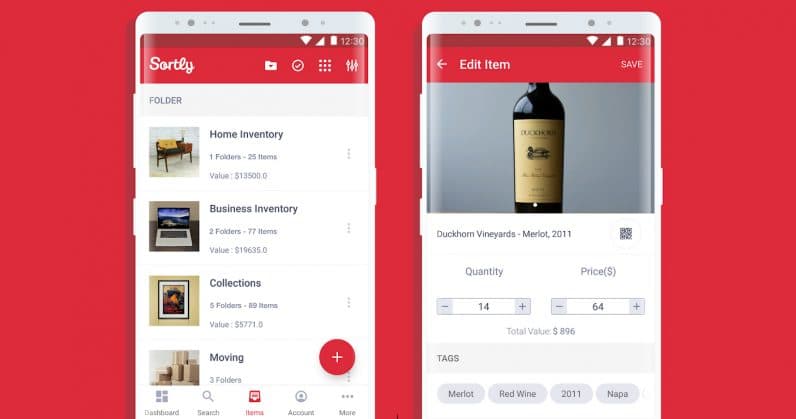
The Sortly moving app, created for iOS and Android platforms, will be your virtual assistant in tracking all the things you pack when moving – a sort of a digital moving checklist that can be conveniently shared with moving companies. It is, basically, an advanced inventorying tool, which helps to save time on unpacking and won’t let a user forget anything when packing.

The solution is utterly simple in its principle of work – you just take a photo of an object to be packed and define points A and B of home moving it. After that, a user can simply pack everything up and pass the baggage to the shipment service workers. Once all things are transferred to a new place, it won’t take any effort to find where’s what – everything is situated according to the user specifications in the app. 


This ‘moving planner’ is freeware, but for $4 a month, the premium account services can be employed, which provide some additional functionality. In particular, there appears an ability to create and scan QR-codes, which can be attached to boxes for more convenience. Individual inventory lists can also be uploaded to Dropbox or downloaded in the form of a PDF file and shared with other users.

Google Maps

Google Maps can also be a great moving planner. Getting from point A to point B most optimally can be pretty difficult even for the most ‘geographically-minded’ people. Google Maps is a globally popular solution to help handle that without any issues. It provides convenient navigation (even the voice navigation), shows the most optimal routes for traveling by public transport, car or even on foot, and helps go by the local transportation.

Google Maps have grown to cover even the least-populated locations. Last but not least, one can view real images of most environments either from the first-person or satellite perspective.

Wunderlist

When we’re talking about moving, one has to understand that the affair as important as this one requires a consistent approach (i.e., one cannot simply pack all stuff in a few hours and not miss a thing). Taking weeks to pack up most properly is also not an optimal option, however.

A compromise may be found with the help of the Wunderlist moving app. It can help optimally plan the moving routine and pack according to the formed list (kind of an algorithm). 


Wunderlist is a convenient moving checklist and a business planner where one can set up deadlines, create notifications, and even export tasks for other users to view. Definitely a worthy solution to try.

TaskRabbit

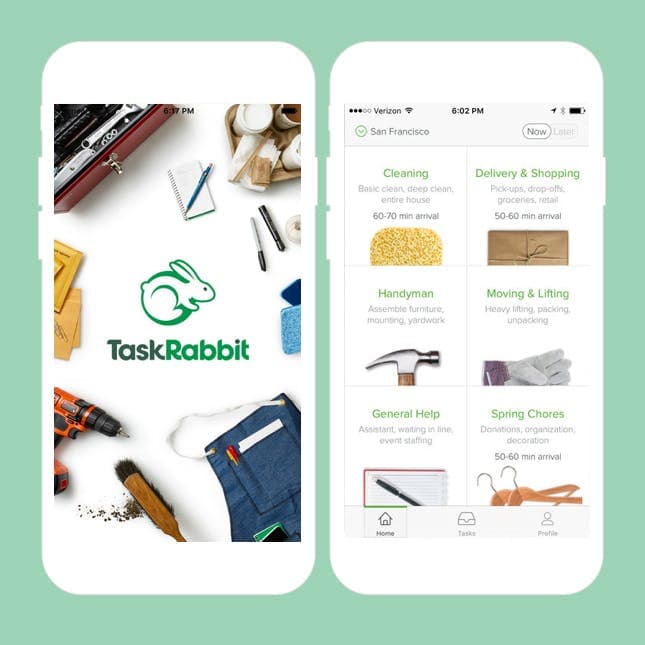
TaskRabbit is a very smart (and completely free of charge) moving app for iOS and Android users. In particular, it rapidly provides local household, babysitting, and pet care service providers’ contacts.

All that TaskRabbit asks for to start searching optimal options is the timeframe, during which the needed service has to be provided. Next, the app offers a list of available expert services approved by the solution itself. The most fitting provider can be selected by the service pricing or an individual specialist’s CV. According to practice, the average specialist pricing is about $35 per hour.

Nextdoor app

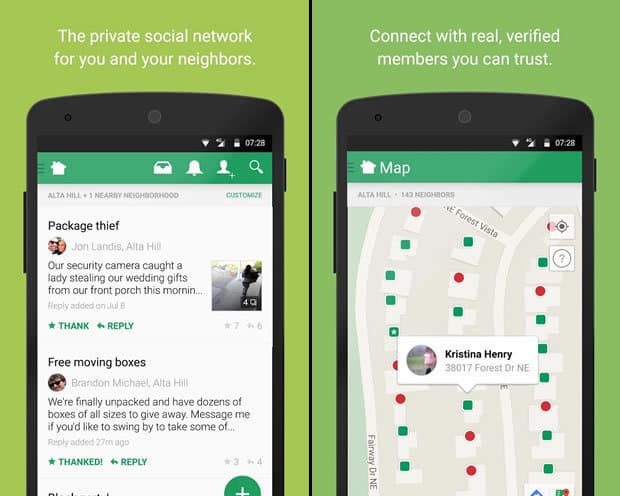
Last but not least in our list of the best apps for moving is yet another freeware app for iOS and Android (which, by the way, is also available through a web browser). The solution cover over 145 thousand US neighborhoods and helps those planning to move their place of residence find new acquaintances (not only among neighbors but also among the experts specializing in helping other people with the routine stuff, like babysitters, dog walkers, gardeners, etc.). Nextdoor also indicates how good a certain neighborhood is all-around (it provides some firsthand info about crime rates and level of education in local schools).

The app is made in the form of a social network where contacts are found based on the user’s location (similarly to Tinder).

If we analyze the previously-listed best apps for moving, we can define a number of particular features that help them stay in the lead of the game. Namely: 

  • Geolocation. If you are creating an app that gathers and provides data about new moving locations, it is only obvious that you should involve a specialized API for geolocation (e.g., the Google Maps API). Integration of APIs, usually, takes neither too much time nor effort and, in turn, you will be able to provide you user audience with a truly up-to-date, useful product. 
  • Push-notifications. In terms of competitive ability, mobile apps should not only be useful and help users painlessly handle at least one task but it also should be able to take real ‘care’ of the user. Push notifications can provide just such care. It is a feature ‘by default’ for all the existing decent moving apps, which doesn’t irritate the user, yet provides the optimal means of interaction with them. 
  • Third-party service integration. You cannot pack everything into one solution, that’s why it’s best to leave it ‘open-ended’, i.e., integratable with third-party solutions (e.g., the Facebook Login API can be integrated to provide fast sign-up). 
  • Personalization. The more a user sees individually-oriented features in an app, the better their UX will be. For instance, many creators and owners of apps for moving implement a special configuration panel in user cabinets where custom adjustments can be made and such. And don’t forget about convenient moving checklists.
  • Extra functionality. Without a doubt, even the best apps for moving can be ‘outrun’ by solutions that offer utter accessibility and multipurposeness. In order to reach that, build an MVP initially and think what additional functionality will make it a top product. 

Conclution

As you can see, apps for moving provide a good, profitable field for exploration and bring lots of use to their user audience with moving checklists, next door services, shipping opportunities, etc. If you want to build your own moving app, contact us and our experienced narrow-profile mobile software development experts will help you properly implement a solution of any complexity.

Top Emerging UK Fintech Companies of 2019

Fintech or financial technology is a wide term that covers a wide variety of technology-driven innovations in the financial services sector. Currently, it is changing all traditional business models by convenient digital banking, effective insurtech solutions, efficient asset management, and better financial education for customers.

That’s why fintech startups have been attracting impressive levels of investment in recent years. Are you curious about the quickly evolving fintech market in the UK? Discover more about 2019’s top fintech companies in this article.

[NAVIGATION LIST]

The global financial technology market has been constantly growing in recent years and it attracted the record $111.8 billion of funding by the end of 2018. At the beginning of 2019, the US remains the leader among deals while Europe surpasses Asia in funding with $1.7 billion just in the first quarter.

The United Kingdom is currently one of the global leaders on the fintech market with $3.3 billion of investments provided in 2018. There are already over 1600 UK companies in this sector, and with numerous emerging fintech startups, this number could double by 2030. 

The key reasons for UK fintech success are:

  • High demand

The UK has been one of the biggest global financial hubs for centuries, being among the top fintech destinations of the now, so the startups have numerous opportunities here, from connecting with traditional institutions to catering directly to a wide customer base.

  • Strong investment support

Usually, the more money there is in a market, the more trust it evokes in potential investors, which leads to higher market stability and more investments. In the past year, the UK was accounted for the majority of fintech funding in Europe rising high levels of trust among venture investors.

  • State support

The UK’s government focuses on accelerating innovations and creating a fruitful environment for the top fintech growth. They have invested more than £1 billion into the next-generation digital infrastructure. The government has announced over £20 billion of investments aiming to make financial markets more comfortable for smaller businesses during the following 10 years. State institutions are also developing open-minded regulatory visas and taxation schemes to make the market even more attractive for newcomers.

  • Regional fintech hubs

In addition to the auspicious UK’s ecosystem, there are several powerful fintech strongholds dotted across the country. The most prominent among them is London, the home to some of the top emerging fintech startups. It is recognized as one of the leading global fintech centers. The smaller hubs are supported by £21 millionTech National government program so their network is expected to expand in the future.


Creating a favorable environment for startups, the UK laid solid grounds for the fintech market growth. We reviewed the most remarkable successes. The following are ten leading fintech companies to watch in 2019.

TrueLayer

A relatively new startup, TrueLayer provides other fintech companies with the financial API platform directed at accessing banking operations. They aim to create a secure infrastructure that will protect both customers and businesses, while reducing operational costs. Already they are partnered with a variety of companies such as Starling Bank, CreditLadder, Zopa, Anorak, BitBond, ClearScore, and have a high growth potential due to many other startups showing interest in TrueLayer services.

In 2018, TrueLayer has raised $7.5 million to expand to European market and launched its data API in Germany. Currently, they are developing a payments API based on Open Banking system that is a fast, secure and cheaper way to accept payments. 

TransferWise

One of the longstanding fintech startups, TransferWise has been steadily developing since its foundation in 2011. Initially an Estonian company, today TransferWise has offices across a globe with HQ in London. Startup’s main goal is to provide better currency exchange rates compared to traditional banking methods. Such a customer-oriented approach became a key to their success, and now this company supports more than 300 currencies in numerous countries.

Just a year ago they joined the Hong Kong market lowering the exchange prices by 20%, and have a lot of the potential for further expansion. Talk about prominent companies to watch. The company announced the secondary share sale with an evaluation of about $4 billion, and in case of success, they will cement their status as the UK’s highest priced fintech startup.

Monzo

Aimed to challenge the well-established financial institutions, Monzo is a fintech company that provides its customers with a mobile-only bank account. They focus on an intuitive banking model, with convenient interface, easy tools, and without any hidden fees and charges. According to the recent survey, they were named the second best British mobile bank, providing a close competition to the leading Starling Bank. With such impressive achievements, Monzo is one of the most promising fintech companies to watch in 2019.

Nutmeg

Since the company was founded in 2011, Nutmeg has become the top online wealth management service in the UK. In eight years, they attracted more than 70,000 customers who trusted Nutmeg with more than £1.7 billion. At the beginning of 2019, this company has raised $58 million of investments from Goldman Sachs.

This startup allows the clients to define targets and choose the risk level before looking through the portfolio options. Nutmeg uses technology for their investment management services, but for building up the portfolio they rely on the experts in their team rather than on algorithms.

Monese 

The company was founded in 2013. Ever since Monese has been offering another alternative to traditional banking. Their distinctive features are a quick and easy application process and stable high-quality services that inspire longtime relationships.

One of the top emerging fintech startups, Monese is now offering its services in 20 different countries and keeping a stable pace of expansion. In 2018, they have officially become a CIFAS’ member joining their anti-fraud team to help fight financial crimes. Definitely yet another one of companies to watch within this sector.

Receipt Bank

A London-based fintech company, Receipt Bank was established in 2010, and since then they have opened offices in France, the US, and Australia. This company offers a cloud computing service that can automatically compile accounts and other data. It’s easy to use, can be integrated with other accounting software, and saves users their time and efforts on data handling. Each month Receipt Bank processes over 5 million documents and has already raised $65 million of funding.

Trussle

One of the emerging fintech companies in the UK, Trussle focuses on online mortgage services and compares tens of thousands of deals to find the best offers for their customers. What’s more, after completing the deal they continue to monitor the market so their customers can switch to the better options later. Such services allow an average customer to save around £4,500 a year

Such benefits result in high customer loyalty, also shared by investor trust. In 2018, Trussle received £13.6 million in series B funding.

Cleo

Another promising startup, Cleo has developed an AI-driven chatbot for Facebook that helps users to manage their finances via convenient social media interface. It can track expenditures, report savings, and make calculations helping people to plan their finances and save money. 

They have already entered the US market and now have almost 1.5 million users globally. With such success, Cleo has the potential to introduce their service to other markets as well.

Curve

A relatively new card-based banking system, Curve provides an elegant solution to a common problem. They allow clients to access all their cards via one platform, using their Curve card and a pin number. This helps managing expenses, getting instant insights, and saving money abroad with no fees for currency exchange.
However, Curve has been already confronted by American Express that blocked access to their cards in rather “anti-competitive” manner, but with a strong investors’ support they can stand up for their rights.

Revolut 

Our list of the UK’s top fintech companies wouldn’t be complete without Revolut, another great alternative to traditional banking. They offer prepaid cards with wide currency support as well as peer-to-peer payments. What is more, Revolut provides its customers with easy account management, in-built budgeting tools, and instant notifications.
In the past year, they have reported more than 1 million clients just in the UK, and now their audience reached 5+ million customers globally. Revolut has faced some bad press claims at the beginning of 2019, but their founder stated them as misleading. Despite that bad coverage, this company keeps growing and has all power to gain even more audience in the following years. 

In addition to already mentioned companies, we want to point some other promising startups that were launched in recent years and have the potential to grow in the following years. 

According to the Startups 100 List, these are some of the most promising projects in the fintech sector:

  • Soldo – a simple solution for budget management focused on corporate sector;
  • Glenhawk – founded in 2018, this company provides non-bank lending services;
  • Zego – an insurtech startup that aims to create a simple, transparent, and flexible insurance schemas for their clients;
  • Dozens – the winning combination of a current account with the investment manager and convenient budgeting tool;
  • GoodBox – focused on charities, this startup enhances its fundraising process with technology.

Conclution

The UK’s fintech sector is experiencing a boom of startups that cover a wide range of financial tasks, from banking to asset management. The UK-based startups successfully challenge traditional business models, gain popularity among customers, and grow enough to reach new markets all over the world. In our material, we have described the top 10 fintech companies in our opinion. However, there are many others evolving in the fruitful British financial ecosystem.


The Best Real Estate Apps in the USA

Buying or selling a house is an important step. The real estate market is constantly changing, so you need to learn and analyze all the information you can find to make the best deal possible. Luckily, you can take advantage of convenient apps that will allow you to search for property, browse documents, and make the best decision on the go.

In the United States, real estate apps have 26.2% mobile reach among online users. Are you struggling to find the best app among such a variety available online? Do you want to learn how these applications can help to enhance your business? Learn more about USA’s best real estate apps from our material.


The main reason for the popularity of real estate apps in the USA is that they make life sufficiently easier for agents and customers. Such applications may include in-built maps and 3D tours, messengers, search & save options, and even a functionality to sign documents online.

The best real estate apps can give you the following benefits:

  • Better productivity – such apps save you from overwhelming paperwork, allowing you to save, list, and organize necessary data;
  • Faster property search – agents can easily browse all property details such as price, area, and images within a single platform;
  • Enhanced communication – both sellers and buyers will appreciate instant direct messages and support;
  • More marketing opportunities – the app can create a direct marketing channel, helping you to promote your company without additional effort.


Numerous applications can help you find a house, manage the property, organize documents, maintain business communication, etc. Based on a survey of the most popular real estate platforms, we have identified the leaders in this niche in the USA. In addition to these giant house marketplaces, there are several other useful applications for a real estate agent.

So, let’s take a closer look at the best apps for the real estate sector in the USA. 

Zillow

Zillow, the leader among real estate apps, gets 36 million unique visitors per month. This service has an impressive database of 100 million US houses, allowing you to personalize your search with special features to find the home you need. Zillow allows users to estimate home value, compare prices by area and time, and make automatic online payments.

Moreover, they also offer several specialized applications like the Zillow Premier Agent app that helps manage and communicate with leads. Such wide functionality makes it the best real estate solution for consumers and agents.

Benefits:

  • Impressive audience;
  • Great advertisement possibilities;
  • Powerful search tools;
  • Offers references for home renovation and design.

Trulia

The second most popular online real estate marketplace, Trulia provides more information about the neighborhood where the houses are located. It allows you to look at the local map view and compare nearby sales, look for amenities in the area, transit options, etc. Instead of spending time visiting all the chosen houses, you can explore the neighborhood from the comfort of your home. Trulia also features crime map data, fueled by local law enforcement reports and news.

Benefits:

  • Great mapping features;
  • Creates a reliable picture of the neighborhood;
  • Has a wide audience.

Realtor.com

With 18 million monthly visitors, Realtor.com aims to challenge Zillow’s dominance of the home search niche. They offer two mobile apps that allow you to search for a perfect house on Realtor.com. One app, Rentals, provides a variety of apartments to rent, has accurate, up-to-date information, and has great filtering functionality. Another app, Realtor.com Real Estate, focuses mainly on sale listings, provides all property details, and even offers 3D tours. Both services can send notifications about new offers and price reductions and show you driving directions on a map. Such functionality features these services as one of the most popular real estate apps in the USA.

Benefits:

  • Advanced search functionality;
  • Useful notifications;
  • Intuitive interface.

Docusign

Paperwork takes up much time for any real estate agent, and DocuSign aims to save it for more important tasks. With this app, you can upload documents, send them to a client for an electronic signature, and track this process so an important agreement won’t be lost. You can contact clients anywhere and have the document signed securely and reliably, making DocuSign one of the best real estate apps.

Benefits:

  • Secure online signatures;
  • Integration with Google Drive, One Drive, and Dropbox;
  • Amazing document management functionality.

BombBomb

If you want to advance your email marketing, BombBomb can help you to customize your letter with a video. You can record simple videos using your mobile device or computer camera and connect with your clients face-to-face. 

This app is integrated with Gmail and Outlook, so there is no need to open your email client: the application itself has all the required functionality to send emails. BombBomb also provides users with tools to track who watched the videos, so you can correct your marketing strategies accordingly.

Benefits:

  • Helps to create face-to-face communication;
  • Convenient in-app recording;
  • Integration with Gmail and many other services.

Zumper

A fantastic free rental listing tool, Zumper has all the functionality essential for the best real estate platform: easy search, intuitive platform, real-time alerts, etc. At the same time, some features help Zumper stay out of the box. It runs Experian credit reports so you can check prospective tenants, making it extremely easy to collect broker fees. 

Benefits:

  • Great rental listing functionality;
  • Has functionality to learn more about tenants;
  • Free to post, and offers more tools for a paid plan.

RPR

Owned by the National Association of Realtors, RPR helps you access all reliable property data and create customizable reports to send to your clients. It offers residential and commercial modes, and only licensed real estate agents can access this platform. You can use the information from the RPR database and add your own notes and photos that will be private to you and your clients.

Benefits:

  • Gathers reliable big data;
  • Synchronization between the RPR’s app and website;
  • Amazing search functionality.

Spacio

Any real estate agent will appreciate the convenient open house management tool called Spacio. This application allows you to create digital sign-in forms to collect clients’ information and automatically send follow-up emails. Spacio will form a database of people who filled in your forms and link each person with their social media accounts so you can learn more about your potential clients.

Benefits:

  • Automated emails;
  • Integration with listing platforms and marketing software;
  • Real-time reporting.

Buffer

To keep in touch with clients, agents usually use multiple social media accounts, and Buffer helps to manage all of them efficiently. Integrated will the most popular social platforms, this app helps you to post to different accounts using one platform, pre-schedule publications, and maintain a consistent social presence without any extra effort. 

Benefits:

  • Integration with all major social media platforms;
  • One application for multiple accounts.

Dropbox

It wasn’t initially created for realtors, but now Dropbox is one of the best real estate apps. A fantastic tool for document management, it allows you to store any files you want and access them on the go. Keep all architecture plans, photos, property disclosures, or any other documents in the cloud and share them with your clients whenever you need,

Benefits:

  • Convenient cloud-based service;
  • Stores all necessary files on one platform.


The above-described applications can solve most tasks related to buying and selling property, but some other promising startups may be helpful for the real estate sector. They aim to make homeownership more affordable, add more flexibility for people who sell houses, and implement technology for real estate needs. 

Here are some of the most anticipated and innovative startups:

  • Bungalow – this service divides houses into multiple units that are easier to afford;
  • Knock – a platform that helps people to buy a new house before selling their own one; 
  • Atlant – a startup aiming to create a decentralized real estate marketplace to destroy the monopoly of big companies and reduce fees for tenants and landlords. They have already launched a set of applications on Google Play;
  • Enertiv – a service for managing your property maintenance and repairs on a single platform. They focus mainly on office and multifamily buildings.

Conclusion

Real estate applications can improve productivity, give you access to important data, and enhance your communication with clients. Numerous apps cover a wide range of real estate agents’ tasks. You can use giant marketplaces to place your listings, communication and social media tools to improve your visibility, applications for document management, etc. So, browse our list and find the best real estate app in the USA for your business.

Clutch Releases 2019 Report Featuring Unicrew as Top Developer

Unicrew is a full-scale web and software development firm with 8 years of experience, presence in 2 continents & representation in Silicon Valley, Singapore, & headquarter in Ukraine. Our primary goal is to use human relations and information technology to shape your business into its quintessential form. We utilize commercial grade software to not only solve challenges but create opportunities for your business. In an age of meticulous software development that requires a complex understanding of expectations and latent needs, our team gets straight to the point to help deliver software solutions in time, on budget, and in accordance with stakeholders’ expectations.

Unicrew values nothing more than the uncompromised satisfaction of our clients and we have demonstrated our competence in the field of software development over the years, being recognized by reliable ranking websites such as “Top App Development Companies” and “Clutch.”

This year, we are excited to share that we have been recognized by Clutch in their 2019 leader awards as one of the top .NET developers on their platform.

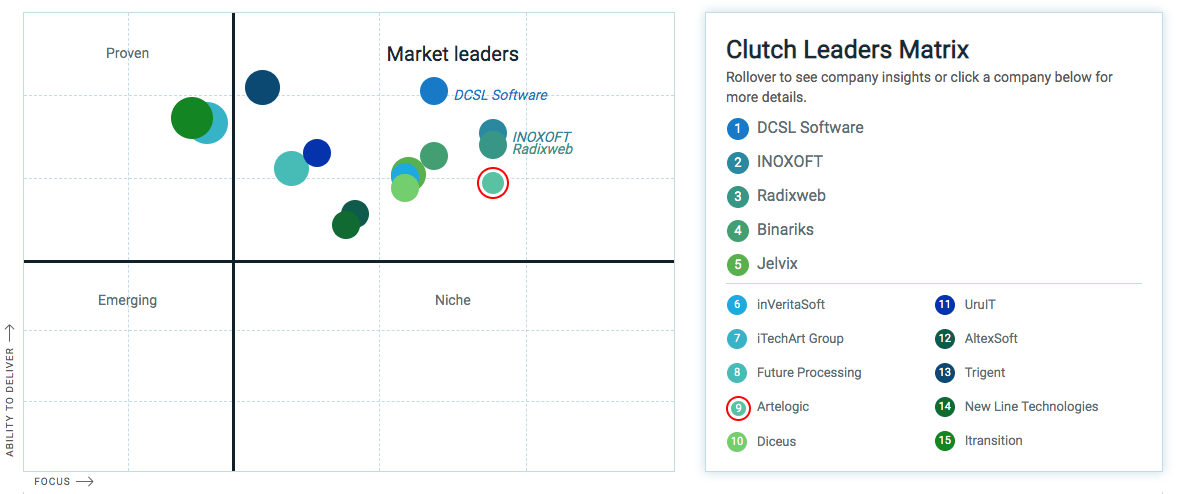
Clutch is a leading research firm that provides verified ratings and reviews for vendors in dozens of industries, aiming at helping businesses form more beneficial partnerships with each other. If you look closely at clutch’s leader’s matrix, a tool offering a broad view of the top-performing companies in a particular industry or location, you can see that Unicrew has specifically been ranked the 9th .NET developer.

This is a commendable feat, as the Clutch team uses complex analytics and objective data to rank a company. This is also impressive considering that we were competing with 991 contending firms for a position in the top 15 in order to be featured on the leader’s matrix. The leader’s matrix is based off of a company’s ability to deliver and industry focus. Ability to Deliver includes the company’s client reviews, past work, market presence, and prestigious awards. Focus is a company’s level of specialization in a given service. Take a look at a snapshot of our companies’ placement in the “Market Leaders” category of the leader matrix below!

Of all the factors that Clutch considers when evaluating a firm’s ability to deliver, the verified client reviews are the most important. Thanks to our satisfied customers, we have a whopping 21 reviews on our profile with a perfect five-star rating. The uniquely styled questionnaire that Clutch has developed has prompted our clients to share informative, holistic feedback like the following:

“Unicrew’s overall efficiency created high value for cost. The team’s outsourcing implementations were timely, and their technical skills were both impressive and reliable. Clear communication and supportive service made the partnership a smooth experience.” – CEO, Digital Solutions Company

This type of feedback helps our team identify what our clients appreciate most about our work, or in other words, what practices we should continue in our daily processes; and what behavior needs improvement. Our reviews have been very positive so far; however, we are excited to see what our clients will share with us in the future and are eager to improve our methodologies.

We have also been on Clutch’s sister-site, The Manifest, in their 2019 ranking of the 50 top .NET developers. The Manifest helps firms of all shapes and sizes identify and address their industry challenges by providing curated advice and tutorials for a wide array of processes and practices.

In addition, due to our flawless portfolio work, we have been fortunate enough to receive recognition on Clutch’s other sister-site, Visual Objects. Visual Objects is a platform for branding agencies, developers, and other creatives to showcase their work in order to give potential clients an opportunity to see first-hand what a finished product will look like and its quality. We are excited to announce that visual objects has listed Unicrew as one of their 2019 leading web developers.

Our team extremely proud of our continued efforts and everything we have accomplished so far. We not only take pride in satisfying the needs of others, but we also elicit great joy and fulfillment from our work. As one of our top developers says, “Never fall in love with your product or a company, remember that your users and clients should always be your true love”. Our company lives by this motto and we are truly grateful for and love all of the people who have helped us along the way. From our clients to the members of our team, everyone has had a vital part to play in our success and we eagerly await new challenges!

5 Innovational Technologies for Proptech Apps Viability

The niche of proptech is currently striving as never before. The real estate industry gradually gets a hang of advanced technological solutions, which allow multiplying the global value of real estate services. Companies are fast to employ whole departments of proptech experts, who would implement software solutions to fit the niche and help businesses catch the ‘hype wave’. Let’s take a look at some innovative tech solutions that will help you get into the proptech software competition.   

[NAVIGATION LIST]

In the first half of 2018, the investments in the proptech industry reached $5 billion. The industry is quite new: just a couple of years ago, no one heard about it, and now astronomical sums are being raised for proptech services. One of the latest examples is Kodit.io, one of the proptech startups, which raised $13 million for a house buying automation tool.

Proptech keeps rocking the entire real estate industry. In fact, proptech means the application of all the cutting-edge technologies for trading real estate objects in a more efficient way. Besides trading, it also has an impact on building, utilizing and leasing property.

As mentioned above, the industry adopted this trend in an excellent way. Statistics and surveys show that proptech attracts not only attention but also talents and finances:

Let’s find out what types of proptech apps may drive your business, which startups succeeded in 2018, and what technologies to employ to develop a solution that will renovate the industry as we know it.


When planning to start or upgrade your real estate business, or thinking over an excellent programming solution for the industry, you have definitely faced some questions. What kind of solution should it be? Which type of software will be the most profitable? In this rapidly developing sphere, there are a lot of options. Thus, we have prepared a proptech products categories list:

  • Facilitating products;
  • eCommerce platforms and marketplaces;
  • Real estate web and mobile apps;
  • Social products;
  • IoT elements;
  • Construction and design apps, etc.

Still, there is no better way to get to know the proptech industry than taking a look at its most successful startups. Here is a brief overview of several of the most successful projects in the USA:

WeWork

  • Founded in: 2010
  • Value: $35 billion

WeWork is one of the most successful proptech startups that bring together people who can design a lovely workspace and those who need to refresh their environment. The company also provides great co-working spaces and amazing offices in several locations worldwide. However, business isn’t always flawless: in 2018, the company’s founders claimed their net loss was nearly as high as the revenue

Airbnb

  • Founded in: 2008
  • Value: almost $30 billion

Airbnb was one of the pioneers of the proptech galaxy. The tool allows finding accommodation for a short stay. Hotel rooms, entire apartments and even castles are available. You can find more than 4 million listings worldwide on this platform!

Compass

  • Founded in: 2013
  • Value: $2.2. billion

The company delivered a mobile app for property industry representatives. The solution simplifies the realtors’ job and automates routine tasks. On the company’s website, one can find properties in 20+ locations all over the US.

Among the many aspects stimulating industry growth, we defined those which have the greatest impact in 2019:

Space as a ServiceThis is a new model that embodies the following principle: a landlord does not just provide tenants with property they need but also offers a full spectrum of services to use it efficiently. Here, we mean everything from space design to cleaning services.

As you can see, in this case, the role of a landlord transforms completely. Now, one does not simply allow others rent a space in a businesses center but also provides all the services for making the tenants feel comfortable utilizing the property’s features.

A few lines above, we mentioned the WeWork startup that is based on this model. Its investments and revenue are more proof that the Space as a Service approach is worth your attention.

5G Modifies the Game Rules. Information has become highly accessible. The possibility to reach out to everyone you want, from wherever you want, has changed the consumers’ demands. Now, people expect lightning-fast connection to be available at home, at the office, in shopping malls and on the streets.

Proptech business owners and enthusiasts should take into account the changes 5G connection brings. Industry followers and builders should construct assets that are able to adapt to 5G technologies seamlessly. Software engineers, in turn, should develop programming solutions that will be able to support 5G. At the same time, both physical and digital products should meet the tenants’ and users’ needs in the best way.

Virtual Reality and Proptech. Before renting an apartment, you’ll want to see it. This requirement gets even more critical when you plan to buy property. Each visit may take a lot of time, but opportunities provided by virtual reality take care of this problem. 

Virtual Reality in real estate technologies allows potential tenants or buyers to have a lovely walk around the apartment without leaving their homes or offices. There are 2 options available:

  • A 360-degree video built with panoramic photos;
  • An interactive tour around the property.

Integrating such features into a typical real estate app, you even can allow tenants to have real-time conversations with realtors or property owners.

Another great example of how VR improves proptech is architecture visualization. It is hard to sell a house that doesn’t even exist yet. With the help of VR, property owners can get the opportunity to present it to potential buyers before it is constructed.

Smart assets for a better experience. In the global perspective, each real estate object will become an element of the IoT network at one point. Thus, developing your vision of a brilliant proptech solution, keep in mind several points:

  • Automation. The future is about the minimization of routine actions and focusing on those which require attention. This is why a well-thought-out fully-equipped smart property is in trend right now. Technologies for automated doors, windows, household appliances drive the industry development.
  • Integration. Integration is crucial. Building a property technology app, take care of integration features and allow your customers to synchronize it with their system seamlessly.
  • Smart assets. For example, drones will come in handy when developing a panoramic view of a landscape around the property. Smart assets can contribute to security features and provide even more convenience to potential tenants or buyers.

Big Data. There are myriads of objects on a real estate map of the world, and a single system that stores the information about all of them doesn’t exist. However, consumers expect to get a response to their queries about apartments available in a certain region immediately.

Thus, you, as a proptech enthusiast, need to develop a system that can collect and process data, as well as provide the needed answer as fast as possible. How do you reach the highest speed? Big Data is the answer. A big data engineer can contribute to your project and accelerate data processing.


Now that you are aware of technologies for proptech industry, it is time to decide on the functionality your app should include. We analyzed the most popular products and defined the following features:

  1. Geolocation. Integration with Google Maps is required. Provide the exact location along with tips on how to get there to improve the experience.
  2. Payment options. These days, it is not enough to offer Visa and MasterCard for payment options. Implement other methods like Paypal or even consider cryptocurrency for this purpose.
  3. Chatbots. No matter what software product you plan to launch, interaction with users is important. To provide immediate answers and basic information, try chatbots and watch the number of satisfied app’s users grow.

In Conclusion

Follow these principles to launch a viable proptech tool:

  • Always keep in mind typical demands and users’ expectations;
  • Keep a hand on the pulse of modern trends and technologies;
  • Deliver bugless products with intuitive design;
  • Improve functionality constantly.

Do you have some questions about proptech startups, solution development and promotion? Just drop us a line, and let’s add your company’s name to the list of successful startups!