
Why Invest in Supply Chain Management Automation: 8 Reasons That Hold Up
Supply chain management automation cuts costs, reduces errors, and boosts output. Here are 8 reasons manufacturers and logistics firms invest in it.

Volodymyr KhitsiakSenior Marketing Manager
Published · Updated
Share
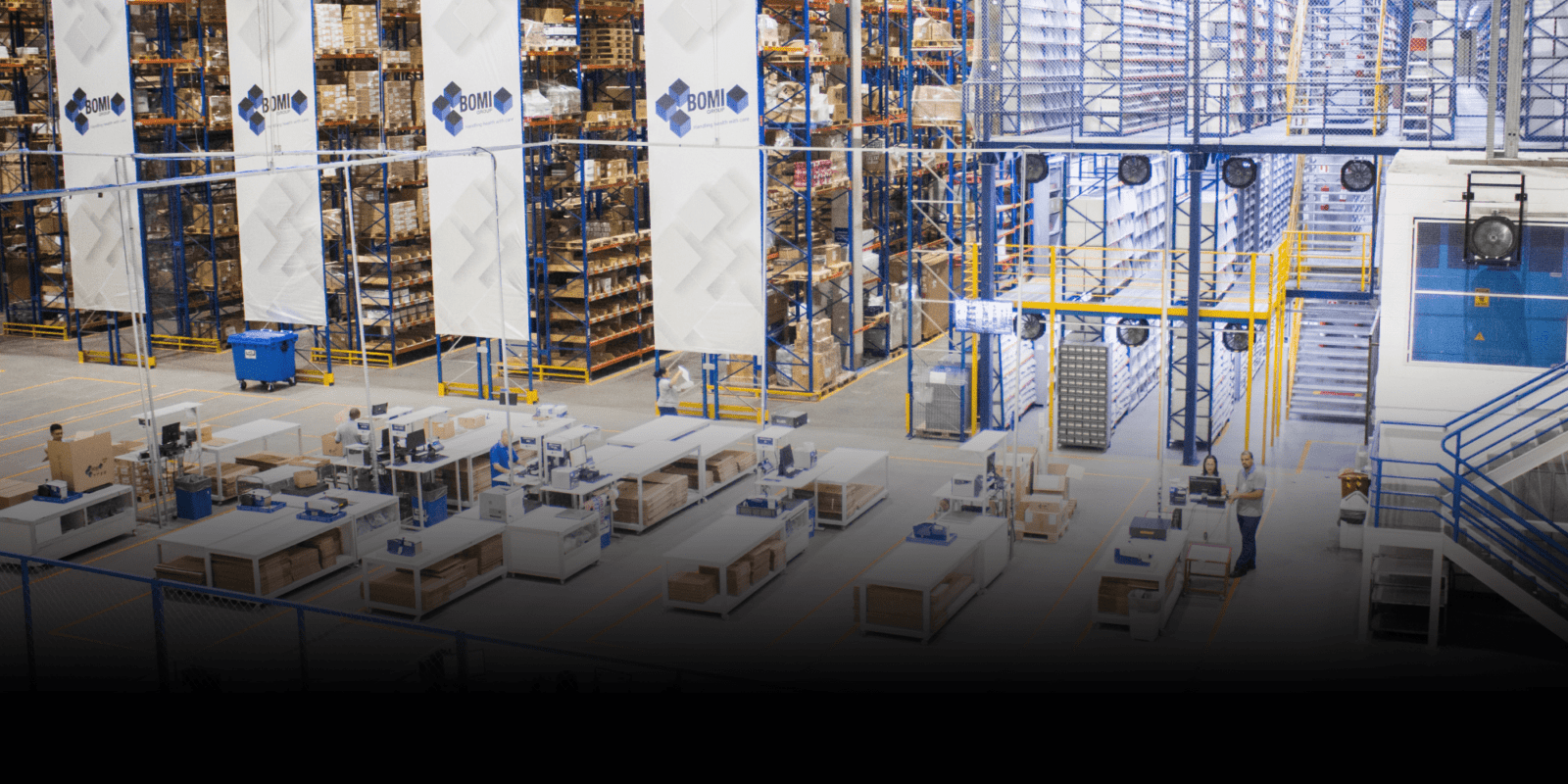
Supply chain management automation reduces operational costs by up to 30%, cuts human error from manual processes, and accelerates order-to-delivery cycles. For manufacturers and logistics businesses competing on margin and fulfillment speed, automating supply chain workflows is one of the highest-ROI technology investments available, with leading organizations reporting full ROI within 6 to 18 months of implementation.
The Business Case for Supply Chain Automation
The global supply chain management software market is valued at $36.39 billion in 2026 and is projected to reach $56.01 billion by 2031, growing at a 9.01% CAGR. That growth is driven by increasing supply chain complexity, global sourcing pressure, tighter fulfillment expectations, and the rising cost of manual processes that don't scale. For manufacturers and logistics operators, the question is no longer whether to automate but which processes to prioritize and what platform to build on.
Supply chain automation replaces repetitive, rule-based tasks, including inventory updates, purchase order generation, shipment tracking, and compliance logging, with software systems that execute them faster and more accurately than manual workflows allow. The operational result is a supply chain that responds faster to demand signals, holds less excess inventory, and surfaces problems before they escalate into delivery failures. Our supply chain software development practice covers the full range of these automation scenarios, from procurement to warehouse management and analytics.
8 Reasons to Invest in Supply Chain Management Automation
1. Higher Throughput and Productivity
Automated systems operate continuously without the throughput limits of manual teams. Manufacturers implementing supply chain automation report productivity gains of up to 35%, driven by eliminating idle time between process steps, reducing handoff delays, and enabling parallel workflows that manual operations cannot sustain. For businesses where output volume directly determines revenue, this productivity gain translates immediately into margin improvement.
2. Reduced Human Error and Improved Accuracy
Manual data entry, purchase order processing, and inventory counts introduce errors that compound across the supply chain. A mis-keyed quantity becomes a fulfillment shortfall; an incorrect delivery address becomes a return. Automated systems execute the same process identically every time, eliminating input error at the source. Organizations using AI-driven demand forecasting, the most mature automation use case, report forecast accuracy improvements of 20-40% compared to manual planning cycles, directly reducing overstock and stockout incidents.
3. Lower Labor and Operational Costs
Warehousing, inventory management, and procurement are labor-intensive at scale. Supply chain automation reduces the manual headcount required for routine transactional work, allowing teams to focus on exception handling, supplier relationships, and strategic sourcing. Companies implementing supply chain automation consistently report operational cost reductions of 25-30%, with the largest savings in order processing, invoicing, and inventory reconciliation. The reduction in rework costs from correcting manual errors adds further savings that are often underestimated in pre-project ROI calculations.
4. Greater Production Volume and Scalability
Manual supply chain processes have a natural ceiling: adding volume means adding headcount. Automated systems scale differently. A software platform handling purchase orders for 500 SKUs can be extended to 5,000 without a proportional increase in operational cost. This scalability is particularly valuable for businesses with seasonal demand peaks or rapid growth trajectories, where the ability to absorb volume spikes without operational disruption is a competitive differentiator.
5. Faster Order-to-Delivery Cycles
Each manual step in an order fulfillment workflow introduces latency: approval queues, communication delays, and batch processing windows all slow the time between a customer order and a shipped product. Automation removes these bottlenecks. Order intake, inventory allocation, pick-list generation, and carrier selection can all be handled in minutes by an automated system rather than hours by a manual team. For businesses competing on fulfillment speed, this cycle time reduction is among the most visible and customer-facing benefits of supply chain automation.
6. Improved Workplace Safety
In warehouse and manufacturing environments, repetitive physical tasks and high-throughput operations carry meaningful injury risk. Automated systems handling material movement, heavy lifting, and hazardous process steps reduce the number of human exposures to those risks. Beyond the direct safety benefit, fewer workplace incidents reduce insurance costs, regulatory exposure, and operational downtime from injury-related disruptions.
7. Stronger Regulatory Compliance
Supply chain compliance requirements, including traceability mandates, import and export documentation, safety certifications, and sector-specific regulations like the Drug Supply Chain Security Act in healthcare, generate significant administrative overhead when managed manually. Automated compliance workflows capture the required data at each step, generate audit-ready records automatically, and flag non-compliant transactions in real time rather than at the point of audit. This shifts compliance from a reactive cost center to an embedded operational capability.
8. Higher Customer Satisfaction
Delivery accuracy, fulfillment speed, and real-time order visibility are now baseline customer expectations across B2B and B2C supply chains. Automated systems enable all three: order tracking updates happen automatically, delivery exceptions are flagged and routed for resolution before they reach the customer, and accurate inventory data prevents the overselling that leads to cancellations. The result is a customer experience that reflects operational competence rather than masking operational gaps with manual intervention.
The Role of AI in Modern Supply Chain Automation
The most significant shift in supply chain automation since 2023 is the integration of AI and machine learning into processes that previously required human judgment. Gartner forecasts that supply chain software with agentic AI capabilities will grow from less than $2 billion in spend in 2025 to $53 billion by 2030, reflecting a fundamental change in what automation can cover.
Demand forecasting is the most mature AI application in supply chains, with an 87% adoption rate among leading organizations. Machine learning models trained on historical sales, seasonal patterns, and external signals consistently outperform human planners, delivering forecast accuracy improvements of 20-40% that translate directly into lower inventory carrying costs and better service levels. Procurement is the next frontier: agentic AI systems are projected to manage 60-70% of transactional procurement tasks, including vendor communication, purchase order follow-up, and supplier performance monitoring, by the end of the decade.
For businesses planning a supply chain automation investment, the AI layer is no longer optional. Software platforms that cannot integrate machine learning for demand sensing, anomaly detection, and optimization will be structurally disadvantaged within three to five years. Our business process automation services include AI-ready architecture for supply chain systems, ensuring that automation built today can incorporate more intelligent capabilities as they mature. For a broader view of automation ROI across business functions, our article on business process automation covers the patterns that apply across industries.
Sources: Mordor Intelligence: SCM Software Market Report 2026 | Gartner: Agentic AI in SCM Forecast 2030 | Isometrik AI: Supply Chain Automation Guide 2026 | AI in Supply Chain Report 2026
Frequently asked questions
Supply chain management automation uses software to handle repetitive, rule-based tasks across procurement, inventory management, warehousing, order processing, and logistics coordination. Automated systems execute these tasks faster and with greater accuracy than manual workflows, freeing operations teams to focus on exceptions, supplier relationships, and strategic decisions. Modern supply chain automation increasingly incorporates AI for demand forecasting, anomaly detection, and autonomous procurement.
ROI from supply chain automation varies by process and implementation scope, but leading organizations report achieving full ROI within 6 to 18 months. Cost savings typically come from reduced manual labor in transactional workflows, lower error rates and associated rework costs, and inventory reductions from improved demand forecasting. AI-powered supply chain systems specifically have been associated with a 307% ROI within 18 months in documented deployments, compared to 87% for traditional ERP implementations.
The highest-ROI starting points are typically demand forecasting, purchase order processing, inventory replenishment, and shipment tracking. These are high-volume, rule-based processes where automation reduces errors and cycle time immediately. Compliance documentation and reporting are also strong candidates, as automation there reduces both the labor cost and the audit risk associated with manual record-keeping.
Traditional supply chain automation executes predefined rules: if stock falls below X, generate a purchase order. AI-driven automation learns from data and can handle decisions that require context, like adjusting reorder quantities based on predicted seasonal demand, flagging a supplier as a risk based on delivery pattern changes, or dynamically rerouting shipments in response to disruption signals. The distinction matters for planning: AI handles judgment-intensive tasks that rules-based automation cannot.