
How to Build a Web3 Product in 2026: Architecture, Costs & What Teams Get Wrong
A practical guide to Web3 product architecture in 2026: layer-by-layer stack, real cost breakdowns, and the engineering mistakes most teams make too late.

Andrii BurdaSenior Engineering Manager
Published · Updated
Share
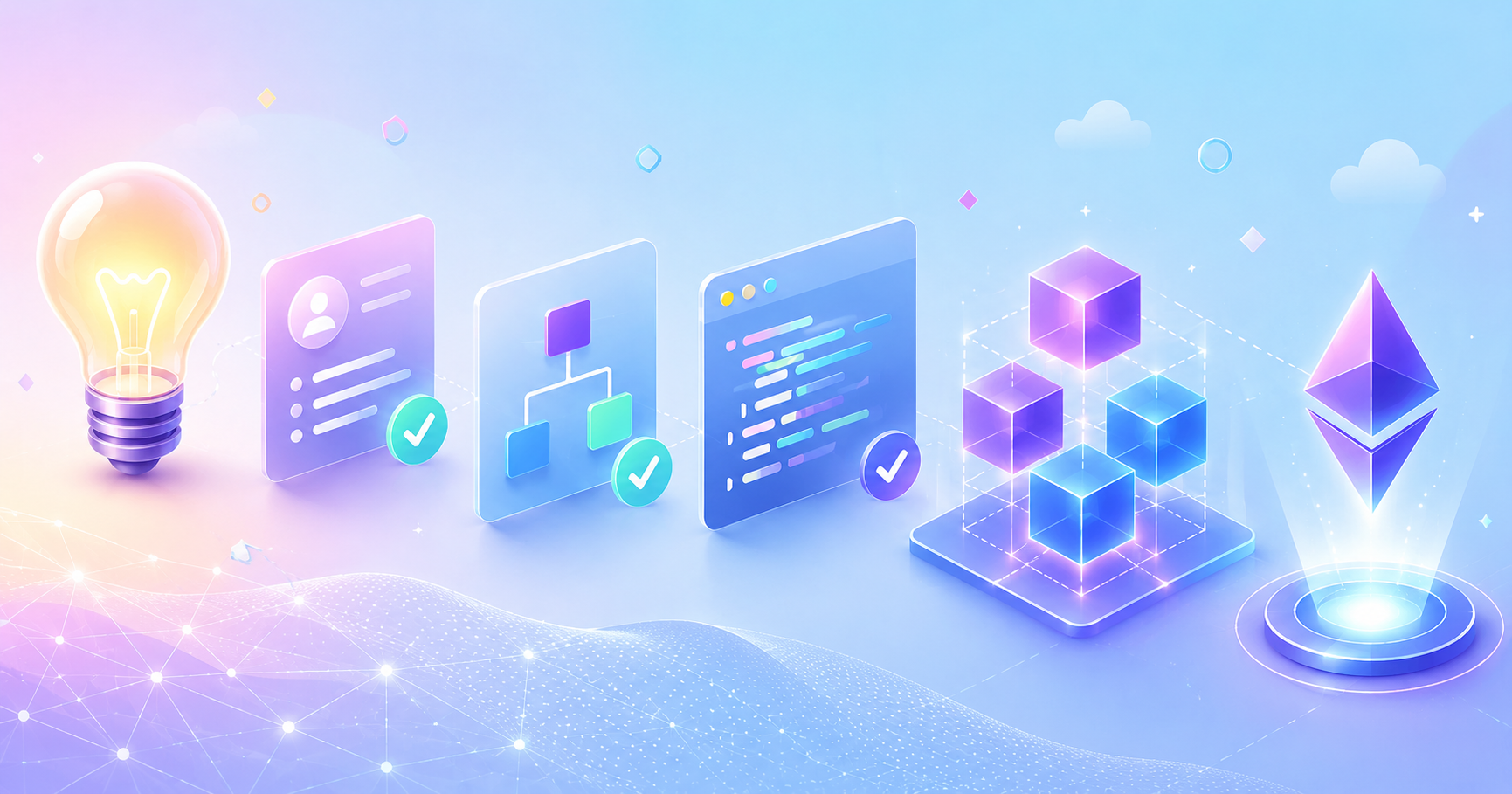
Building a Web3 product in 2026 means choosing the right chain, separating on-chain logic from off-chain infrastructure, budgeting $25,000 to $250,000 depending on scope, and auditing before you ship. The architecture decisions you make in week two determine 80% of your costs and timeline. Most teams get those decisions wrong.
The Web3 market is growing fast: it crossed $57.47 billion in 2025 and is on track to reach $74.02 billion in 2026, a 28.8% year-over-year expansion. But growth at the market level does not translate into success at the product level. The graveyard of funded Web3 startups that shipped technically sound products nobody used is long. This guide is aimed at the people making the architectural and resource decisions before the first line of code is written.
If your team is deciding whether to build in Web3 and how, read this before you open a design doc.
Table of Contents
- Do You Actually Need Web3?
- The Web3 Architecture Stack in 2026: Layer by Layer
- Choosing the Right Chain
- What Does Building a Web3 Product Actually Cost in 2026?
- What Teams Consistently Get Wrong
- How to Structure Your Web3 Team
- Frequently Asked Questions
- Key Takeaways
Do You Actually Need Web3?
The most expensive mistake in Web3 development is building on a blockchain when you do not need one. Before you commit to smart contracts and decentralized storage, answer this question:
Can you articulate in one sentence, without using the words "decentralized," "trustless," or "blockchain," why your product requires a shared public ledger?
If you cannot, stop. You probably do not need Web3 yet.
The one-sentence test
Web3 makes sense when your product needs at least one of the following: verifiable ownership of an asset across parties who do not trust each other, programmable settlement that must execute without a human intermediary, or an immutable audit trail that no single organization controls.
Real examples where Web3 adds genuine value: tokenized financial instruments where ownership is programmable and transferable, supply chain provenance that must be auditable by a regulator who does not trust your database, or cross-organization governance where decisions need to be transparent and irreversible. Our overview of the top Web3 applications defining 2026 covers these use cases in detail.
When Web3 genuinely adds value
Web3 performs poorly when the core requirement is speed, simplicity, or low operational cost for a single-organization workflow. Adding a blockchain to a logistics tracker that one company runs does not improve the product; it adds gas costs, maintenance overhead, and a harder onboarding experience for no benefit.
The useful frame is: what part of your product actually needs blockchain guarantees, and what part can stay a normal application? Most Web3 products are hybrid systems where 70-80% of the infrastructure is conventional and the blockchain handles the trust-critical operations only. In our experience, getting this boundary right is the most important architectural decision you will make, and it needs to happen before any code is written.
The Web3 Architecture Stack in 2026: Layer by Layer
A Web3 application replaces the centralized server model with a stack of interoperating decentralized layers. Understanding each layer is necessary before you start making technology choices.
Layer 1: Protocol and network selection
The protocol layer is the blockchain itself. Your choice here determines transaction costs, throughput, developer tooling maturity, and the ecosystem of protocols you can compose with.
In 2026, most new dApps deploy on Layer 2 networks (Arbitrum, Optimism, Base, zkSync Era) rather than Ethereum mainnet. Transaction costs on these networks are sub-cent with near-instant finality. For most product use cases, there is no compelling reason to start on mainnet. The protocol layer decision is also a liquidity and composability decision: a token or credential built on Ethereum-compatible networks can interact with the entire DeFi and identity ecosystem without custom integration work.
Layer 2: Smart contracts and execution
Smart contracts are deterministic programs that live on the blockchain and execute when predefined conditions are met. They handle ownership, settlement, permissions, and business rules. The tooling in 2026 has matured considerably: Foundry has become the standard development framework, offering fast compilation and testing. Account Abstraction via ERC-4337 is now supported natively across major Layer 2 networks, enabling programmable wallet behavior, gasless transactions, and social recovery by default.
Smart contract code is production-critical the moment it goes live. Unlike a web server, you cannot patch a deployed contract. Plan for rigorous testing, formal auditing, and a deployment process that matches the risk level of the assets the contract will control. Smart contract engineering typically accounts for 25-40% of total Web3 development budget.
Layer 3: Data indexing and off-chain storage
Blockchains are not designed for querying. Reading state from the chain directly is slow and expensive for anything beyond simple lookups. Most production Web3 applications use a separate indexing layer. The Graph is the standard solution: you define a subgraph that listens to on-chain events and indexes them into a queryable API. This separates your write path (signing transactions, paying gas) from your read path (serving data instantly from an indexed store).
For large files, media, or user-generated content, off-chain storage via IPFS or Arweave is standard. The content hash is stored on-chain; the actual file lives on the decentralized storage network. This keeps chain costs low and throughput high.
Layer 4: Frontend and wallet UX
The frontend of a Web3 application looks like any other web application, with one critical addition: wallet connection. The wallet is the user's identity and signing mechanism. The historic UX problem with wallets (seed phrases, gas estimation, transaction popups) has been largely addressed by Account Abstraction. In implementations using ERC-4337, users can onboard with email or social login, fees can be sponsored by the application, and wallets are recoverable without seed phrases. Early deployments show roughly a 60% reduction in onboarding friction.
wagmi and viem are the current standard libraries for Ethereum frontend integration. For React applications, wagmi's hooks provide clean abstractions over wallet connection, contract reads, and transaction submission.
Choosing the Right Chain
The chain decision is frequently made too quickly, based on familiarity rather than product fit. Here is how to think through it.
Ethereum mainnet vs. Layer 2 solutions
Ethereum mainnet is the right choice if your product requires maximum credible neutrality, if you are issuing tokens that need to be liquid across the widest possible venue set, or if you are building infrastructure that other protocols will build on.
For most product teams in 2026, Layer 2 networks are the practical starting point. They share Ethereum's security model with transactions ultimately settled to mainnet, offer sub-cent gas costs, and have near-feature parity with mainnet tooling. Base and Arbitrum have the largest developer activity among L2s. Layer 2 solutions can reduce infrastructure costs by up to 90% compared to Ethereum mainnet.
App-specific chains: when to consider one
An app-specific chain (built with the Cosmos SDK or Polygon CDK) gives you full control over the execution environment: custom gas tokens, bespoke consensus rules, transaction ordering. This matters for high-throughput exchanges, gaming infrastructure, or financial products with regulatory requirements a general-purpose chain cannot satisfy.
The cost and complexity overhead is significant. Building and operating your own chain requires a validator set, ongoing node infrastructure, and a team capable of managing protocol-level security. Consider this path only after your product has demonstrated demand on a general-purpose chain.
What Does Building a Web3 Product Actually Cost in 2026?
The honest answer is that Web3 development costs more than most founders budget and takes longer than most timelines assume. The main reasons: smart contract development is senior-engineer work, auditing is non-negotiable, and experienced Web3 developers are scarce. Active blockchain developers dropped 56% from early 2025 as AI absorbed much of the junior developer pool, pushing experienced developer rates sharply upward.
Cost ranges by product type
The table below reflects 2026 market rates across multiple cost analyses. These are realistic budgets, not minimums.
| Product type | Estimated cost range | Typical timeline |
|---|---|---|
| MVP dApp (single smart contract, basic frontend) | $25,000 – $50,000 | 8–12 weeks |
| Standard dApp (multi-contract, wallet integration, indexing) | $50,000 – $120,000 | 3–6 months |
| DeFi platform (liquidity pools, governance, complex tokenomics) | $120,000 – $250,000 | 6–12 months |
| Enterprise multi-chain solution | $500,000 – $2,000,000+ | 12–24 months |
The hidden costs most budgets miss
Security audits. A smart contract audit costs $10,000 to $50,000 per contract depending on complexity and auditor reputation. Auditing typically adds 20-30% to the base development cost. Skipping it is not a cost-saving measure; it is a decision to accept catastrophic risk. On-chain bugs are public and permanent.
On-chain gas and infrastructure. Deploying contracts, running testnets, sponsoring user transactions, and managing RPC endpoints carry real operational costs. Budget 10-15% of development cost annually for infrastructure.
Ongoing maintenance and upgrades. Web3 protocols update. Layer 2 networks introduce breaking changes. Dependencies get deprecated. Plan for at least one significant engineering sprint per quarter to keep a live product secure and current.
Compliance and legal review. If your product touches tokens, financial instruments, or user funds, legal review is not optional. This varies by jurisdiction but can add $20,000 to $100,000 to initial costs, with ongoing compliance monitoring beyond that.
Successful Web3 projects typically allocate 40-60% of total development time to planning and architecture before writing production code. That upfront investment prevents the costly redesigns and security vulnerabilities that kill products post-launch.
What Teams Consistently Get Wrong
These are the patterns we encounter most often across Web3 engagements. None of them are unique to any one team; they are structural tendencies in how Web3 products get built, and they show up regardless of budget or team size.
Building the tech before the problem
The single most common failure mode is arriving at a blockchain architecture before articulating what problem it solves for users. Token economies, governance structures, and NFT mechanics get designed weeks before anyone has verified that real users want the underlying product. The technology becomes the product, and when users arrive expecting useful software, they find a mechanism.
If you cannot describe your product's core value without mentioning blockchain, start over with the product definition.
Skipping or underfunding security audits
Smart contract vulnerabilities are not recoverable the way a web application bug is. You cannot push a hotfix. The cost of a drained treasury, an exploited lending pool, or a stolen token launch is always higher than the audit that would have prevented it.
Budget for at least one reputable audit per major contract before mainnet deployment. For high-value contracts, two independent audits from different firms is standard practice. Treat audit costs as a fixed cost of production, not a line item to negotiate away.
Leaving UX until the last sprint
Web3 products consistently underinvest in frontend and UX relative to smart contract work. The result is a technically sound system that nobody uses because the wallet connection flow is confusing, error messages are raw EVM output, and transaction confirmation states are opaque.
Account Abstraction has removed most of the protocol-level UX friction. The remaining friction is design work: clear state management, human-readable error messages, sensible gas fee abstractions, and onboarding flows that do not assume crypto literacy. These are not afterthoughts; they are features.
Rebuilding infrastructure that already exists
Teams regularly build their own oracle layer, custom wallet SDKs, indexing infrastructure, and RPC management from scratch. This can consume 6-12 months of engineering time before the first product feature ships.
The ecosystem in 2026 has mature, production-ready solutions for most Web3 infrastructure primitives. Chainlink for oracles, The Graph for indexing, Alchemy or Infura for RPC, and the major wallet SDKs cover the vast majority of requirements. Buy or use open infrastructure before building custom.
Letting MVP code become production code
Web3 MVP code is often written under time pressure with minimal test coverage and architectural shortcuts. In Web3, "ship it and iterate" does not apply to smart contracts. Once a contract is deployed with real value, iterating on it requires careful upgrade management, security re-review, and migration of on-chain state.
The discipline required is closer to embedded systems development than to web application development. Write tests before writing contracts, document the invariants your contracts must maintain, and treat a smart contract audit as a phase gate rather than a final step. Our smart contract trading software case study illustrates what this discipline looks like in a production environment.
How to Structure Your Web3 Team
A Web3 product team is not simply a traditional software team with Solidity added. The skill profile is different, the scarcity is real, and the gaps between what you need and what general-purpose engineers know are large enough to matter. Our article on the 12 essential skills for Web3 developers covers the competency profile in detail.
| Role | Core responsibilities | Where to source |
|---|---|---|
| Smart contract engineer (Solidity/Vyper) | Contract architecture, business logic, testing, upgrade design | Specialist blockchain talent networks, protocol Discord communities |
| Blockchain security engineer / auditor | Threat modeling, pre-audit code review, audit liaison | Security-focused firms (Trail of Bits, OpenZeppelin), freelance auditors with public track records |
| Web3 frontend engineer | Wallet integration, transaction UX, wagmi/viem, ERC-4337 | General frontend talent with Web3 track record; transferable from React engineering |
| Indexing and data engineer | Subgraph design, event schema, off-chain data pipeline | Full-stack Web3 engineers; cross-trains from backend with graph/indexing experience |
| Product engineer (Web2 backend) | Off-chain APIs, user accounts, notifications, traditional database | Standard senior backend hire; Web3 knowledge not required |
| DevOps / infrastructure | Node management, deployment pipelines, testnet config, RPC monitoring | DevOps generalist with blockchain deployment experience |
| Technical lead / solutions architect | Architecture decisions, chain selection, cross-layer integration, security review | Senior engineer with shipped Web3 products; most valuable and scarcest role on the team |
A minimum viable Web3 team for a standard dApp is three to five people: one smart contract engineer, one Web3 frontend engineer, one backend engineer, and a technical lead. Auditing is typically outsourced. If you need to scale quickly without compromising on domain expertise, a dedicated Web3 development team that operates as an integrated engineering pod is often faster than building from scratch.
Key Takeaways
Building a Web3 product in 2026 is more achievable than it was three years ago. The tooling is better, the Layer 2 infrastructure is production-ready, and Account Abstraction has removed most of the user experience barriers. What has not changed is the underlying discipline required.
The teams that ship products users actually want share a few traits: they defined the problem before the architecture, they budgeted honestly for auditing and maintenance, they kept non-trust-critical logic off the chain, and they treated smart contract code with the same rigor they would apply to embedded firmware.
If you are in the early planning stages, start with our blockchain development services overview to understand the full scope of what production Web3 engineering involves.
If you are further along and need a team that has shipped both the smart contract and enterprise integration sides, that is the conversation we are set up to have. Let's talk.
Frequently asked questions
A basic Web3 MVP typically costs $25,000 to $50,000. A standard dApp with multi-contract logic, wallet integration, and data indexing runs $50,000 to $120,000. DeFi platforms and enterprise-grade multi-chain products range from $120,000 to $2 million or more. Security audits add 20-30% on top of development costs and are not optional for any product handling user funds.
For most products, start on a Layer 2 network. Arbitrum, Base, and Optimism offer Ethereum-level security with sub-cent transaction costs and near-instant finality. Ethereum mainnet makes sense only if maximum decentralization or the broadest possible liquidity access is a core requirement. App-specific chains are a later-stage decision for products with proven demand and specific performance or compliance requirements that general-purpose chains cannot satisfy.
No. Many Web3 products use smart contracts only for the trust-critical operations: token issuance, settlement, ownership transfer, and governance. The majority of the application runs on conventional infrastructure. Identifying exactly where you need the blockchain and keeping everything else off-chain is one of the most important architectural decisions you will make.
A well-scoped Web3 MVP with one or two smart contracts, basic wallet integration, and a working frontend takes 8 to 12 weeks with an experienced team. Poorly scoped MVPs that try to include governance, tokenomics, and complex multi-contract interactions on day one routinely take 6 months or more. Scope ruthlessly and get a working product in front of users before adding mechanism complexity.
Smart contract vulnerabilities. Unlike a web application, a deployed contract cannot be patched. Bugs that expose user funds are public, irreversible without a pre-designed upgrade path, and often exploited within hours of discovery. The mitigation is a rigorous pre-deployment audit from a reputable firm, comprehensive test coverage before audit, and a formal upgrade strategy designed into the contract architecture from the start.