

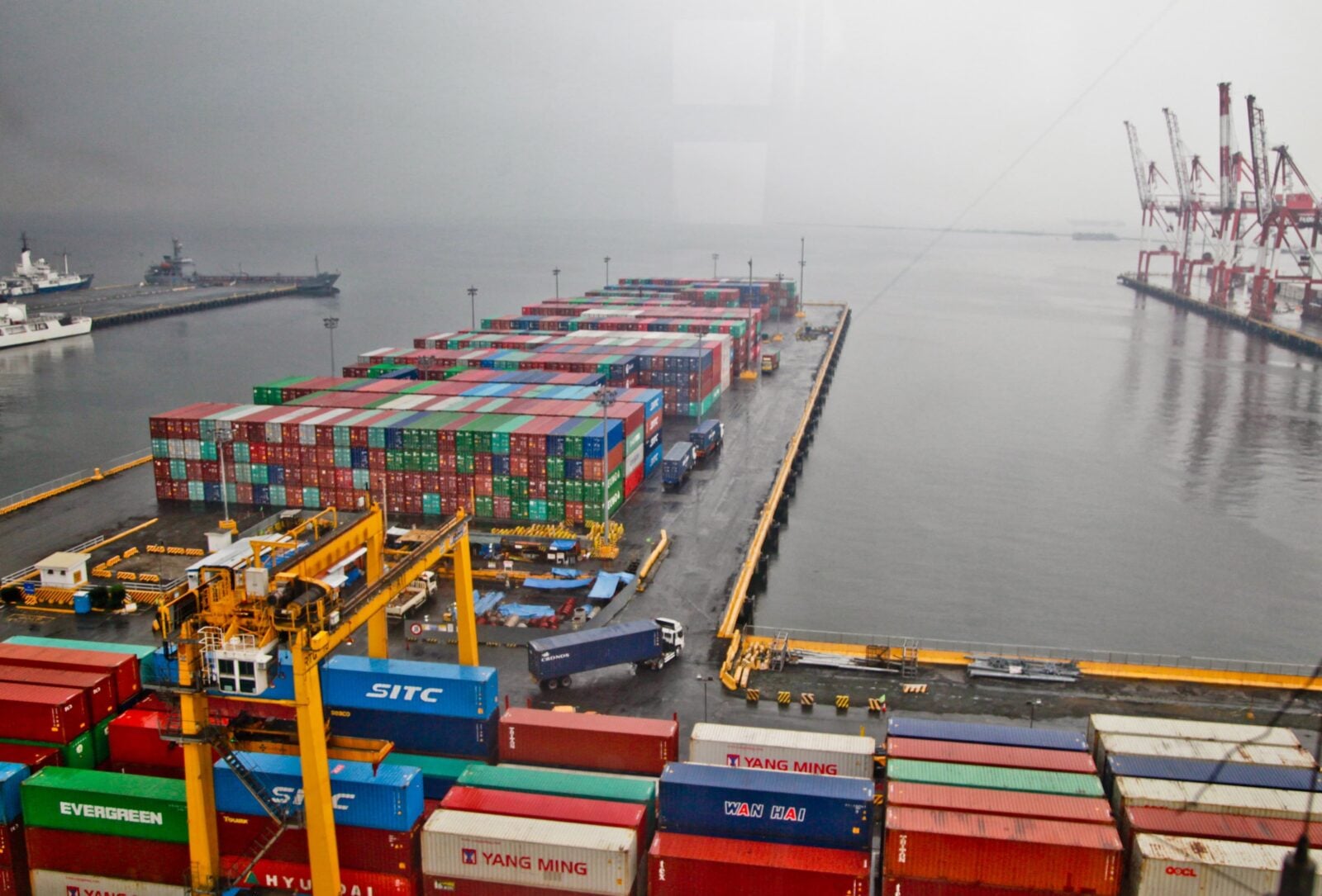
The logistics technology trends reshaping direct-to-customer delivery in 2026 cluster around four areas that have matured significantly since e-commerce growth accelerated: IoT-based real-time visibility, autonomous delivery by drone and ground vehicle, AI-driven route and demand optimization, and blockchain-based supply chain transparency. A fifth area, last-mile delivery innovation, has emerged as the defining competitive battleground for DTC retailers. Each carries different implications for retailers building scalable, cost-effective delivery operations.
IoT and Real-Time Visibility
IoT has become the operational backbone of modern logistics rather than an emerging capability. Real-time tracking, warehouse automation, and resource consumption analytics are now standard practice across large-scale distribution operations. According to Grand View Research, the global IoT in logistics market was valued at $34.5 billion in 2023 and is projected to grow at a compound annual rate of over 13% through 2030, driven primarily by demand for real-time supply chain visibility and cold chain monitoring.
Beyond basic GPS tracking, IoT in DTC logistics now encompasses smart sensors that monitor temperature and humidity for perishable goods throughout the cold chain; connected warehouse infrastructure that enables autonomous inventory counts and automated replenishment triggers; and endpoint communication systems that coordinate delivery timing with smart home access devices, ensuring package security whether or not the recipient is present.
The compounding effect of IoT data is what makes it transformative at scale. Individual sensor readings have limited value in isolation. The analytics layer built on aggregated IoT data enables the predictive capabilities that translate directly into business results: route optimization based on real-time traffic and vehicle telemetry, demand forecasting informed by inventory movement patterns, and preventive maintenance on delivery fleets that reduces unplanned downtime. According to Statista, global retail e-commerce sales are projected to exceed $8 trillion by 2027, and the operational pressure to deliver that volume efficiently makes IoT infrastructure investment increasingly non-optional for serious DTC players.
Autonomous Delivery: Drones and Ground Vehicles
Autonomous delivery has moved from concept to operational reality since 2019, though the timeline for full-scale deployment has proved more incremental than early projections suggested. Drone delivery and autonomous ground robots have crossed meaningful commercial thresholds; fully autonomous road delivery vehicles remain in advanced testing rather than widespread operation.
Amazon Prime Air, which first announced its drone delivery program in 2013, received FAA approval for beyond-visual-line-of-sight operations in 2022 and began commercial deliveries in College Station, Texas and Lockeford, California. Wing, Alphabet’s drone delivery subsidiary, operates commercial services across multiple markets including the US, Australia, and Finland. Zipline, originally built for medical supply delivery in Rwanda and Ghana, has expanded significantly into retail and healthcare logistics in the United States. The global drone delivery market is projected to reach $7.4 billion by 2030, according to Mordor Intelligence.
For short-range last-mile delivery on pavements, autonomous ground robots from companies like Starship Technologies operate across college campuses, residential neighborhoods, and urban areas in the US and Europe. Self-driving delivery trucks are progressing more slowly: Aurora Innovation launched commercial driverless operations on the Dallas-Houston corridor in 2024, representing a genuine milestone for Level 4 autonomous freight, though widespread deployment across diverse routes and conditions remains several years away.
The practical implication for DTC retailers is that drone and robot delivery are worth serious evaluation for specific use cases today, particularly in suburban and semi-rural markets where drive time per delivery is high. Autonomous road delivery for long-haul freight is a closer-horizon opportunity for retailers operating regional distribution networks.
AI and Machine Learning in Logistics
AI’s role in logistics has expanded from future possibility to core operational infrastructure. McKinsey research estimates that AI-driven supply chain management can reduce logistics costs by 15%, improve inventory levels by 35%, and improve service levels by 65% — outcomes that were theoretical in 2019 and are now achievable with production-ready tools. Logistics and DTC delivery are among the clearest beneficiaries of this shift.
The primary AI applications in direct-to-customer logistics today include:
- Demand forecasting: machine learning models trained on historical sales, weather patterns, local events, and search trends achieve significantly better forecast accuracy than traditional statistical methods, enabling retailers to pre-position inventory closer to anticipated demand and reduce costly expedited shipping.
- Route optimization: AI routing engines continuously recalculate delivery sequences based on real-time traffic, weather, package constraints, and delivery time windows. UPS’s ORION route optimization system saves an estimated 100 million miles per year — a benchmark that illustrates the scale of efficiency achievable at volume.
- Warehouse robotics: AI-guided robotic picking systems have reduced order fulfillment times and labor costs in large distribution centers. Computer vision enables quality inspection, package sorting, and damage detection at throughput levels no manual operation can match.
- Natural language processing for order management: LLM-based systems now handle customer inquiry routing, order exception management, and proactive delivery notification in natural language, reducing manual intervention in customer service operations at scale.
- Digital twin simulation: AI can model an entire distribution network as a digital replica, enabling operators to simulate the impact of disruptions, test routing changes, and optimize network configuration before making operational commitments.
The next frontier is agentic AI in logistics: systems that not only forecast and recommend but take autonomous action, automatically re-routing shipments around disruptions, triggering inventory replenishment, or adjusting carrier selection within predefined parameters. Gartner projects that by 2028, 15% of day-to-day operational decisions in supply chain management will be made autonomously by AI agents. We help companies build and integrate these capabilities through our AI/ML development services.
Blockchain in Logistics: Where It Stands in 2026
The 2019 assessment of blockchain in logistics as a technology with significant uncertainty has proven accurate. The years since have validated both the promise and the skepticism in roughly equal measure, and the picture is clearer now than it was then.
The most prominent failure was TradeLens, the blockchain-based global trade platform built jointly by Maersk and IBM. Launched with substantial industry backing and genuine ambition, TradeLens was shut down in November 2022 after failing to achieve the network-wide adoption necessary to deliver its core value proposition. The lesson was straightforward: blockchain’s value in multi-party logistics depends entirely on network effects, and building those networks across competitors with incompatible incentives is harder than the technology itself.
At the same time, blockchain has found durable applications in specific, bounded use cases. Walmart and several major food retailers use blockchain-based provenance tracking, built on the IBM Food Trust network, to trace fresh produce from farm to store. This reduces the time required to identify the source of a contamination event from days to seconds, with direct implications for food safety and brand liability. Smart contracts for automated carrier payment on verified delivery have seen adoption in freight markets where trust between counterparties is limited. Pharmaceutical supply chain compliance, driven by the US Drug Supply Chain Security Act, has sustained demand for blockchain-based serialization and verification.
The practical guidance remains the same as it was in 2019, now with more evidence behind it: evaluate blockchain against the specific problem you are trying to solve. It works well where transparency, immutability, and multi-party trust are genuinely required. It is not a general-purpose logistics platform, and investments framed that way consistently underdeliver.
Last-Mile Delivery: The Defining Challenge
Last-mile delivery, the final leg of the journey from a local distribution center to the customer’s door, represents approximately 53% of total shipping costs according to Business Insider Intelligence. It is also the stage most visible to the customer and most directly linked to satisfaction and repeat purchase. For DTC retailers, last-mile efficiency is the primary logistics competitive dimension, and it has become substantially more technically sophisticated since 2019.
The technologies converging on last-mile delivery in 2026 include:
- Micro-fulfillment centers: compact, highly automated fulfillment facilities positioned within urban and suburban areas, reducing the distance to the customer and enabling same-day or two-hour delivery windows at lower cost than traditional hub-and-spoke distribution networks.
- Crowdsourced delivery networks: platforms enabling retailers to access flexible delivery capacity without building proprietary fleets, particularly effective for grocery, pharmacy, and quick-commerce use cases where delivery density is high.
- Smart locker networks: carrier-agnostic pickup lockers positioned in residential buildings, retail locations, and transit hubs reduce failed delivery attempts and give customers flexible collection options, improving both operational cost and customer experience simultaneously.
- Delivery window optimization: AI-driven scheduling systems now offer customers accurate, narrow delivery windows and dynamically route drivers to minimize total road time, reducing the customer service contacts driven by delivery uncertainty.
Integrating these capabilities requires logistics management software that connects order management, carrier selection, route optimization, and customer communication in real time. Our logistics and transportation technology practice supports retailers building and modernizing these systems.
Conclusion
Keeping up with rapidly evolving logistics technology is a genuine operational challenge. The trends covered here, IoT-based visibility, autonomous delivery, AI-driven optimization, blockchain for specific use cases, and last-mile innovation, are not distant projections. They are reshaping what customers expect from retailers and what it costs to meet those expectations, right now.
Most of these capabilities require expert guidance for effective implementation, both in choosing the right technology for a specific use case and in integrating it with existing systems. If your delivery operations are falling behind competitive benchmarks or you are evaluating which technologies to invest in next, our business process automation and logistics technology teams can help you find the right path forward.
Frequently Asked Questions
What is direct-to-customer (DTC) delivery?
Direct-to-customer delivery is the logistics model where a brand or retailer ships products directly to the end consumer without passing through a retail intermediary. It has grown substantially with e-commerce, giving brands more control over the customer experience and delivery quality, but also requiring investment in logistics infrastructure, carrier relationships, and last-mile capabilities that traditional wholesale distribution models do not require.
How is AI currently used in logistics and delivery?
AI is applied across multiple stages of logistics operations: demand forecasting (predicting what products will be needed where and when), route optimization (calculating efficient delivery sequences in real time), warehouse automation (guiding robotic picking and sorting), customer communication (handling order inquiries and proactive delivery notifications), and supply chain simulation (modeling disruptions before they occur). Each application reduces cost, improves speed, or both, and the technology is now sufficiently mature for production deployment across mid-size and large logistics operations.
Is blockchain actually used in logistics today?
Yes, in specific use cases. Blockchain is actively used for food provenance tracking (Walmart’s IBM Food Trust network), pharmaceutical supply chain serialization and compliance, and smart-contract-based carrier payments in freight markets. High-profile projects like TradeLens (Maersk/IBM) have been discontinued due to adoption challenges rather than technical failure, which underlines the importance of evaluating blockchain against a specific, bounded problem rather than as a general logistics platform.
What is the biggest logistics challenge for DTC brands in 2026?
Last-mile delivery remains the most costly and operationally complex challenge for DTC brands, representing approximately 53% of total shipping costs. Customer expectations for free, fast delivery continue to rise while the economics of delivering individual parcels to residential addresses remain tight. DTC brands that solve last-mile at competitive cost, whether through micro-fulfillment, smart carrier strategy, or technology investment, hold a durable operational advantage over those that cannot.