Is Your IT Services Partner Actually Practicing Ethical AI?
AI ethics in IT services goes beyond policy. Here's what responsible AI delivery looks like in practice, from code quality to data governance.
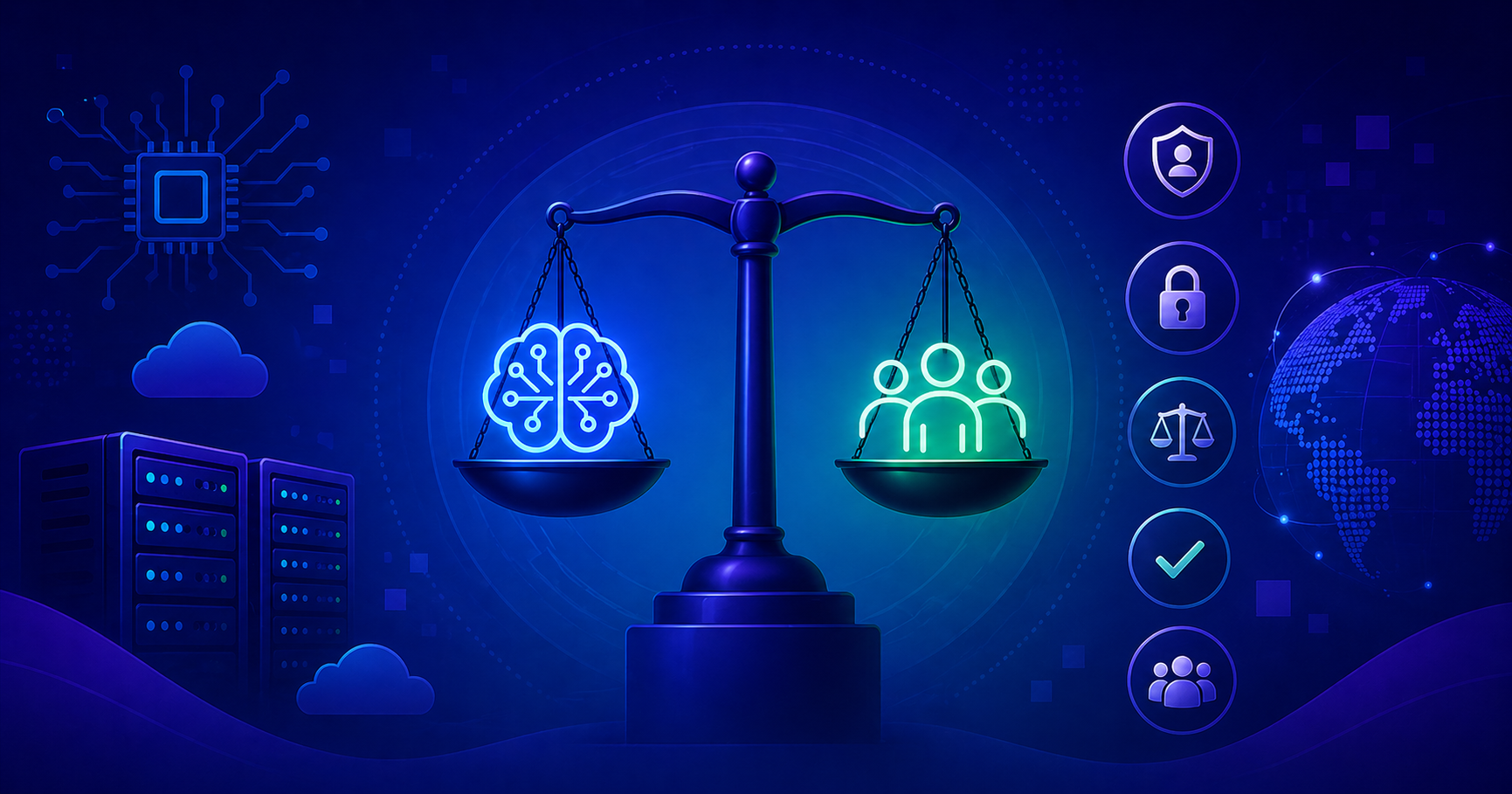
Ethical AI in IT services means your partner has governance, quality safeguards, and security practices built into how they build and deploy AI-augmented systems, not just stated in a policy document. Done right, it doesn't just reduce risk: it makes AI-backed delivery measurably better for your business.
Nearly every IT services firm claims to work with AI. The real question is whether that use is disciplined and auditable, and the gap between vendors who've built ethical safeguards in versus those who haven't shows up directly in your code, your data, and your customer relationships.
According to the Stanford HAI AI Index 2025, reported AI-related incidents rose 56.4% in 2024 to 233 total. Many were production failures in systems built by teams that moved fast without the right guardrails.
Below, you'll find a breakdown of the key ethical fault lines in AI-augmented delivery, what responsible operations actually look like in practice, how ethical AI translates into concrete business advantages, and the questions worth asking when evaluating any IT services partner.
Why Ethics Became a Technical Requirement, Not a Philosophy
The conversation about AI ethics used to live in research papers and conference panels. In 2025, it moved into procurement checklists and regulatory enforcement. Two developments in particular changed the landscape for any company buying or delivering IT services.
| EU AI Act Enforcement (June 2025) | AI-Generated Code Vulnerabilities | |
|---|---|---|
| Event | The EU AI Act entered active enforcement, requiring organizations in or serving European markets to classify AI systems by risk, prepare oversight plans, conduct red-team testing, and publish transparency documentation. | AI-assisted coding became standard: ~80% of new GitHub developers use Copilot in their first week (GitHub Octoverse 2025). Research found ~40% of AI-generated code is vulnerable in high-risk scenarios (arXiv), with one study showing 10% more critical security bugs versus human-written code. |
| Implications for companies | AI tools embedded in a vendor's delivery process, code generation, automated testing, AI-assisted architecture, may fall within regulated scope. A vendor's compliance gap becomes your legal exposure. | When AI significantly influences code and no independent review exists, security vulnerabilities ship undetected. The attack surface now includes the model, the API, the training pipeline, and the inference layer. |
| Potential risks | Fines up to 6% of global annual turnover for prohibited-use violations. Regulatory liability transferred to clients of non-compliant vendors. Reputational exposure in markets with active enforcement. | Production breaches, compliance failures in regulated industries, and technical debt that compounds quickly once vulnerable AI-generated code is in production. |
| What a service partner must provide | Active ISO certifications, documented AI risk classification processes, human oversight frameworks, and the ability to produce transparency documentation on request for any AI system in the delivery stack. | Independent security review gates, a QA process that verifies AI output before it ships, and a clear, specific answer to: "What does your security review look like for AI-generated code?" |
The Four Ethical Fault Lines in AI-Augmented IT Delivery
Ethics breaks down into four distinct problem areas in practice, each requiring its own operational response.
Transparency and Explainability
Can your IT partner tell you which parts of your codebase were AI-generated, which AI tools are in their stack, and where human review is applied? Transparency scores among major AI model developers rose from 37% to 58% between late 2023 and mid-2024 (Stanford HAI), meaning 42% of systems still operate without it. The same expectation applies to your vendor's delivery process: transparency should be the default, not something you have to request.
Bias in AI-Assisted Development
AI tools trained on historical codebases carry the assumptions embedded in those codebases. In domains like hiring software, credit scoring, or content moderation, AI-suggested logic can introduce bias at the architecture level before any model is deployed. The 2025 Stack Overflow Developer Survey found 79% of developers cite misinformation and incorrect outputs as their primary ethical concern with AI tools. The bias conversation belongs at the design stage, not after a system is live.
Data Governance and Privacy
Only 23% of organizations have full visibility into their AI training data, and 70% of AI data leaks stem from weak access governance (industry research). Before any AI engagement begins, your provider should have clear, documented answers to: what happens to your data when it informs a model, what logs are kept, and what reaches third-party APIs.
Accountability When AI Makes Mistakes
AI systems fail. The ethical question isn't whether failures will occur but who is accountable when they do. Providers who treat AI output as a black box offload that accountability onto you. Providers with structured QA, post-deployment monitoring, and human-in-the-loop design accept it as part of the engagement. That distinction is worth probing hard during vendor selection.
What Ethical AI Delivery Actually Looks Like Operationally
Principles are easy to write. Operations are where things hold or fall apart. Each of the challenges above has a corresponding operational solution that mature IT services providers build into their delivery model.
Quality Assurance as an Ethical Safeguard
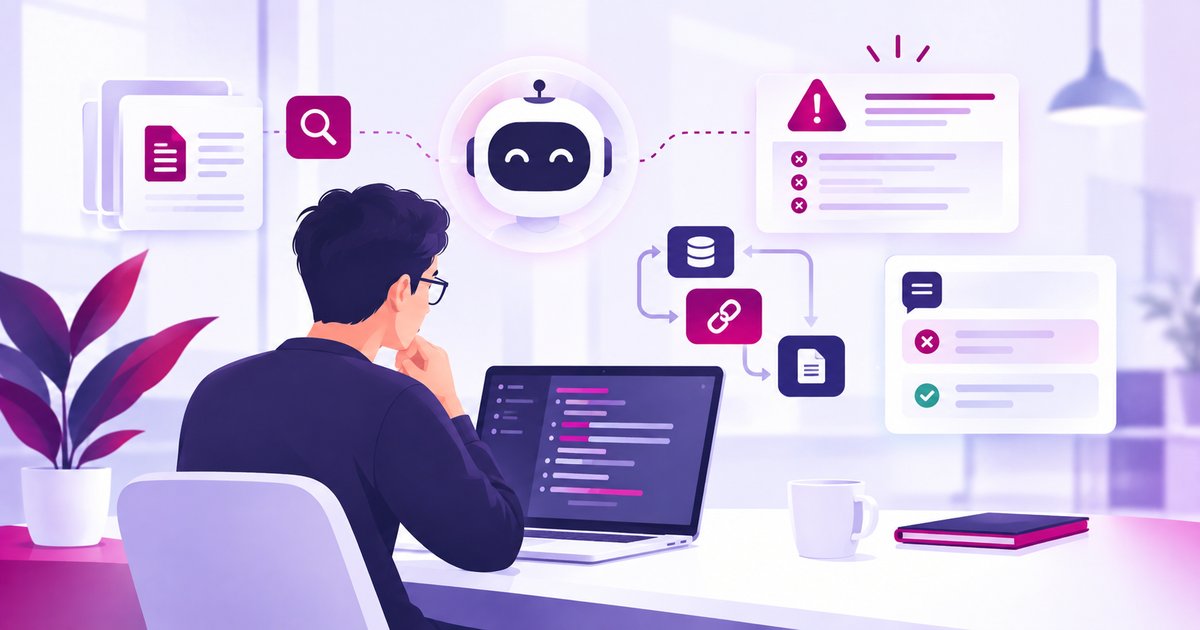
When AI generates or significantly influences code, development teams lose the deep familiarity with the output that comes from writing it line by line. Independent testing becomes more important, not less: automated test coverage catches regressions, but human QA engineers catch logical errors that automated tests weren't designed to find.
The practical solution is a dedicated QA practice that treats AI-generated output as untrusted input by default. AI-driven testing tools raise the volume of what gets checked; human engineers define the criteria and own the results. For clients, this means fewer undiscovered defects, more predictable delivery, and a clear line of responsibility for what ships. This is what "human-in-the-loop" looks like when it's actually implemented rather than just cited.
Security-First Architecture and Structured Governance
Security has to be designed in, not added afterward, and for AI-integrated systems, that means the entire delivery chain, not just the application layer.
A provider operating under ISO 27001:2022 (information security) and ISO 9001:2015 (quality management) brings auditable process discipline to every engagement. Pair that with a dedicated cybersecurity and compliance practice that includes penetration testing, and clients gain a way to actively stress-test what's being built specifically for the vulnerability patterns that AI-generated code introduces. The right question to ask your vendor isn't "are you experienced with AI?" but "can you show me the security review framework applied to AI-generated output?"
Strategic AI Governance: Knowing What Not to Build
For many organizations, the harder problem isn't implementation; it's knowing what to build, what to avoid, and how to make AI decisions at an organizational level before engineering begins.
A Chief AI Officer as a Service arrangement addresses this directly: companies get executive-level AI strategy, governance frameworks, vendor evaluation, risk assessment, without the cost and lead time of a full-time hire. Governance decisions made at the strategy level shape everything downstream in engineering. When ethical considerations are applied here, they become a filter rather than a retrofit, which is both more efficient and more effective.
The Business Case: Ethical AI Delivery Creates Measurable Value
The framing of AI ethics purely as risk mitigation is accurate but incomplete. Ethical AI delivery also creates direct positive value.
Faster trust with end users. Products built with explainability, auditability, and bias controls earn user trust faster. In regulated industries, this is mandatory. In consumer products, it's becoming a differentiator as awareness of AI-related failures grows.
Regulatory readiness without retrofitting. The EU AI Act is the leading edge of a global regulatory wave. Companies that partner with ethically mature IT providers now are building compliance into their architecture from the start. Retrofitting it later is always more expensive and more disruptive.
Better software, measurably. Teams that verify AI output rigorously ship fewer bugs and maintain faster cycle times. According to GitHub research, teams using AI tools with oversight built in complete tasks 55% faster than control groups while maintaining higher completion rates.
Lower incident exposure at scale. AI-related incidents increased 56.4% year over year in 2024 (Stanford HAI). The cost of a single AI-related production incident, in remediation, reputational damage, and regulatory response, typically exceeds the cost of the safeguards that would have prevented it.
More durable AI integration over time. Systems designed with explainability are easier to maintain. Data pipelines built with governance in mind are easier to audit and update. The upfront process investment pays back in a codebase you can actually build on.
Conclusion
AI ethics in IT services isn't a constraint on what's possible. It's the foundation for making AI-backed delivery trustworthy enough to use at scale. The vendors who treat ethics as a checkbox produce systems that look fast to build and prove expensive to maintain. The vendors who've built ethical practice into their operations produce AI-augmented work that holds up under audit, under scale, and under the scrutiny of users who increasingly know what questions to ask.
When evaluating IT services partners in 2026, ask the hard questions: How is AI output reviewed before it ships? What certifications back the security process? Who is accountable when an AI-assisted system fails? The answers tell you everything about whether a vendor's AI adoption creates value or quietly transfers risk to you.
Take a closer look at your current partner's process, and if the answers aren't clear, explore what a structured, governance-first approach to AI delivery looks like in practice.
Sources
- Stanford HAI Artificial Intelligence Index Report 2025, Chapter 3: Responsible AI
- Stack Overflow Developer Survey 2024/2025, VietDevHire analysis (2026)
- GitHub Octoverse 2025
- arXiv: "Asleep at the Keyboard? Assessing the Security of GitHub Copilot's Code Contributions"
- ISACA: Understanding the Ethical Impacts of AI Systems (2026)
- KDnuggets: Emerging Trends in AI Ethics and Governance for 2026
- McKinsey: Trusted AI Compliance for Ethical and Resilient Systems
- unicrew.com: Services, ISO certifications, blog
Frequently asked questions
It means a provider has governance, QA, security, and accountability practices embedded in how they build and deploy AI-augmented systems, covering transparency about AI tool use, bias controls, data governance, and clear accountability when AI-assisted systems fail.
Enforced from June 2025, it requires organizations serving European markets to classify AI systems by risk, maintain oversight plans, conduct red-team testing, and produce transparency documentation. Vendors building AI-integrated systems for European clients are directly in scope and should have a documented compliance posture.
Research suggests it can be: approximately 40% of Copilot-generated programs were found vulnerable in high-risk scenarios (arXiv). This isn't an argument against AI tools, but it is a strong argument for independent security review and QA as standard practice on every AI-augmented project.
Ask for specifics: What AI tools are in your delivery stack? How is AI-generated code reviewed before it ships? What certifications govern your security processes? What is your data governance policy for AI projects? Vendors with concrete answers are operating with the process discipline ethical delivery requires.
No. Teams with structured QA, security review, and AI governance policies ship more reliably and accumulate less technical debt. The productivity gains from AI tools are realized more fully with a verification layer in place.