
Artificial Intelligence Consulting Services that end in a decision, not a deck.
AI consulting answers which AI use cases are worth funding at all, and whether any of them is yet. We score the candidates against the data and the systems you actually run.
- 120+Projects delivered across 12 countries since 2012
- 100+Senior in-house engineers, six countries
- 5.0Unified rating across 61 client reviews on Clutch
- ISO 27001Certified security practice, audited by Quay Audit UK
- ISO 9001Certified quality management, audited by Quay Audit UK
01Overview
When is AI consulting the right buy?
When there is an AI proposal on the desk and nothing to judge it against. We take the whole list of things you could do with AI and return a ranked answer, independent of whoever inside your company is already championing one: what to fund, in what order, and what to leave alone until the data underneath it is fixed. The engagement ends at handover.
- Advice from people who operate AIThe feasibility call comes from the team that runs Snaplore and Talkmetry in production and carries their maintenance, not a research desk.
- The conflict, said out loudWe also build, so we can win the work we recommend. That is on the table before you hire us rather than discovered in month two.
- No agent of ours to placeWe build agents to each client's own requirements and sell no agent of our own, so when a workflow scores well here, what gets specified is yours rather than something we already own.
- If the decision is already madeAI integration when you know what to build, a fractional Chief AI Officer when it needs owning week to week, and AI and ML development when the model is the product.
02Proof
Why clients bring us the AI decision
A roadmap is cheap to write and hard to be held to, so judge an AI advisor on what happened after the advice.
- Advice that has survived a real stackWe rebuilt the sharded data architecture under Solus Connect's machine-learning authentication platform, and replaced a manual data-entry process with a tool that reads the documents while an operator releases each result. Neither engagement was bought as advice; both are what the advice has to be good for.2xdata-entry throughput, from around 5,000 datasets a month typed by hand
- We ship AI, we do not only advise on itunicrew builds and runs its own AI products, Snaplore and Talkmetry, so the feasibility call comes from people who have lived with what breaks in production.Up to 60%less time on documentation, reported by Snaplore's own clients
- Certified, and audited on itunicrew is certified to ISO 27001:2022 and ISO 9001:2015, renewed through a multi-stage audit with Quay Audit UK, and ISTQB-certified QA sits inside delivery, not at the end of it.ISO 27001:2022 and ISO 9001:2015, renewed through a multi-stage audit with Quay Audit UK
03Compare
Who should decide what AI you fund?
Three routes, and the honest one for many companies is the third, which is the column we get paid nothing for. What decides it is whether your data has an owner and an API, not which model you pick, and that makes it a sequencing problem before a technology one.
| Advisory from unicrewunicrew | A strategy firm that does not buildAdvise | Wait, and fix the data firstWait |
|---|---|---|
| Best forYou want a roadmap that is actually buildable, and the option of the same team delivering it with no handoff to a second vendor. | Best forA board mandate or a multi-year transformation program where procurement wants a named advisory brand on the cover. | Best forYour data sits in silos with no owner and no API, which is what a readiness assessment often finds. |
| Trade-offWe are not a delivery-free audit house. If your board needs an opinion from a firm that cannot win the build, that conflict is real and you should weigh it. | Trade-offThe roadmap is written by people who will not build it, so feasibility is assumed rather than tested, and the handoff is yours to manage. | Trade-offWaiting is only cheap if somebody is actually fixing the data. Otherwise you arrive at the same conversation a year later, having paid for the delay. |
| You end up owningA ranked roadmap, a governance framework, and an ROI model you could execute without us. | You end up owningA strategy document, and a vendor selection still to run. | You end up owningEither a data estate worth pointing AI at, or the same decision a year later. |
Quick self-check
Tick what is true for you. The read-out updates as you go.
0 of 4 true
Buy the build, or the leadership, not the advice
Nothing here says consulting. If you know what to build and want it connected to the systems you run, that is AI integration. If the decision is made and what you lack is somebody senior owning it, that is a fractional Chief AI Officer.
Tell us anywayThat is one team's question, not the company's
A single unanswered question is usually one process rather than a portfolio, and a conversation about that one process is a much smaller commitment than a roadmap across the business.
Talk it throughStart with the readiness assessment
Two signals usually means the gap is evidence rather than ambition: nobody has looked at the data, the systems and the people in one pass. That is what the fixed-scope AI readiness assessment is for, and it may end by telling you to wait.
Book a discovery callConsulting is the right buy
Three signals, and the open question is no longer whether to fund AI work but which piece and in what order. What is left to settle is scope: how many business areas, and whether governance lands at the same time.
Book a discovery callA decision first, then a roadmap
All four describe a company asked to commit budget with nothing to commit it against. That is this engagement, and it ends in a written decision you could act on without us. Most engagements start within two to four weeks.
Start with discoveryThe gap between adoption and value creation is not a technology problem. It is a sequencing problem.
 Tural MamedovCo-Founder and CEO, unicrew
04Capabilities
What our AI consulting covers
Six things a consulting engagement covers, from finding the use cases worth funding to the governance that keeps them safe to ship. Each links to the team that does the deeper work.
- AI readiness assessment
AI readiness assessment
Keep, rebuild, removeThe first question, and the one that decides the rest: can your data, your systems and your people carry AI at all? It ends in a keep, rebuild, or remove map of everything in scope, and it is the smallest way to start.
- AI use case discovery
Use-case discovery and ROI validation
ROI projectionWhere AI can specifically help your business and industry, and where it cannot, pressure-tested against your data, stack, and budget, with a return-on-investment projection you can take to the board.
- AI data readiness assessment
Data and platform readiness
Where your data livesAI does not improve bad data, it amplifies it. We map where your data lives, how complete it is, and whether a model can reach it, then sequence the pipeline work that has to happen first.
- AI build versus buy analysis
Build, buy, or integrate
API or trained on your dataThe integration approach decides most of the cost. We choose between configuring an existing AI service through its API and training something on your proprietary data, and we write down why.
- AI agent feasibility study
Agent and automation feasibility
Where agents breakAn agent is software that carries out a multi-step task on its own. We say which of your repetitive workflows one could genuinely own, and which will break on multi-factor authentication, brittle UI selectors, or unpredictable model behaviour. We have hit all three ourselves.
- AI governance and compliance
Governance, compliance, and evaluation
GDPR, HIPAA, sector rulesThe regulatory and ethical implications for your sector, GDPR, HIPAA, or sector-specific rules, with data-protection, access, and AI-usage policies in place before anything ships, alongside the evaluation and human review design that tells you in numbers whether it is working.
05Trust
What the engagement hands over
Three things, and one of them is not an achievement: a ranked decision rather than a list of possibilities, a verdict the engagement may reach even when it is not yet, and documents that work without us.
- A decisionA ranked shortlist, not a list of possibilitiesScored on the value it would create and on what your data can actually support
- Not yetAn answer the assessment is allowed to reachIf the data is not there, that finding is the deliverable
- YoursThe roadmap, the governance framework, the ROI modelWritten to stand on its own if you execute in-house or take it to another firm
06Stack
The stack behind the advice
Naming the stack first is how AI programs get sequenced backwards, so this list is the outcome of a decision rather than the input to one. The ones we run ourselves: GPT models in both Snaplore and Talkmetry, with Whisper handling speech in Snaplore, and Python, AWS Bedrock and LangChain in the internal agent we built to chase our own delinquent time logs.
 Python
 OpenAI / ChatGPT
 AWS Bedrock
 LangChain
- Whisper AI
- NLP
07Engagement
How an AI consulting engagement is shaped
Three shapes, depending on whether you need a decision, a plan across teams, or somebody senior owning AI week to week. Discovery comes first in all three.
The two-week readiness assessment
Most askedA fixed-scope engagement ending in a written keep, rebuild, or remove map, a ranked use-case shortlist, and a costed first build. No open-ended discovery hours.
- Best when
- You need a decision on where AI pays off before you fund anything
- You pay
- Outcome based, quoted per project
- Typical start
- Two to four weeks
A full AI strategy and roadmap
Across teamsSeveral business areas assessed together and sequenced into one roadmap, with the governance framework and the hiring or upskilling plan that goes with it.
- Best when
- The hard part is the sequencing across teams, not any single use case
- You pay
- Billed hourly, quoted per project
- Typical start
- Two to four weeks
Senior AI leadership inside your business, owning strategy, governance, and rollout without the cost or the hiring cycle of a full-time CAIO.
- Best when
- You need AI owned continuously rather than a one-off document
- You pay
- Billed monthly, per team member
- Typical start
- Two to four weeks
A written second opinion first, and the delivery is a separate decision
If an AI strategy already exists and has stalled, we read it against your data and systems rather than replacing it: which use cases still hold, which depend on data nobody owns, and what has to be sequenced first. You get that in writing with a prioritised plan, and handing us the work afterwards is a separate decision. There is no minimum engagement period.
08Industries
Where AI consulting pays off, by industry
The high-value use cases differ by sector, and so do the constraints that decide what may ship: a fraud model lives or dies on auditability, a clinical summary tool on how protected health information is handled. These are the sectors we have delivered in.
Logistics and transportation
Forecasting, routing, and exception handling. The payoff here is throughput, and the constraint is data that arrives late, dirty and in real time. A leader in US finished-vehicle logistics runs software of ours that supports the movement of 9M+ vehicles.
Hospitality and leisure
Demand that swings by season is where forecasting earns its keep, and booking, membership and venue systems are where it has to land. One of ours is a platform for the entertainment industry.
Fintech and accounting
Fraud and anomaly detection, document processing, and risk scoring, where auditability decides what may ship. We rebuilt the data architecture under a machine-learning fraud-detection platform and proposed the NLP methods for categorising transaction descriptions in a financial advisory firm's bookkeeping platform.
Healthcare
Clinical-document summarization, triage support, and patient-facing assistants. What decides whether any of them survives scoring is where protected health information is allowed to travel and who signs off on the output. We stabilized and scaled a home health monitoring platform.
EdTech and learning
Relevance, tagging, and embeddings, the numeric fingerprints that let a search engine match meaning rather than words. We embedded an engineer on a German ed-tech platform's search team and built the AI beneath it.
Energy and utilities
Demand forecasting and predictive maintenance on sensor data, where the model is only as good as the telemetry underneath it.
Name the AI decision you need made, and get an honest read
The first conversation is about scope, not a pitch. If the honest answer is that your data needs a year of work before AI is worth funding, we will say that.
What happens after you contact us
- We reply within one business dayA written answer to what you described, or the question we have to settle before the AI decision can be scoped at all.
- A call about the decision you need madeWhich business areas are in scope, what you would do differently if the answer came back not yet, and whether an assessment or a roadmap is the right size.
- A written problem statement and a use-case shortlistThe questions the engagement has to answer, and the candidate use cases worth scoring against your data and your stack.
- Then a scope, and a start dateFor the readiness assessment, scope and fee are agreed before kickoff. Most engagements start within two to four weeks.
09Delivery
How an AI consulting engagement runs
What sets the schedule is access, not analysis. There is an NDA before any access, and for the assessment work we read from least-privilege, read-only accounts agreed with your technical contact before anything starts, under our ISO 27001:2022 certification. The people doing the reading are unicrew's own employees, working from our offices in Ukraine, Poland, Estonia and the UK.
- DiscoveryWe work out where AI would have real impact in your business rather than novelty value, and agree what a good answer looks like, so the engagement can end in a decision. You provide the people who know the processes under discussion, and someone who can settle what is in scope and what is not.You getA written problem statement and a shortlist of candidate use cases.
- AI maturity assessmentWe evaluate your data, tooling, and capabilities across three dimensions, data, systems, and people, and name the gaps. You provide read-only access to the systems in scope and one technical contact who can explain what the data means when the schema does not.You getA keep, rebuild, or remove map of the systems and data in scope, with the blockers named.
- Prioritisation and ROI validationWe score each opportunity on the value it would create and how feasible it is given your data and stack, then model the return on the top one. High-value, high-feasibility work goes first, so you see a result before the harder problems. You provide the numbers the case rests on: what the process costs you today, and what a better answer would be worth.You getA ranked use-case shortlist and a return-on-investment projection for the leading opportunity.
- Roadmap and integration approachWe sequence the roadmap around your business context, choose the integration approach per item, and advise on upskilling or recruiting. The reasoning is written down, not assumed. You provide the constraints we cannot see from outside: budget cycles, contracts already signed, and anything a board has already been promised.You getA sequenced roadmap with the integration approach and stack decision recorded, trade-offs included.
- Governance and handoffWe set the governance framework for ethical AI use, data privacy, and compliance, define the human review points, and hand you a plan your team, or ours, can execute. You provide the people who will own it afterwards, in the room for the readout. Nothing depends on you choosing us for the build.You getA governance framework covering data protection, access, human review, and audit trails.
10Client voices
Our clients say
The work is ongoing, but the impact that Artelogic has had on our development team has been substantial. They can work on developing other projects while still seeking guidance from Artelogic. Artelogic always provides our team with solutions backed up with the right research and analysis.
Even though Artelogic didn’t have a background in this area, they learned quickly and repurposed technologies they’d used before in order to solve the business problem. I was very impressed with this ability, as most of the people we contacted before implied that they’d need to spend a lot of time of trying to understand our business logic.
The Artelogic team finished the project on time and within budget. Their work was of excellent quality, making the cost justified. I was impressed when I learned that despite having a small team, they could cater to our needs and provide a comprehensive solution. Artelogic has been delivering excellent value for our investment.
We scoped out the workflow for the platform. Using this foundation, Artelogic’s executing our requirements and developing the platform. Artelogic executed flawlessly according to our plan thus far. Their work ethic is impressive.
We’re one of unicrew’s smaller clients, but they’re always incredibly quick to respond. When we have issues, they treat them as if they’re extremely important. We feel like we have a partner, and that’s been incredible. That’s why we’ll keep them on for as long as we can.
11Case studies
AI strategy in practice
unicrew has been building software since 2012, and until the rebrand the name on the door was Artelogic, which is what most of the reviewers above call us. Snaplore is our own product; the other two are client builds.
See all case studies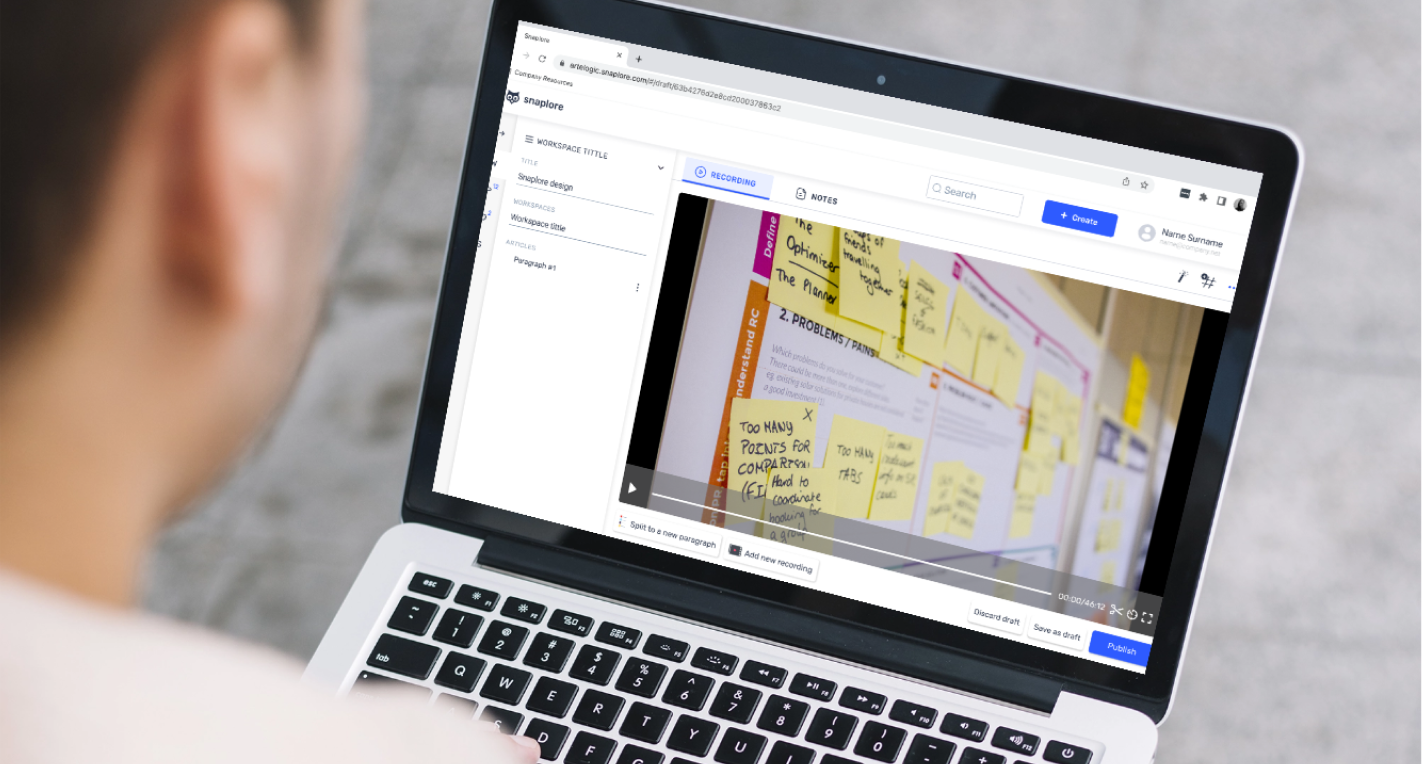 AIRevolutionizing Knowledge Management powered with AISnaplore is unicrew's own product, built and operated in-house. It uses AI to transform how organizations document, structure, and share information, making meetings, training, and project discussions instantly accessible and actionable.Up to 60%Less time on documentation
- AutomationDoubling data-entry throughput with a custom recognition toolunicrew automated a manual data-entry bottleneck with a C# and AWS recognition tool, doubling the data sets the team got through each month.2xData sets processed per month

12Questions
About our AI consulting services
The question underneath most of these is whether you can take the roadmap somewhere else, and you can. The last two are what a comparison actually turns on: which vendor checks to run, and when we are the wrong firm.
You get a decision, not just a document. A typical engagement produces an AI readiness assessment, a use-case roadmap ranked by value and feasibility, a data and infrastructure strategy, a governance plan, and a return-on-investment projection for your top opportunity. It is scoped to the questions you need answered, so a team deciding whether to start gets something different from a team scaling a proof of concept.
We scope it with you first and quote after, because one published figure would be wrong for nearly everyone who asks. Three things move it: how many business areas are in scope, how reachable your data and systems already are, and whether you want one decision settled or a roadmap sequenced across several teams. The AI readiness assessment is deliberately fixed-fee, agreed before kickoff, so the estimate for the build that follows rests on something real.
Scope sets the timeline. The fixed-scope AI readiness assessment runs two weeks from kickoff to readout. A roadmap across multiple business areas takes longer, and in our delivery experience the constraint is how fast we get access to the people who own the data, not analysis time. We size it with you up front.
That question is most of the assessment. We look at where your data lives, whether the systems around it expose APIs, and which parts of the stack an AI feature can safely touch, then tell you what to keep, rebuild, or remove. Legacy is not a blocker on its own: we took over a part-built accounting platform on ASP.NET MVC, MySQL, and C# and proposed how natural-language processing could categorise its transaction descriptions, in the financial advisory case study. Some estates carry AI without being replaced; others need modernization first, and knowing which one you are looking at before you start is worth months.
Consulting decides what to build, whether it is worth building, and in what order, and it ends in a roadmap your team can act on. Building the AI is the delivery that follows. Doing both with unicrew means the advice comes from a team that ships, so the roadmap is buildable and there is no handoff to a second vendor. If you want ongoing leadership rather than a scoped project, that is our fractional Chief AI Officer.
On two axes: the business value it would create and how feasible it is given your data, stack, and constraints. High-value, high-feasibility use cases go first, so you see a return before committing to the harder work. We pay particular attention to the regulated, data-heavy sectors we work in, fintech, healthcare, logistics and energy, where compliance and data quality decide what is realistic.
Governance is part of the engagement, not an afterthought. We map the regulatory constraints that apply to you, GDPR, HIPAA, or sector-specific rules, and set data-protection, access, and AI-usage policies before anything is built. unicrew is ISO 27001:2022 certified, and we build the guardrails, review points, and audit trails that let you adopt AI without taking on risk you cannot see. We do not hold SOC 2, so say so early if you need it.
Yes, and the build is quoted separately, once the roadmap says what is worth building. Delivery then runs with the same people who wrote the roadmap, which is our land-and-grow model: start with a scoped piece of work, then grow the engagement as results come in. You are never obligated to build with us, and the roadmap stands on its own if you take it elsewhere.
Category labels separate nobody here, because the other proposal on your desk is probably also from a firm that builds. Three questions get you underneath the label, and put all three to us as well. First, will they hand you the review link rather than the score? Every quotation above opens the client's own Clutch interview, so you can read what we chose not to excerpt. Second, ask in writing what an assessment is allowed to conclude; the answer below names four situations where we are the wrong choice. Third, ask what a firm does not hold as well as what it does: we hold ISO 27001:2022 and ISO 9001:2015, audited by Quay Audit UK, and we do not hold SOC 2.
Four situations, and we would rather lose the lead now than deliver a roadmap nobody can act on. When procurement requires SOC 2: we hold ISO 27001:2022 and ISO 9001:2015, and we will not say otherwise to get through a vendor form. When you need a vendor-neutral audit with no delivery arm, because we build software and our advice is not conflict-free by construction; hire an advisory-only firm and use us for the build afterwards. When you want the roadmap to confirm a decision already made, because if the data is not reachable or nobody owns the output we will say so, and that answer is the deliverable. And when you want a fixed price before anyone has seen your data. Two alternatives are also worth weighing: your own data or machine-learning lead can run the assessment given the time and the mandate, though internal assessments tend to ratify the use case someone already wants; and if you are committed to one platform, that vendor's own assessment is cheaper, provided you expect a recommendation bounded by what they sell.